Backing and Adhesive
Specify the backing, adhesive type, thickness and tack. Include liners, reinforcement or double-sided constructions.

EQUIPMENT & APPLICATIONS
Share the tape construction and the rolls you need to produce. Define the cutting process, adhesive behaviour and handling requirements before choosing equipment. As an adhesive tape slitting machine manufacturer and supplier, DJH helps you compare the proposed equipment against your backing, adhesive, liner and required cutting process.
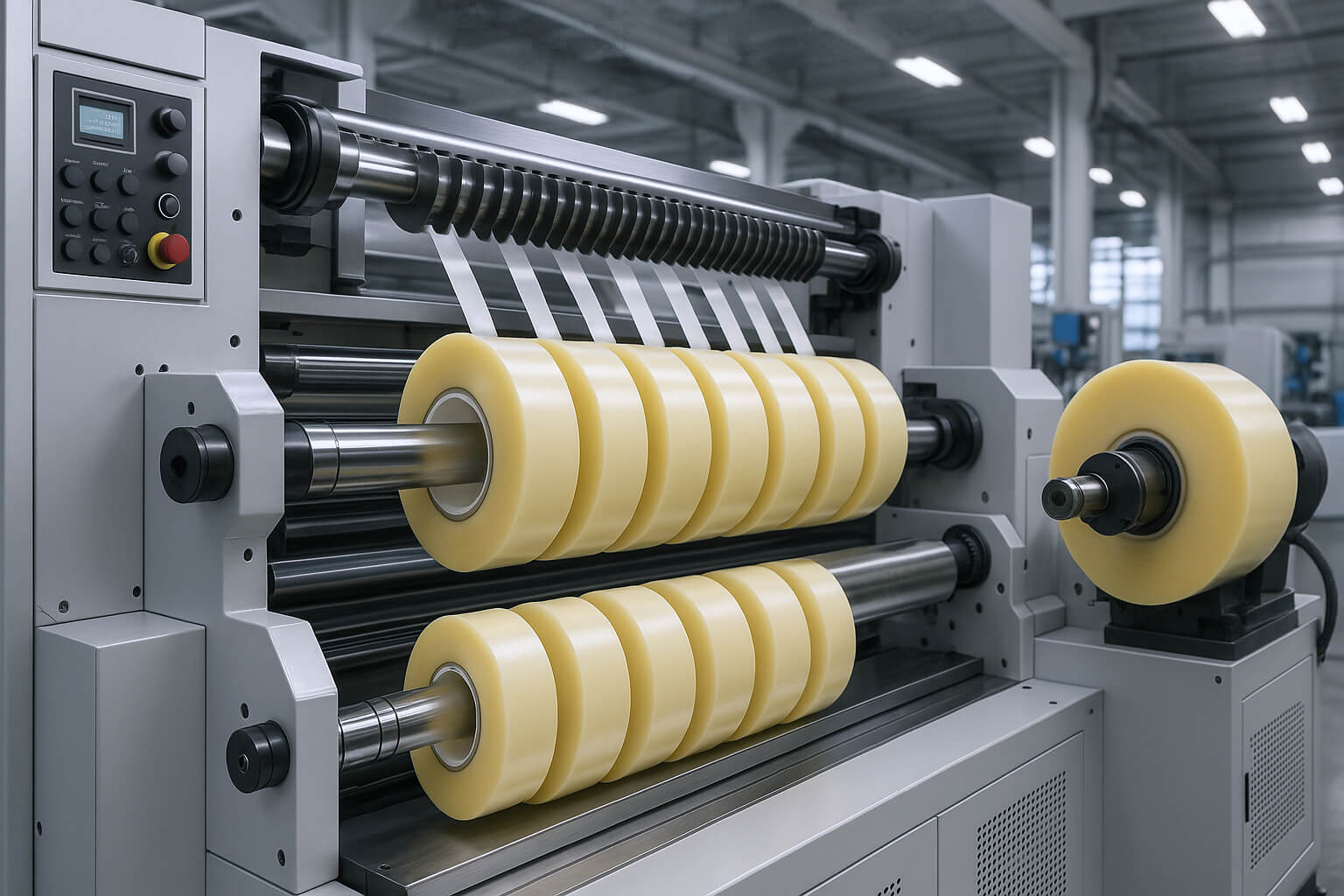
Application reference · select the configuration for your material
APPLICATION & REQUIREMENTS
“Tape slitting” may describe different processes. Explain whether you need to slit and rewind a web or cut a finished log roll, and identify the adhesive and backing.
Specify the backing, adhesive type, thickness and tack. Include liners, reinforcement or double-sided constructions.
Describe edge quality, adhesive buildup or sticking in the current process. Cutting components and contact surfaces require an application review.
Provide slit width, finished diameter, core dimensions and any liner requirements. Explain how rolls will be handled after cutting.
CONFIGURATION & SELECTION
Define unwinding, cutting, rewinding and unloading separately. Log-roll cutting and roll-to-roll slitting are not interchangeable descriptions of one process.
CONFIGURATION & SELECTION
Share backing thickness, total construction, adhesive type and tack behaviour. Include finished width, length, core size and roll diameter.
Identify the release liner and adhesive layers. Check liner tracking, edge adhesion and roll build together, especially where narrow lanes are required.
Compressibility, stretch and adhesive transfer can change the cutting and winding approach. Provide a sample or construction specification before selecting equipment.
A slitter rewinder cuts a moving web and rewinds lanes. A log slitter cuts an already wound roll. Specify the incoming format so the proposal addresses the process you actually need.
CONFIGURATION & SELECTION
Use a representative web and the intended slit pattern. Review edge condition, lane separation and finished-roll build at an agreed speed. Record the material, setup and results so the trial can be compared with the final supply.
QUOTATION & SUPPLY SCOPE
Describe the backing, adhesive, liner and finished format. Agree whether the task requires web slitting and rewinding or another cutting process before comparing equipment prices.
Ask for standard equipment and optional items to be listed separately. Include commissioning, operator training, documentation and initial spare-part requirements in the discussion.
Provide quantity and destination. Confirm price, currency, delivery basis, packing, production schedule and any excluded freight or import charges in the quotation.
Agree representative material inspection, measurement criteria and supplied configuration before ordering. Confirm warranty terms, installation responsibilities and spare-part support with the proposal.
BEFORE YOU SPECIFY
No. Describe the process you require so the proposed machine type matches the input roll and desired output.
Tape construction and adhesive behaviour vary. List the materials and operating conditions for assessment.
A release surface may be relevant, but suitability depends on the adhesive, temperature and contact conditions. Review the actual application.
Provide tape structure, process type, roll dimensions, slit width, core size and the main quality or output requirement.
CONNECTED ENGINEERING
Slitting quality depends on how the complete web path works together. Review each stage against your material and output.
Parent-roll diameter, weight and core dimensions determine the starting conditions.
Web position and tension affect how the material arrives at the cutting section.
Cutting method, blade arrangement and substrate determine the edge requirements.
Core size, finished diameter and roll structure define the required output.
FOR YOUR INQUIRY
Provide the details you know. Identify anything that remains unconfirmed so the discussion starts from the correct conditions.
| Requirement | What to Provide |
|---|---|
| 01 | Process: web slitting/rewinding or log-roll cutting |
| 02 | Backing |
| 03 | Adhesive and liner |
| 04 | Total thickness |
| 05 | Parent and finished-roll dimensions |
| 06 | Core |
| 07 | Output and edge requirements |
TECHNICAL RESOURCES
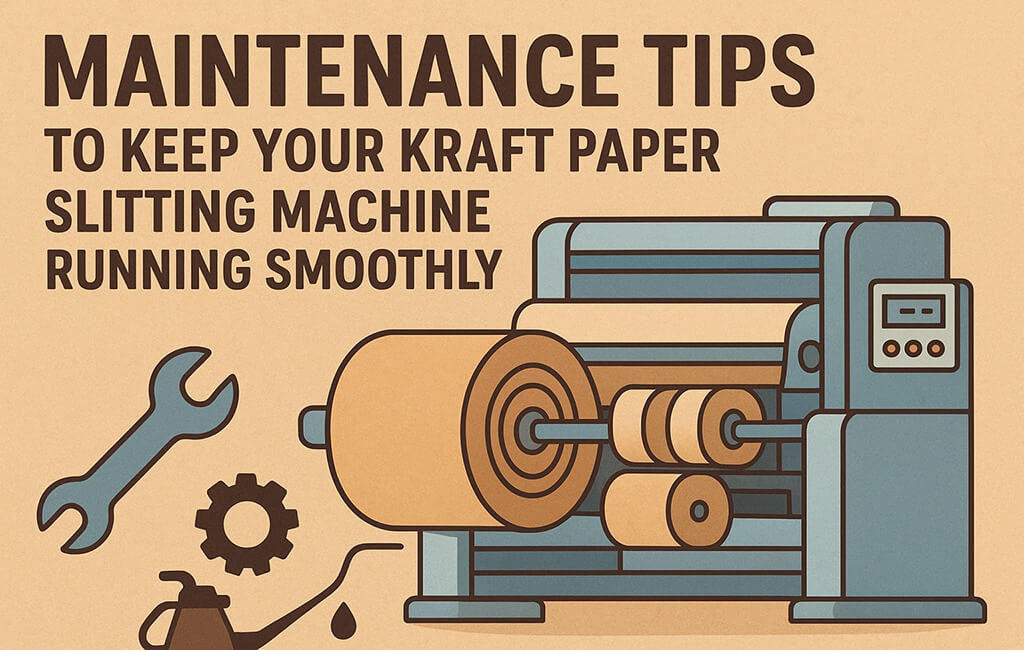
TECHNICAL GUIDE
A maintenance discussion is most useful when it references the actual kraft-paper machine and its documentation. Record component condition and operating context, and confirm tasks with qualified personnel.
Read Article ↗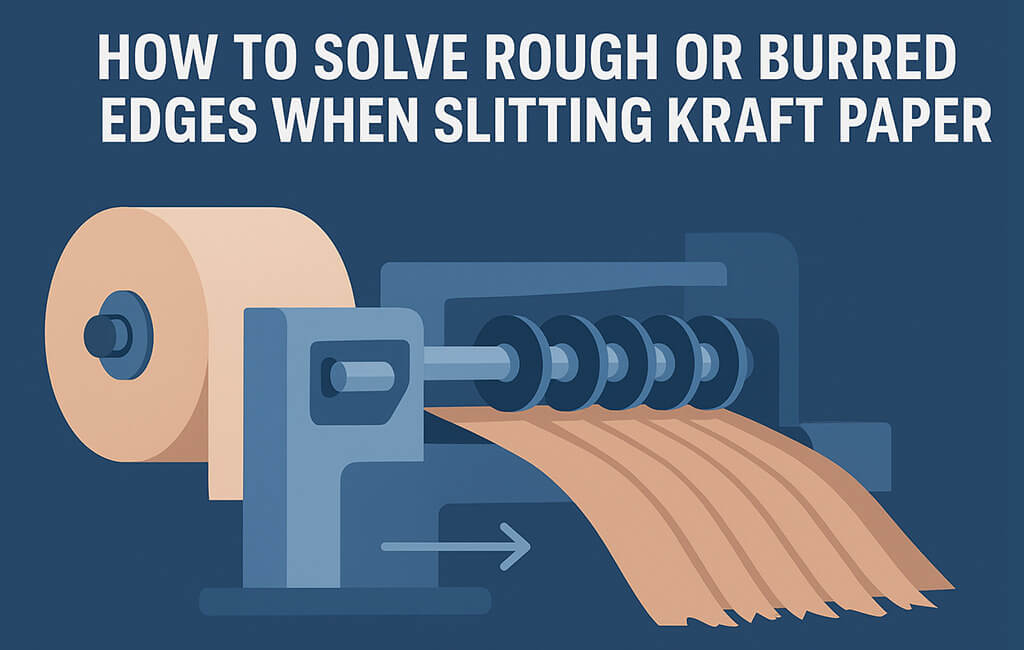
TECHNICAL GUIDE
Rough edges should be described against the paper grade, blade arrangement and operating conditions. Document the defect and follow approved procedures when seeking a configuration or maintenance review.
Read Article ↗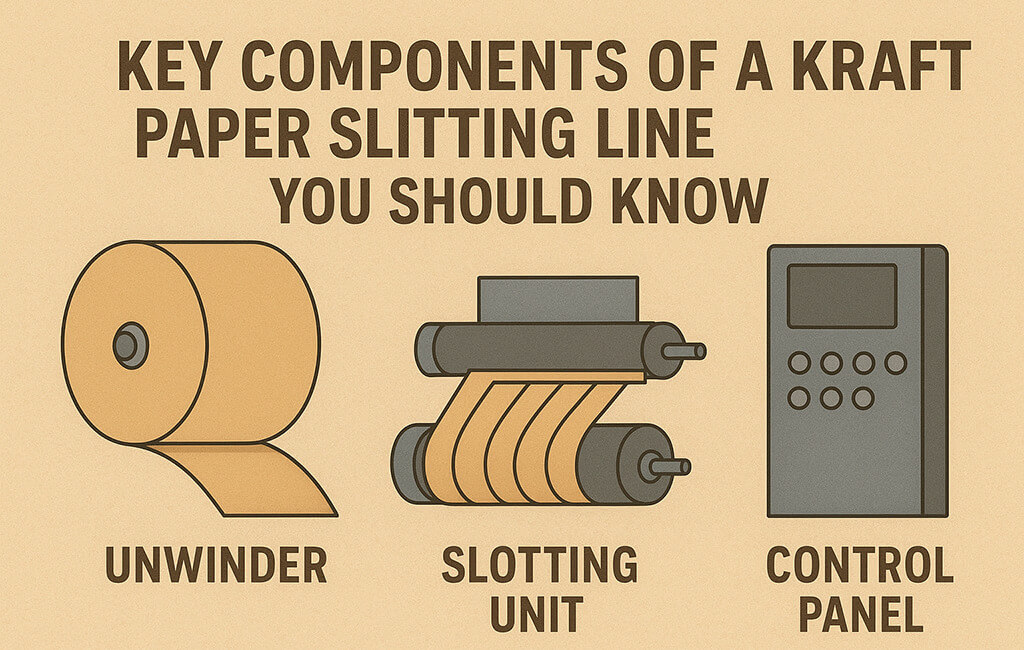
TECHNICAL GUIDE
Unwinding, guiding, cutting and rewinding components work together to form the finished kraft-paper roll. Review each component’s role without assuming the same configuration is used on every machine.
Read Article ↗YOUR MATERIAL. YOUR FINISHED ROLL.
Share your material, roll dimensions and production requirements. Start with the information you have.