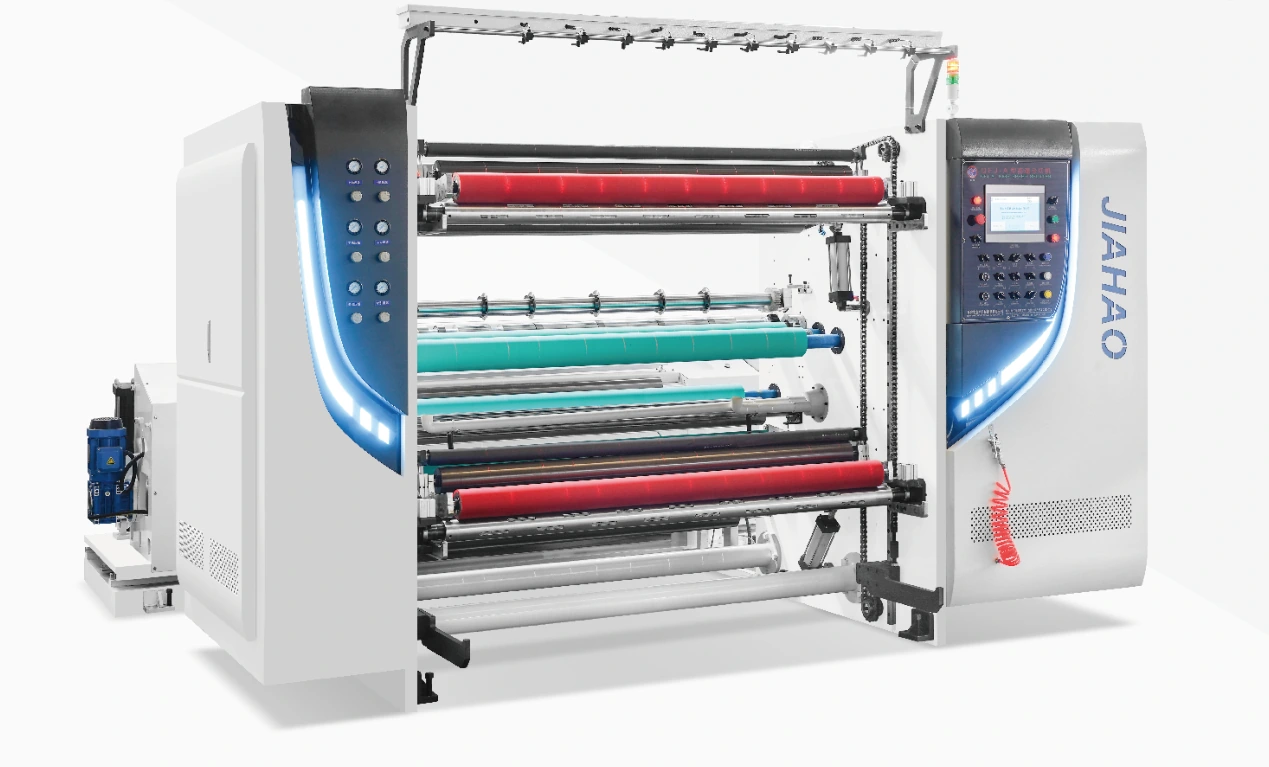
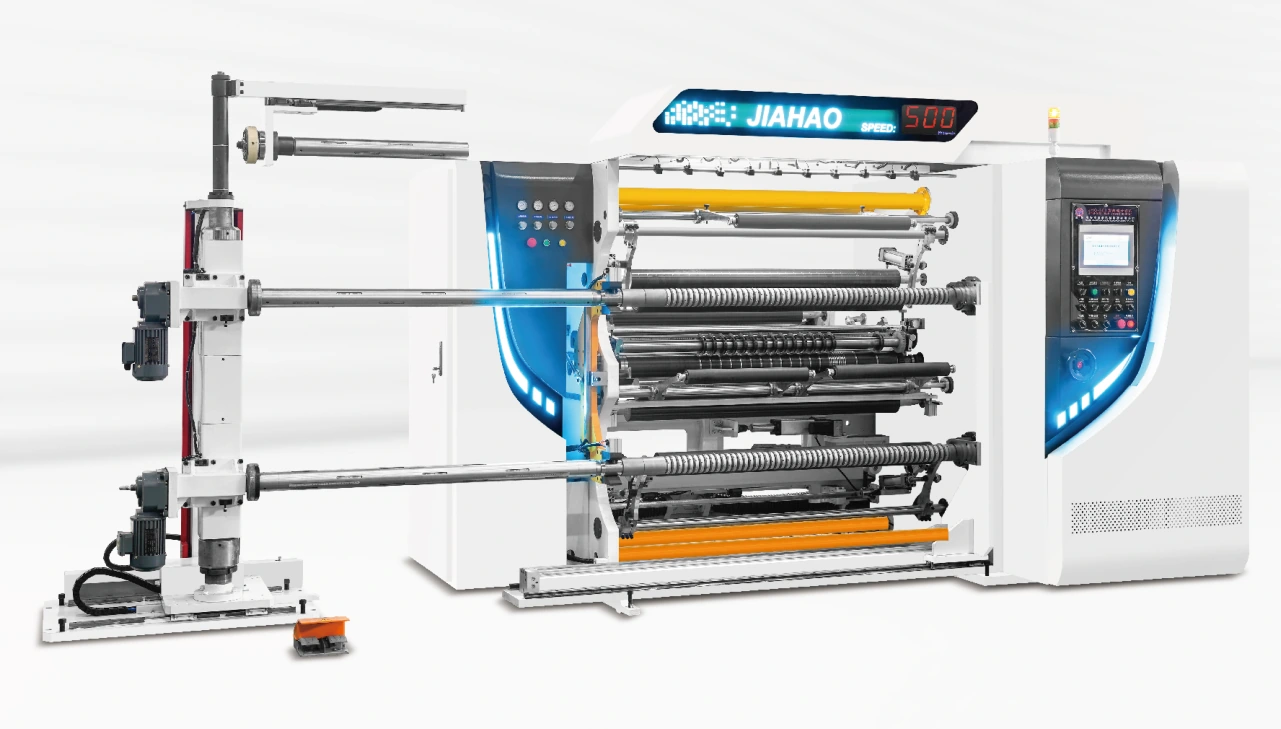
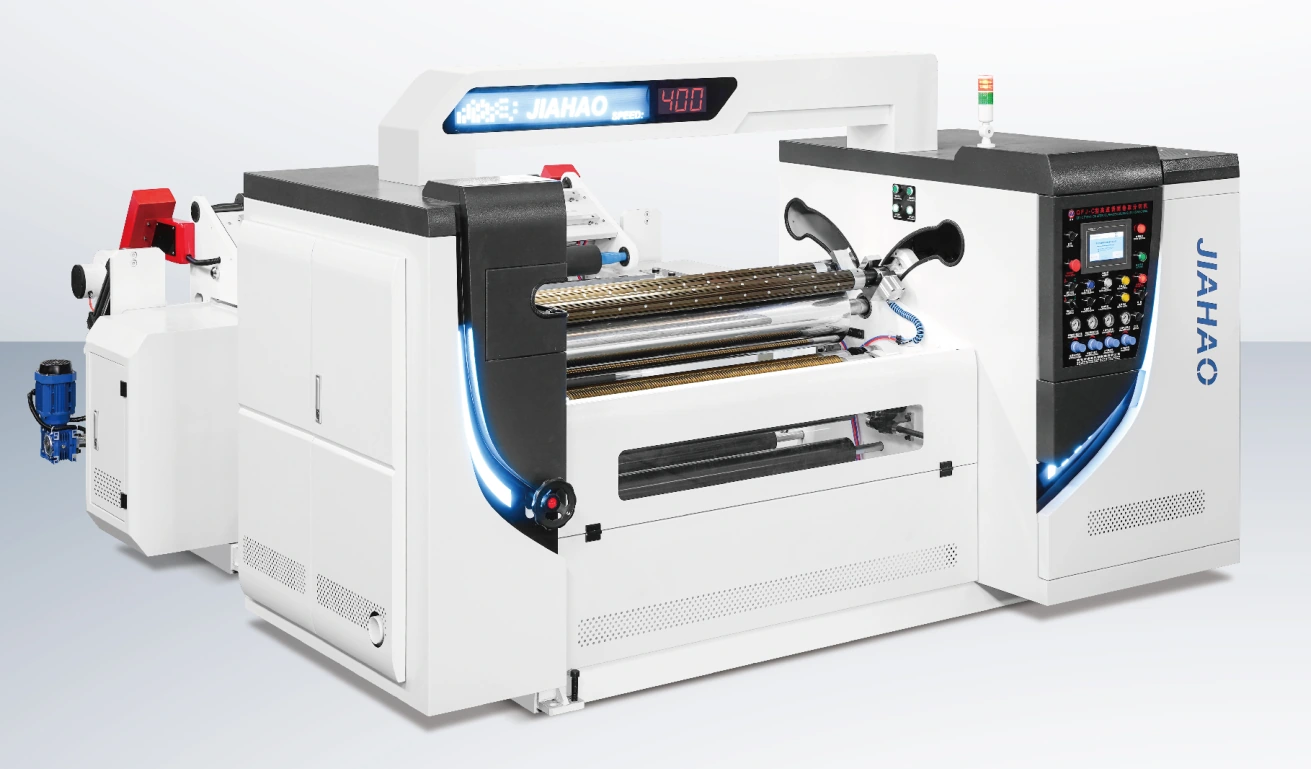
Air-Shaft Rewinding
The horizontal configuration uses air-expanding rewind shafts with individual servo control. The core interface and shaft arrangement should match the finished rolls you need.

EQUIPMENT & APPLICATIONS
Review the QFJ-A400 for converting parent paper rolls into narrower finished rolls. Start with your paper grade, roll dimensions and finished-width requirements, then confirm the complete equipment specification.
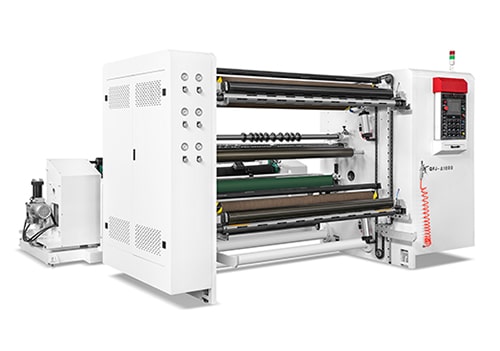
QFJ-A400 · paper slitting and rewinding
MATERIAL & PRODUCTION REQUIREMENTS
Compare material requirements and winding formats before defining the final machine configuration.
PUBLISHED SPECIFICATIONS
Confirm paper grade, grammage and the required production conditions with the selected configuration. Working width and roll diameter are separate dimensions.
QFJ-A400 · CONSTRUCTION & SIZE OPTIONS
The horizontal configuration uses air-expanding rewind shafts with individual servo control. The core interface and shaft arrangement should match the finished rolls you need.
Independent shaftless loading accommodates the incoming roll. Confirm parent-roll weight, core engagement and loading clearance together with the roll diameter.
Chain unloading is listed for this configuration. Include finished-roll weight, removal height and the next handling step when planning the installation.
A 30 mm minimum slit is listed across the width configurations below. Final blade arrangement and production speed depend on the paper grade and slit pattern.
| Parameter | 1300 configuration | 1600 configuration | 1800 configuration |
|---|---|---|---|
| Unwinding width | 1,300 mm | 1,600 mm | 1,800 mm |
| Listed slitting speed | 400 m/min | 400 m/min | 400 m/min |
| Minimum slit width | 30 mm | 30 mm | 30 mm |
| Parent-roll diameter | 1,200 mm | 1,200 mm | 1,200 mm |
| Finished-roll diameter | 1,000 mm | 1,000 mm | 1,000 mm |
| Main servo power | 5.5 kW | 5.5 kW | 7.5 kW |
| Rewinding servo power | 2 × 5.5 kW | 2 × 5.5 kW | 2 × 5.5 kW |
| Unwinding servo power | 5.5 kW | 5.5 kW | 7.5 kW |
The 1,200 mm figure is the parent-roll diameter, not the web width. These drive ratings are individual entries, not the total installed electrical load.
MATERIAL & OUTPUT
Kraft-paper converting begins with the actual grade and parent roll. Define the narrow rolls you need for packaging or the next converting stage.
Paper grade, grammage and thickness where available; parent-roll width, diameter, weight and core.
Slit widths, finished diameter, core size and the required edge and roll quality.
Target output, slit pattern, changeover needs, loading conditions and available installation space.
CONFIGURATION REVIEW
Specify parent-roll weight, core and handling conditions.
Define the required slit edge and confirm the proposed knife setup for the paper.
Confirm finished diameter, core sizes, winding arrangement and roll removal.
Agree on the required functions and identify optional items separately.
INSTALLATION & MAINTENANCE
Check floor space, incoming-roll access and the finished-roll removal path. Record parent and finished-roll weights separately from their diameters.
Agree voltage, frequency and compressed-air requirements with the selected width and configuration. Include commissioning, threading and operator-training needs in the project scope.
Retain the machine identification, blade dimensions, shaft interfaces and maintenance documents. Establish the required spare parts and inspection routine for the supplied configuration.
BEFORE ORDERING
Define the material, slit pattern and operating conditions used to review the equipment. Record slit dimensions, edge condition and finished-roll quality in the agreed specification. The winding arrangement, supplied controls and optional equipment should be explicitly identified.
QUOTATION & SUPPLY SCOPE
Request a QFJ-A400 quotation against your material, working width and finished-roll targets. Identify the selected version, cutting and winding arrangement, loading equipment and controls in the proposed supply.
Ask for standard equipment and optional items to be listed separately. Include commissioning, operator training, documentation and initial spare-part requirements in the discussion.
Provide quantity and destination. Confirm price, currency, delivery basis, packing, production schedule and any excluded freight or import charges in the quotation.
Agree representative material inspection, measurement criteria and supplied configuration before ordering. Confirm warranty terms, installation responsibilities and spare-part support with the proposal.
BEFORE YOU SPECIFY
No. It is a listed maximum mechanical-speed reference. Actual operating speed depends on the material, slit pattern, roll condition and confirmed configuration.
The A400 configurations shown have unwinding widths of 1,300, 1,600 and 1,800 mm. Choose the width against the incoming web and confirm roll weight, core and handling requirements with the proposal.
Submit the required parent and finished-roll dimensions, weight and cores for review. Any variation must be confirmed in the final specification.
The winding and changeover arrangement must be confirmed for the proposed machine. Do not assume a feature is standard from a general description.
Include paper grade, grammage, thickness if available, parent-roll dimensions, slit widths, finished-roll format and target production conditions.
COMPARE MACHINE FORMATS
TECHNICAL RESOURCES
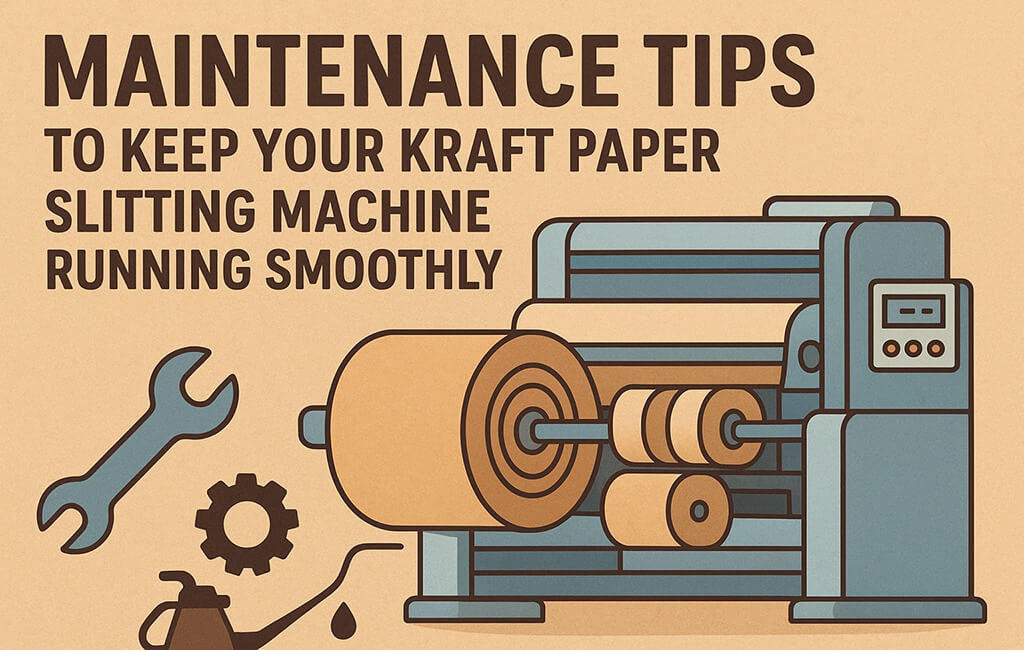
TECHNICAL GUIDE
A maintenance discussion is most useful when it references the actual kraft-paper machine and its documentation. Record component condition and operating context, and confirm tasks with qualified personnel.
Read Article ↗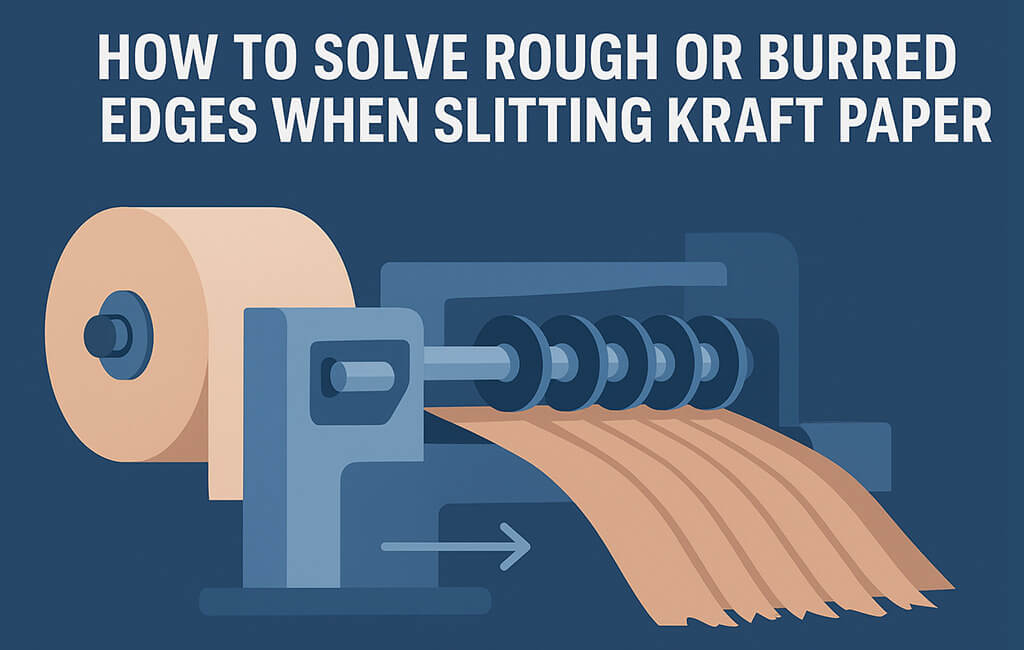
TECHNICAL GUIDE
Rough edges should be described against the paper grade, blade arrangement and operating conditions. Document the defect and follow approved procedures when seeking a configuration or maintenance review.
Read Article ↗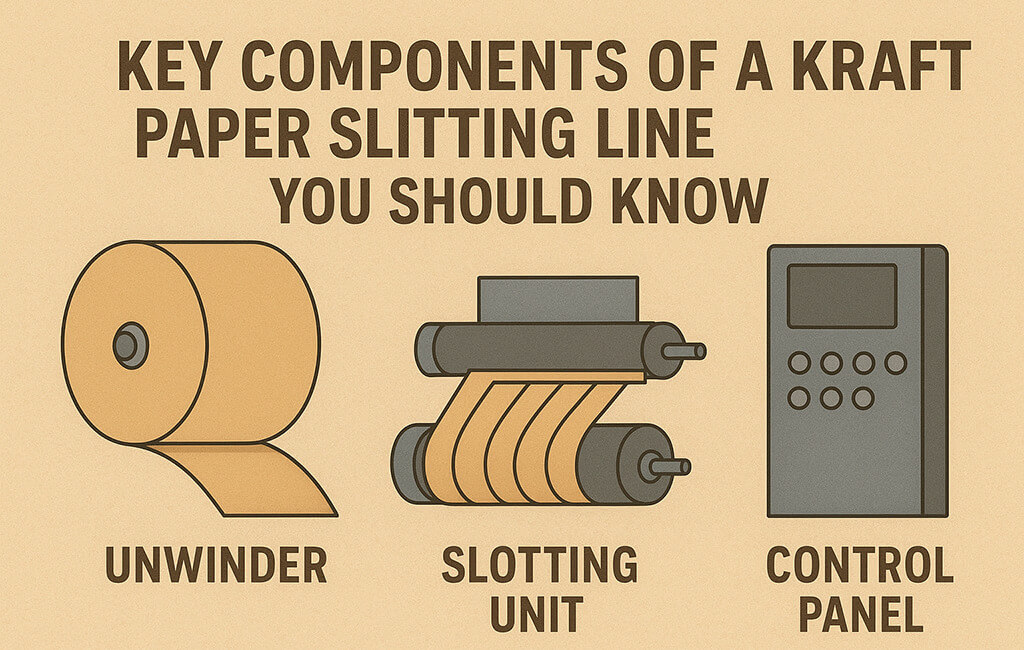
TECHNICAL GUIDE
Unwinding, guiding, cutting and rewinding components work together to form the finished kraft-paper roll. Review each component’s role without assuming the same configuration is used on every machine.
Read Article ↗YOUR MATERIAL. YOUR FINISHED ROLL.
Share your material, roll dimensions and production requirements. Start with the information you have.