Kraft and Packaging Paper
Share the paper grammage, jumbo-roll size and desired roll width. Include the required finished diameter and how the rolls will be used.

EQUIPMENT & APPLICATIONS
Match your paper grade, parent roll and finished-roll requirements to a suitable slitting and rewinding configuration. Compare the listed models, then confirm the details that matter for your production. As a paper slitting machine manufacturer and supplier, DJH helps you compare the proposed equipment against your paper grade, grammage, slit widths and finished-roll dimensions.
Application reference · select the configuration for your material
MATERIAL & PRODUCTION REQUIREMENTS
Compare material requirements and winding formats before defining the final machine configuration.
MATERIAL & OUTPUT
Kraft, coated and thermal papers have different handling and cutting needs. Review grammage, coating, parent-roll condition and the finished-roll format together.
Share the paper grammage, jumbo-roll size and desired roll width. Include the required finished diameter and how the rolls will be used.
Describe the coating or laminate and your edge-quality requirements. Mention dust, coating damage or winding issues seen in the current process.
Provide coating information, roll length and core size. Small finished-roll applications should also be reviewed through the thermal-paper category.
THE PAPER MACHINE RANGE
Compare the formats below and identify the paper grades and finished rolls you intend to run.
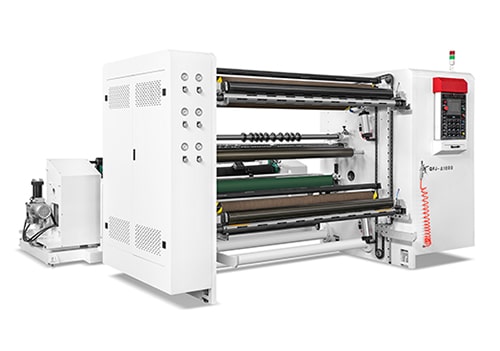
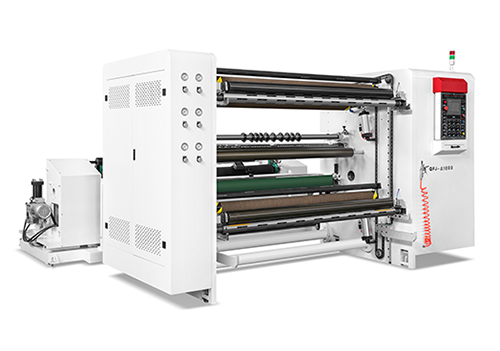
A horizontal paper-converting configuration with the largest listed parent-roll diameter in this comparison.
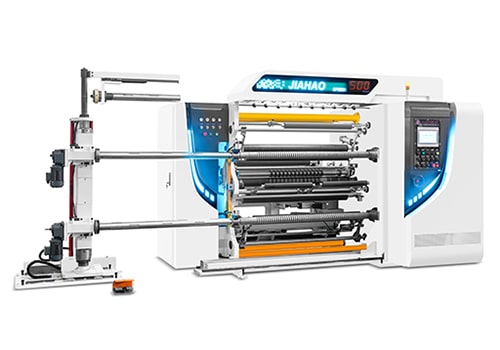
A horizontal configuration to review where the listed roll sizes and slit-width requirement fit the paper application.
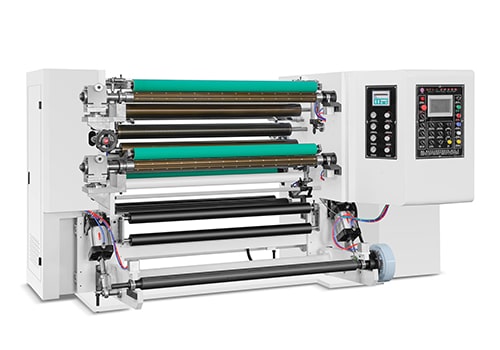
A vertical format with a smaller listed finished-roll diameter. Include installation space and roll handling in the review.
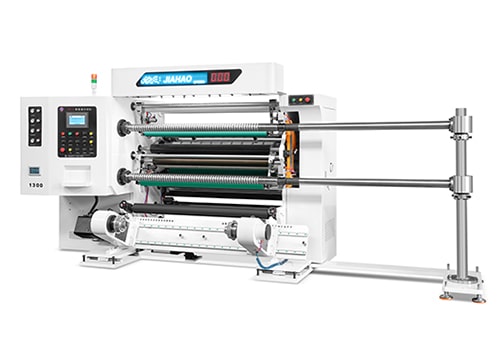
Compare this vertical format against the actual paper, slit pattern and roll-change requirements.
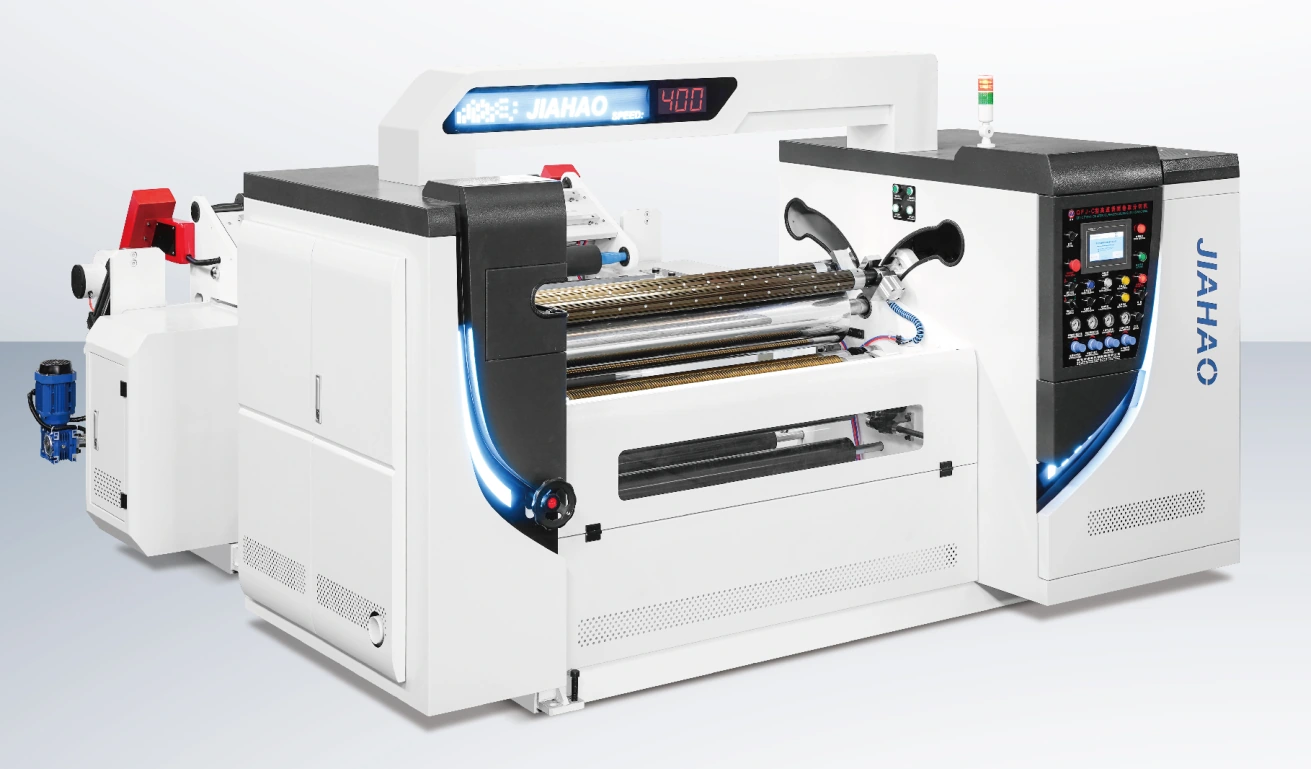
A centre-surface configuration. Minimum slit width depends on the selected working width; confirm contact conditions and finished-roll requirements.
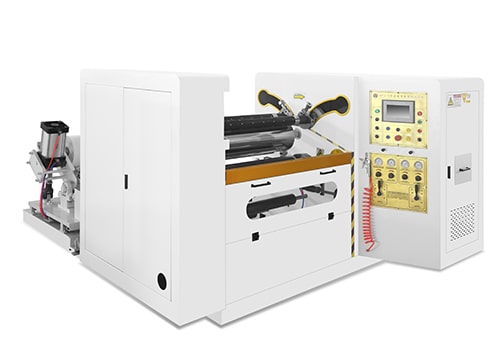
A centre-surface format with width-dependent minimum slits. Confirm the selected working width, material and cutting configuration.
SIDE-BY-SIDE
| Model | Format | Max. mechanical speed | Min. slit width | Parent-roll diameter | Finished-roll diameter |
|---|---|---|---|---|---|
| QFJ-A400 | Horizontal High-Speed | 400 m/min | 30 mm | 1,200 mm | 1,000 mm |
| QFJ-A500 | Horizontal High-Speed | 500 m/min | 20 mm | 800 mm | 600 mm |
| QFJ-B200 | Vertical | 200 m/min | 20 mm | 700 mm | 400 mm |
| QFJ-B500 | Vertical High-Speed | 500 m/min | 20 mm | 700 mm | 400 mm |
| QFJ-C400 | Centre-Surface | 400 m/min | 5 / 10 mm | 1,200 mm | 600 mm |
| QFJ-C200 | Surface Winding | 200 m/min | 10 / 20 mm | 1,000 mm | 600 mm |
Parent-roll diameter is the diameter of the incoming roll, not the material working width. Confirm working width, roll weight and operating range for your application.
APPLICATION & PROCESS
Consider parent-roll weight, dust at the slit edge and the firmness needed for downstream converting. Large roll diameters also affect loading and finished-roll removal.
Surface marking, coating condition and edge dust influence the cutting and contact arrangement. Include any printed register or inspection requirement in the brief.
Thermal coatings and layered label constructions require material-specific handling. Finished diameter, core and roll length should be defined alongside slit width.
Minimum slit width changes with machine construction and, on some surface-winding models, working width. Compare the actual configuration rather than applying one minimum across the range.
APPLICATION & PROCESS
Use a representative web and the intended slit pattern. Review edge condition, lane separation and finished-roll build at an agreed speed. Record the material, setup and results so the trial can be compared with the final supply.
MACHINE FORMATS & CONFIGURATIONS
Horizontal, vertical and centre-surface layouts serve different roll requirements. Compare parent-roll capacity, finished diameter and winding construction before choosing a speed range.
| Model | Winding format | Listed speed | Min. slit | Parent Ø | Finished Ø |
|---|---|---|---|---|---|
| QFJ-A400 | Horizontal · air-shaft rewinding | 400 | 30 | 1,200 | 1,000 |
| QFJ-A500 | Horizontal · differential-shaft rewinding | 500 | 20 | 800 | 600 |
| QFJ-B500 | Vertical · differential-shaft rewinding | 500 | 20 | 700 | 400 |
| QFJ-C400 | Centre-surface contact winding | 400 | 5 / 10 | 1,200 | 600 |
Values describe the configurations shown, rather than guaranteed production performance. Width-dependent slit limits are explained below. Material grade, thickness, slit pattern and final equipment scope determine suitability. Different versions of the same model must be compared using a matching specification.
A large-roll horizontal layout with separate servo control for each rewind shaft. Chain unloading and independent shaftless loading address roll-handling requirements.
Differential rewind shafts and separate servo control provide a configuration to discuss when slit lanes need individual winding accommodation.
An integrated vertical format for smaller finished-roll diameters. Consider operator access, core preparation and handling alongside available floor space.
Separate servo control for the winding shafts. The 1,300 mm configuration lists a 5 mm minimum slit; the 1,800 mm configuration lists 10 mm. A connected-layout version lists an 800 mm parent roll.
CONNECTED ENGINEERING
Slitting quality depends on how the complete web path works together. Review each stage against your material and output.
Parent-roll diameter, weight and core dimensions determine the starting conditions.
Web position and tension affect how the material arrives at the cutting section.
Cutting method, blade arrangement and substrate determine the edge requirements.
Core size, finished diameter and roll structure define the required output.
FOR YOUR INQUIRY
Provide the details you know. Identify anything that remains unconfirmed so the discussion starts from the correct conditions.
| Requirement | What to Provide |
|---|---|
| 01 | Paper grade and grammage |
| 02 | Parent width, diameter, weight and core |
| 03 | Finished slit width, roll diameter and core |
| 04 | Target speed |
| 05 | Edge and winding requirements |
TECHNICAL RESOURCES
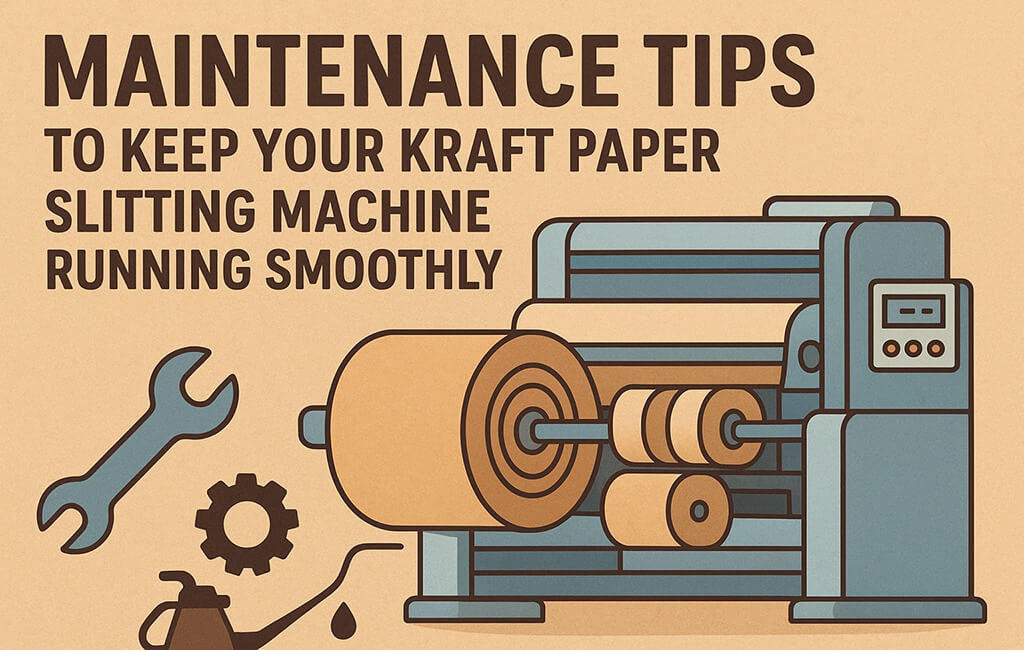
TECHNICAL GUIDE
A maintenance discussion is most useful when it references the actual kraft-paper machine and its documentation. Record component condition and operating context, and confirm tasks with qualified personnel.
Read Article ↗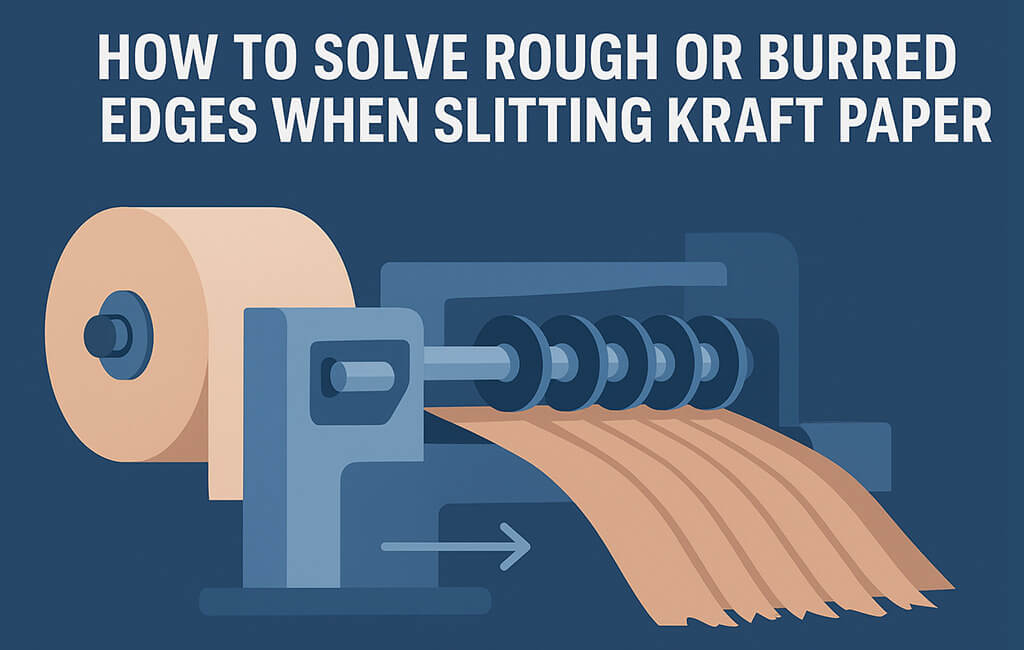
TECHNICAL GUIDE
Rough edges should be described against the paper grade, blade arrangement and operating conditions. Document the defect and follow approved procedures when seeking a configuration or maintenance review.
Read Article ↗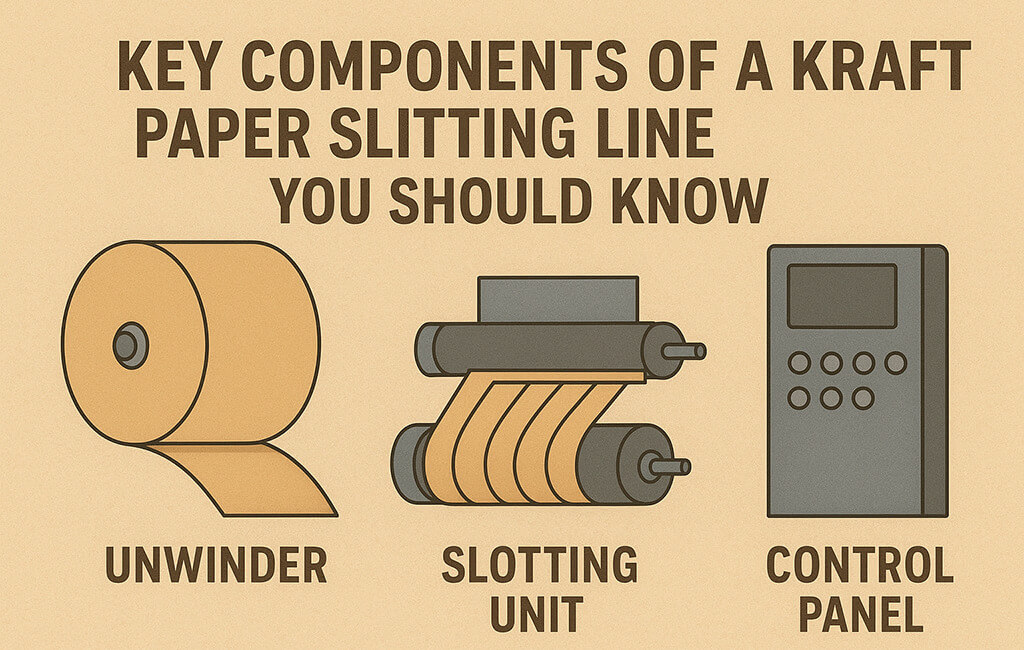
TECHNICAL GUIDE
Unwinding, guiding, cutting and rewinding components work together to form the finished kraft-paper roll. Review each component’s role without assuming the same configuration is used on every machine.
Read Article ↗QUOTATION & SUPPLY SCOPE
Supply paper grade and grammage with the parent roll and finished-roll targets. Compare cutting conditions, dust control requirements and winding construction against the paper you actually convert.
Ask for standard equipment and optional items to be listed separately. Include commissioning, operator training, documentation and initial spare-part requirements in the discussion.
Provide quantity and destination. Confirm price, currency, delivery basis, packing, production schedule and any excluded freight or import charges in the quotation.
Agree representative material inspection, measurement criteria and supplied configuration before ordering. Confirm warranty terms, installation responsibilities and spare-part support with the proposal.
BEFORE YOU SPECIFY
Start with grammage, parent-roll size and finished-roll format. Compare the listed models, then confirm the complete configuration for your paper.
No. The listed value is a maximum mechanical-speed reference. The paper, slit pattern, roll condition and configuration affect production speed.
The original specifications identify customization for some diameter fields. Confirm the required diameters, load and handling arrangement in the quotation.
Gsm describes paper mass per area. Thickness is a separate measurement. Provide both when available; do not substitute one for the other.
YOUR MATERIAL. YOUR FINISHED ROLL.
Share your material, roll dimensions and production requirements. Start with the information you have.