
Feeling the pressure to get your new paper bag making line running perfectly? The success of that major investment hinges on something that happens upstream: the quality of the paper rolls you feed it. A poorly executed slitting process can lead to constant web breaks, registration errors, and frustrating downtime, turning your high-speed line into a slow-moving headache. The key to avoiding this is proper planning for paper slitting for paper bag making lines, which means starting your thinking at the bag machine and working backward.
Effective planning involves matching the slitter's capabilities directly to the paper bag machine's requirements. This means focusing on the specific paper types and grammage, the required finished roll widths, and operational factors like tension control and winding quality, rather than just the slitter's maximum speed. The goal is to produce consistent, high-quality rolls that prevent downtime on the bag line.
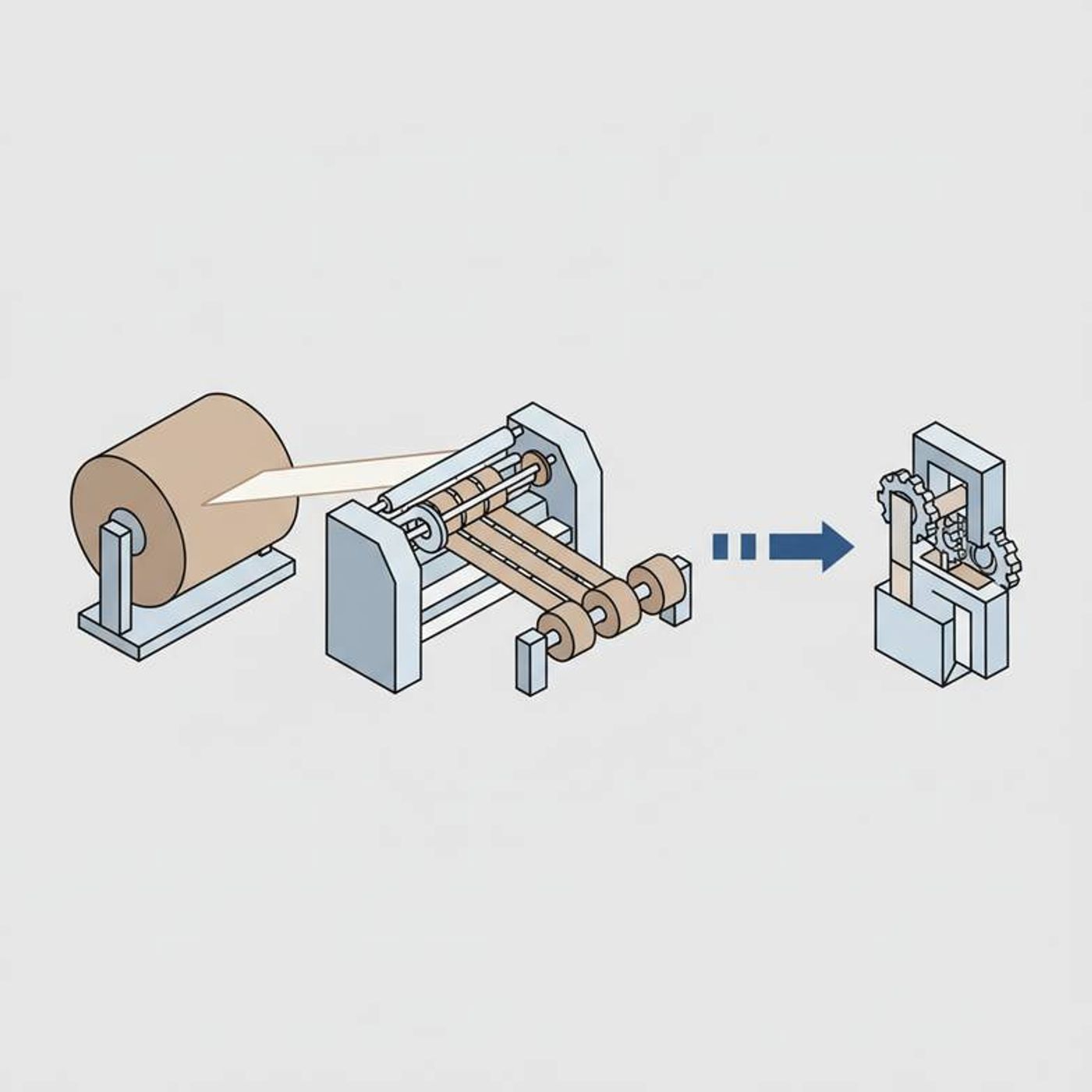
Now that we’ve established the core principle—that the bag machine is the boss—let's dive into the practical details. Understanding how to connect the needs of your bag line to the features of a slitter rewinder is what transforms this from a risky purchase into a smart, strategic investment.
What Defines the 'Best' Slitter for My Bag Line?
You're searching for the "best" slitter, but every supplier's brochure says their machine is number one. This can be confusing and doesn't really help you make a safe choice for your factory. In my experience, the biggest risk isn't buying a "bad" machine, but buying a machine that is a bad fit for your specific paper and production needs.
The "best" slitter is simply the one that reliably produces rolls that match your paper bag machine's diet. Think about its required paper type and weight, the exact roll dimensions it needs, and how you can ensure the maximum possible uptime for the entire line.
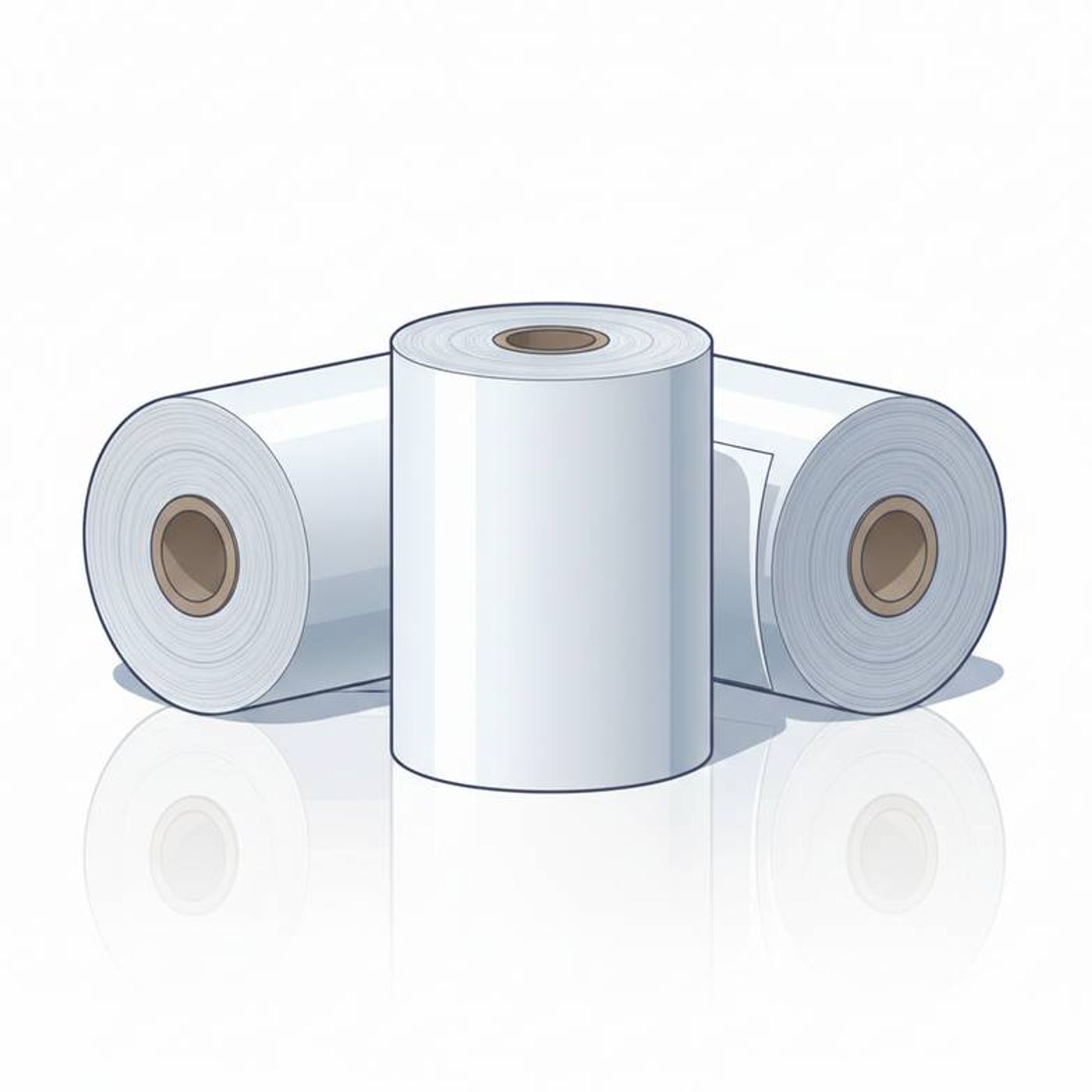
Start with Your Paper Bag Machine's Needs
Before you even look at a slitter's specifications, you need to have a crystal-clear profile of the rolls your paper bag machine requires to run efficiently. I always ask customers to define this first. It’s your "demand," and the slitter is the "supply."
- Paper Type & Grammage (GSM): Are you running virgin kraft paper, recycled stock, or coated paper? Recycled paper, for example, has shorter fibers and more variations in thickness. It requires a slitter with a much more sophisticated tension control system to prevent web breaks. Heavier grammage papers (e.g., 100-140 GSM) used for shopping bags need a machine with a robust frame and a cutting system that can handle the extra force without creating a lot of dust.
- Finished Roll Widths: This seems obvious, but it's crucial. The slitter must be able to consistently and accurately cut the precise widths your bag machine is designed for. Inaccuracy here leads to waste and registration problems down the line.
- Finished Roll Diameter: This is a huge, often underestimated factor in your line's overall efficiency. A larger finished roll diameter coming off the slitter means fewer roll changes on the paper bag machine.
The Hidden ROI of Fewer Roll Changes
Let's do some quick math. Imagine your bag machine requires a roll change every 40 minutes. If each change takes 5 minutes (including splicing, re-threading, and getting back up to speed), you're losing at least 5 minutes of production every hour. Over an 8-hour shift, that's 40 minutes of lost production time.
Now, what if you invest in a slitter that can produce rolls with a larger diameter, pushing that changeover interval to every 80 minutes? You’ve just cut your roll-change downtime in half, gaining 20 minutes of production per shift. Over a year, that adds up to a significant amount of extra output and profit, all because you planned your slitting process around the needs of the downstream machine.
Why are Tension and Winding More Important than Max Speed?
It's so tempting to get caught up in the headline numbers, especially maximum slitting speed. But I've seen many factory managers focus on a high "meters per minute" number only to discover their fast machine produces rolls that are unusable. What good is a fast slitter if it causes constant breaks and jams on your multi-million dollar bag making line?
Consistent tension control and high-quality winding are what directly prevent the most common and costly problems in paper bag production. Things like web breaks, telescoping rolls, and registration errors are almost always symptoms of poor roll quality, not a slow bag machine.
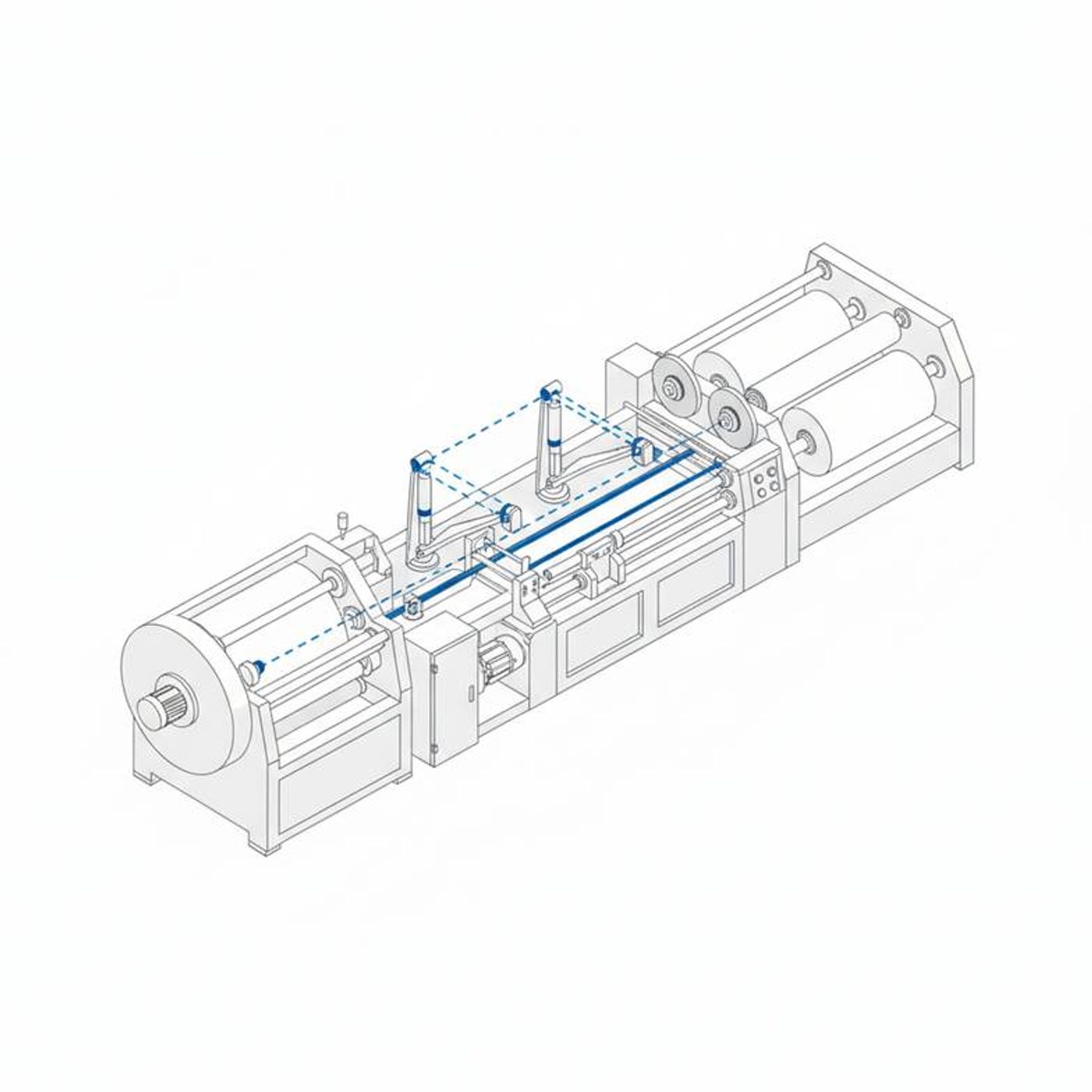
The Critical Role of Tension Control
Paper, especially the kind used for bags, has a certain amount of natural stretch. A good slitter's job is to manage this stretch perfectly from the unwind stand all the way to the finished, rewound rolls.
- Too little tension: The paper web can wander, flap, or wrinkle, leading to uneven cuts and poorly wound rolls.
- Too much tension: You stretch the paper out. When it's wound into a roll, that tension is trapped. As the roll sits, or as it unwinds on the bag machine, that tension can release, causing the roll to deform or the paper to break.
A modern slitter rewinder should have an automatic tension control system, often using a "taper tension" setting. This means it applies high tension at the beginning of the rewind core and gradually reduces it as the roll builds up in diameter. This creates a roll that is solid at the core but not overly stretched on the outer layers—perfect for stable unwinding on the bag machine.
Winding Quality: The Foundation of a Good Roll
The way a roll is wound is just as important as the slitting itself. The goal is a finished roll with straight sides and uniform density from the core to the outer edge.
- Roll Density: If a roll is wound too loosely ("soft"), it can deform during handling or "telescope" (when layers slide out sideways). If it's wound too tightly, it traps excessive tension and can even crush the core. For papers with inconsistent thickness, like some recycled grades, a differential winding shaft is essential. These shafts allow each individual slit roll to slip slightly, compensating for gauge variations and ensuring every roll is wound with the same, perfect tension.
- Edge Quality & Dust: The cutting method is key here. For most paper bag applications, shear cutting is far superior to crush cutting. Shear cutting uses two rotary knives like a pair of scissors, giving a clean cut with minimal fiber fracturing. Crush cutting breaks the paper along a line, which generates a significant amount of paper dust. This dust is a huge enemy on the production floor—it can contaminate glue applicators, clog sensors, and create a messy, unsafe work environment. Reducing dust at the slitting stage is a massive long-term win.
Should I Choose an Offline or Inline Slitting Unit?
You have to decide where this slitting process will happen. Will it be a large, separate "offline" machine that produces finished rolls for inventory? Or will it be a smaller "inline" unit that is part of the paper bag machine itself? This feels like a simple layout decision, but believe me, it has massive operational and strategic consequences for your entire factory.
An offline (jumbo roll) slitter offers tremendous flexibility to supply multiple lines and handle different jobs, but it requires more material handling. An inline unit creates a simpler, more direct workflow but can become a single point of failure that shuts down your entire line if it has a problem.
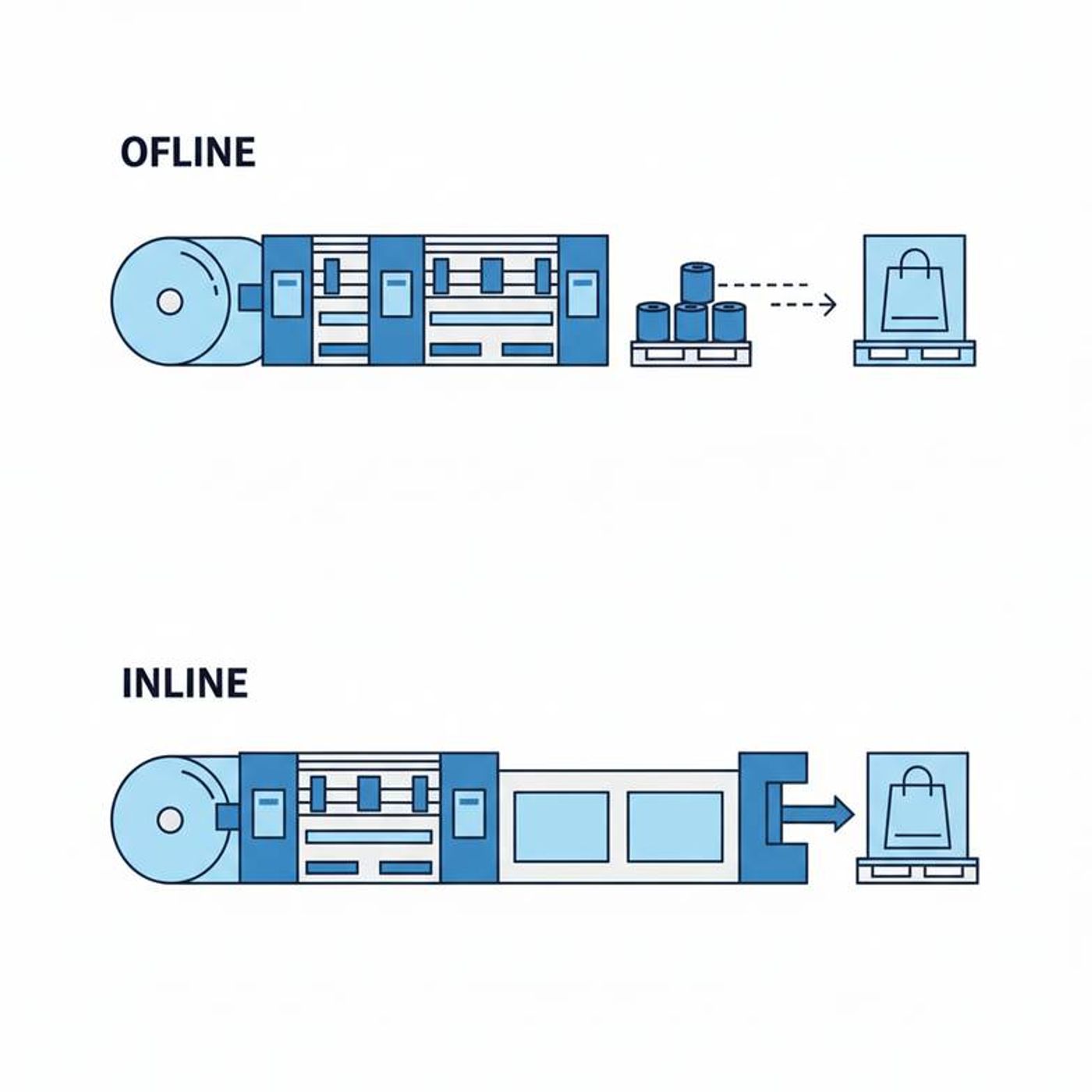
Comparing Offline vs. Inline Slitting
Choosing between these two philosophies depends entirely on your production volume, product mix, and tolerance for risk. Here’s a breakdown to help you think it through.
| Feature | Offline Slitter (Jumbo Roll Slitter) | Inline Slitting Unit |
|---|---|---|
| Workflow | Jumbo Roll → Slitter → Inventory of Slit Rolls → Bag Machine | Jumbo Roll → Inline Slitter/Bag Machine → Finished Bag |
| Flexibility | High. One slitter can feed multiple bag lines or other machines. Can easily switch between different paper types and widths. | Low. Tied to a single bag machine. A change in job might require stopping the entire line. |
| Efficiency | The slitter can run at its own optimal speed, independent of the bag machine, maximizing its own output. | The slitter's speed is limited by the slowest part of the integrated line. |
| Risk | Lower System Risk. If the slitter goes down for maintenance, the bag machines can continue running from the inventory of slit rolls. | Higher System Risk. A problem with the slitter (e.g., knife change, web break) stops the entire production line. A single point of failure. |
| Quality Control | Easier. You can isolate and quarantine any bad rolls produced by the slitter without stopping the bag line. | Harder. A slitting defect might not be noticed until it causes a problem downstream, leading to more waste. |
| Footprint & Handling | Requires more floor space and material handling equipment (forklifts, cranes) to move rolls. | Smaller overall footprint and less material handling. |
For most factories I've worked with, especially those with multiple production lines or a need for flexibility, an offline jumbo roll slitter offers better overall risk management and operational stability. It decouples the slitting process from the bag-making process, allowing each to run at its most efficient pace.
How Can I Verify a Machine Before Buying It?
So, you've read the brochures, watched the videos, and talked to sales teams. But how do you really know if a slitting machine from a supplier, who might be halfway around the world, is going to work with your specific paper stock in your factory?
You need to shift your mindset. Stop asking suppliers, "Is your machine good?" and start telling them, "Show me that your machine is good for my application." The single best way to de-risk this purchase is to request a sample trial using your own material and define clear, measurable acceptance criteria.
Preparing for a Meaningful Sample Trial
Don't just send a small sheet of paper. To get a real result, you need to provide the supplier with the right materials and the right instructions.
- Send Your Paper: Ship a representative section of one of your jumbo rolls to the supplier. Critically, don't just send the "perfect" paper from the middle of the roll. Include sections that have the typical variations and challenges you face every day.
- Provide Clear Specifications: Tell them exactly what you need.
- Parent roll grammage and material type.
- Desired finished slit widths (with tolerances).
- Desired finished roll diameter.
- The core size (inner diameter) you use.
- Request Evidence: Ask them to record the trial and send you photos and videos, in addition to the finished rolls.
Your RFQ & Verification Checklist
When you get the trial rolls back, or when you are evaluating a quotation, here is what you need to be asking and checking. This turns you from a passive buyer into an expert evaluator.
- Ask the Supplier:
- "Based on my [kraft/recycled/coated] paper at [X] GSM, what cutting method (shear/crush) do you recommend and why?"
- "What kind of tension control system is included? Is it fully automatic?"
- "What features are included to minimize paper dust?"
- "For my material, which has some thickness variation, do you recommend a standard air shaft or differential winding shafts? Why?"
- "Can you provide a full, unedited video of the trial run with my paper?"
- Check the Trial Rolls:
- Edge Quality: Are the edges smooth and clean, or are they fuzzy and dusty? A dusty edge means a dusty factory.
- Roll Density: Press the roll with your thumbs. Is it rock-hard or mushy? It should be firm and consistent all the way across. A roll that is hard on the ends and soft in the middle is a recipe for disaster.
- Visual Inspection: Look for any signs of telescoping, wrinkles, or starring. The sides should be perfectly flat and flush.
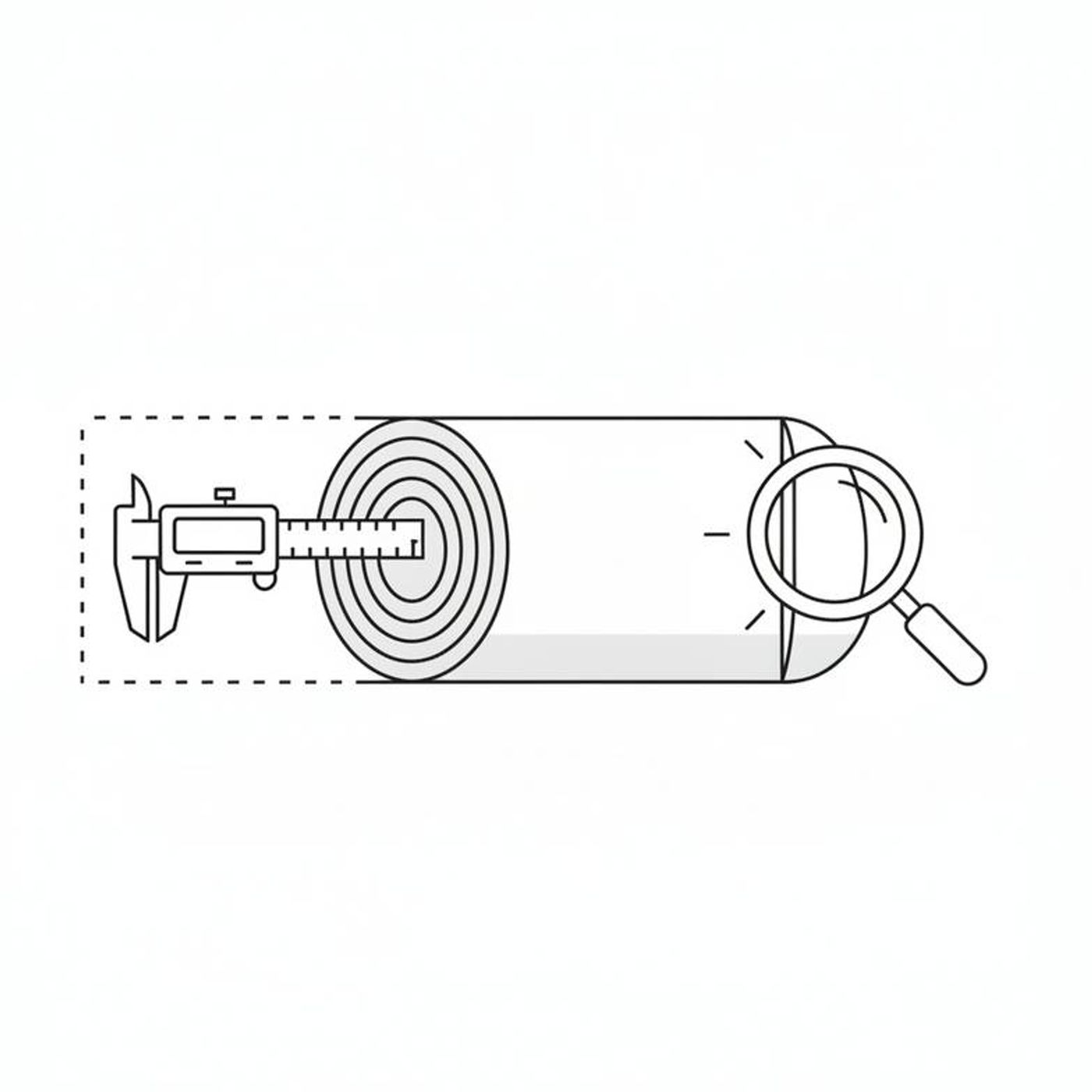
- Measure Everything: Don't just trust your eyes. Use calipers to measure the slit widths. Use a tape measure for the diameter. Does it match what you asked for?
This process gives you concrete data to make a decision, moving beyond simple sales claims.
Frequently Asked Questions
What's the difference between shear cutting and crush cutting for paper?
Shear cutting uses two rotating blades that act like scissors to make a clean cut. This is ideal for paper as it minimizes dust and creates a smooth edge. Crush cutting uses a single blade to press the paper against a hard anvil roll, fracturing it. This is simpler but creates significant dust and a rougher edge, which is generally not recommended for quality bag production.
Can I use one slitter for both paper and film?
While some machines are marketed as "universal," it's generally a bad idea. Paper and film have vastly different properties. Paper requires robust cutting and dust control, while film requires extremely sensitive tension control to prevent stretching. A machine optimized for one is almost always compromised for the other. It's better to use dedicated equipment.
How much paper dust is acceptable?
Ideally, close to zero. Any amount of dust is a problem that can lead to maintenance issues with downstream machinery, create safety hazards, and lower the quality of your final product. Choosing a slitter with a proper shear cutting system is the most effective way to minimize dust at the source.
What is a differential winding shaft and do I need one?
A differential shaft has a series of slip-clutch rings along its length. It allows each individual rewinding roll to rotate at a slightly different speed. You need this if your parent material has variations in thickness (gauge), which is very common with recycled paper. It ensures every single roll on the shaft is wound at the exact same tension, creating a set of perfectly uniform finished rolls.
Conclusion
Effective planning for paper slitting for paper bag making lines is fundamentally an exercise in risk management. It's about shifting your focus from a machine's headline specifications to its practical ability to serve your primary production line. The most successful paper bag operations I've seen are the ones that treat their slitter not as a separate, standalone machine, but as the critical first step in a single, integrated system. By starting with your bag machine's needs, prioritizing tension control and winding quality over raw speed, making a strategic choice between offline and inline systems, and—most importantly—verifying performance with your own materials, you set your entire operation up for smoother, more profitable production.
When you’re ready to move from planning to action, our team at DJH Machinery is here to help. Contact us with your paper specifications, bag machine requirements, and desired roll dimensions. We can begin a detailed technical discussion to configure the right slitting solution for your factory.
Continue the Technical Review
For a closer look at the selection and operating questions raised in this guide, read Maintenance Tips to Keep Your Kraft Paper Slitting Machine Running Smoothly and compare the recommendations in How to Solve Rough or Burred Edges When Slitting Kraft Paper.