
Trying to decide between two slitting machine models can feel overwhelming. You're staring at spec sheets, and the numbers for speed and width start to look very similar. But making a choice in the QFJ-A400 vs QFJ-A500 comparison based on top-line specs alone is a huge risk. You could end up with a machine that's too much for your needs, or worse, one that can't handle your most important jobs.
The core difference is application focus. The QFJ-A400 is a high-efficiency workhorse, perfect for standardized, high-volume slitting jobs where material widths and finished rolls are consistent. In contrast, the QFJ-A500 offers greater flexibility with its larger roll capacity and wider web path, designed for converters who handle more varied, wider, or heavier parent rolls, which naturally comes at a higher initial investment.
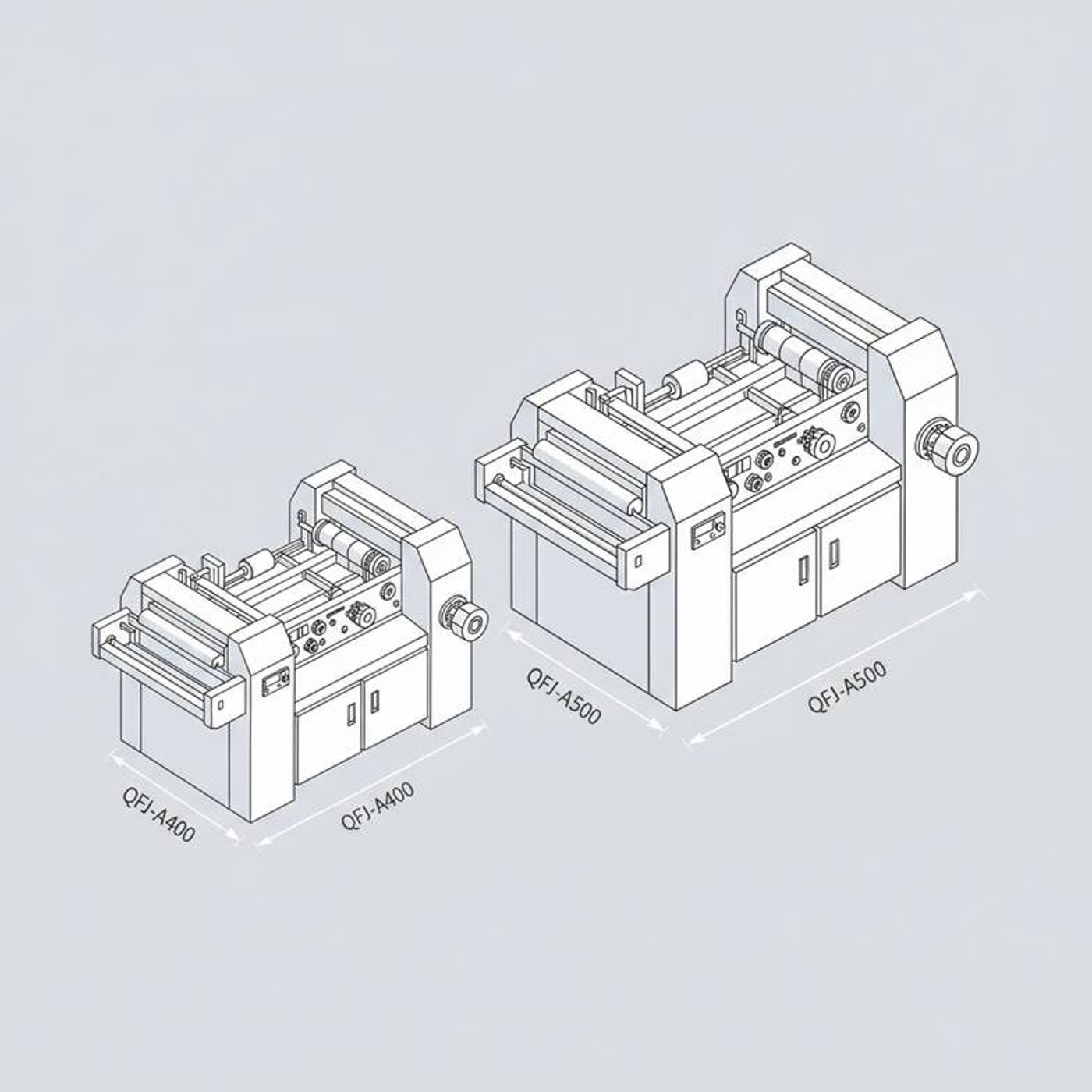
Now that you have the quick answer, let's unpack what those differences really mean for your workshop, your material costs, and your overall profitability. The choice between these two machines is really a choice about your business model.
How does the QFJ-A400 vs QFJ-A500 roll capacity impact your workshop?
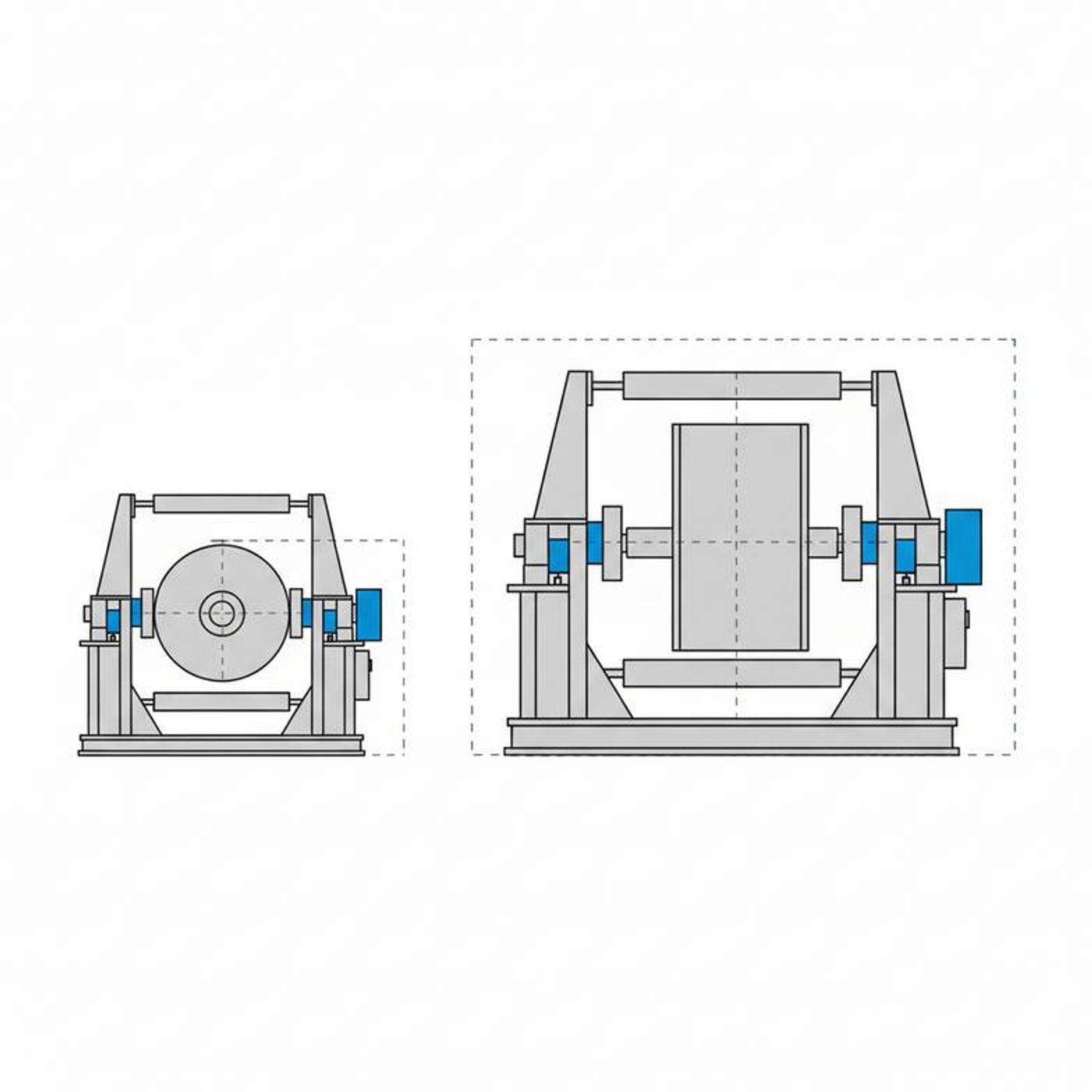
You see a bigger number for roll diameter on a spec sheet and immediately think, "Great, more material on the roll means fewer changeovers and more uptime." But have you considered if your team and equipment can actually handle that much heavier roll? The practical logistics of loading and unloading can quickly turn a theoretical advantage into a real-world bottleneck.
The QFJ-A400 is built to handle standard parent roll sizes that are generally easier and quicker to manage in a high-frequency production environment. The QFJ-A500's larger diameter and weight capacity is for businesses that process bigger jumbo rolls, but this requires having the right lifting equipment and floor space to do it safely and efficiently.
Dive Deeper: The Physics of Roll Weight
Here's something we often discuss with customers: a small increase in roll diameter leads to a surprisingly large increase in total roll weight. It’s not a linear relationship.
For example, a 1000mm diameter roll of 80 gsm paper might weigh around 800 kg. Increase that diameter to 1200mm, and the weight can jump to over 1150 kg. That extra 350+ kg is a major factor. It's the difference between a standard forklift being able to handle the job and needing a more robust, specialized lifting solution.
This is why one of the first questions we ask isn't just about the material, but about your workshop logistics.
- What kind of lifting equipment do you currently have (e.g., forklift, pallet stacker, overhead crane)?
- What is the certified safe working load (SWL) of that equipment?
- How much floor space do you have for staging these large parent rolls before they are loaded?
- How will your team move the finished rolls away from the machine?
Dive Deeper: Loading Systems and Workflow
The QFJ-A400 is often paired with simpler shafted or shaftless loading mechanisms that are quick and efficient for moderately sized rolls. An operator might use a forklift or a dedicated roll cart to position the roll for loading.
The QFJ-A500, designed for those heavier rolls we just talked about, is frequently configured with an integrated, shaftless hydraulic loading system. This allows an operator to pick up a heavy jumbo roll directly from the floor, eliminating manual lifting and reducing the risk of injury or damage to the material. While this adds to the machine's upfront cost, for a business running heavy rolls all day, the safety and efficiency gains are non-negotiable.
Think of it this way: the A400 is for a "grab and go" workflow, while the A500 is for a more "heavy-duty, planned logistics" operation.
What's the practical difference in slit width between these machines?
Looking at a wider machine like the QFJ-A500 might seem like a good way to "future-proof" your investment. The thinking goes, "it can do everything the narrower machine can do, plus more." While technically true, running consistently narrow jobs on an overly wide machine can be inefficient and can even affect the quality of your finished rolls.
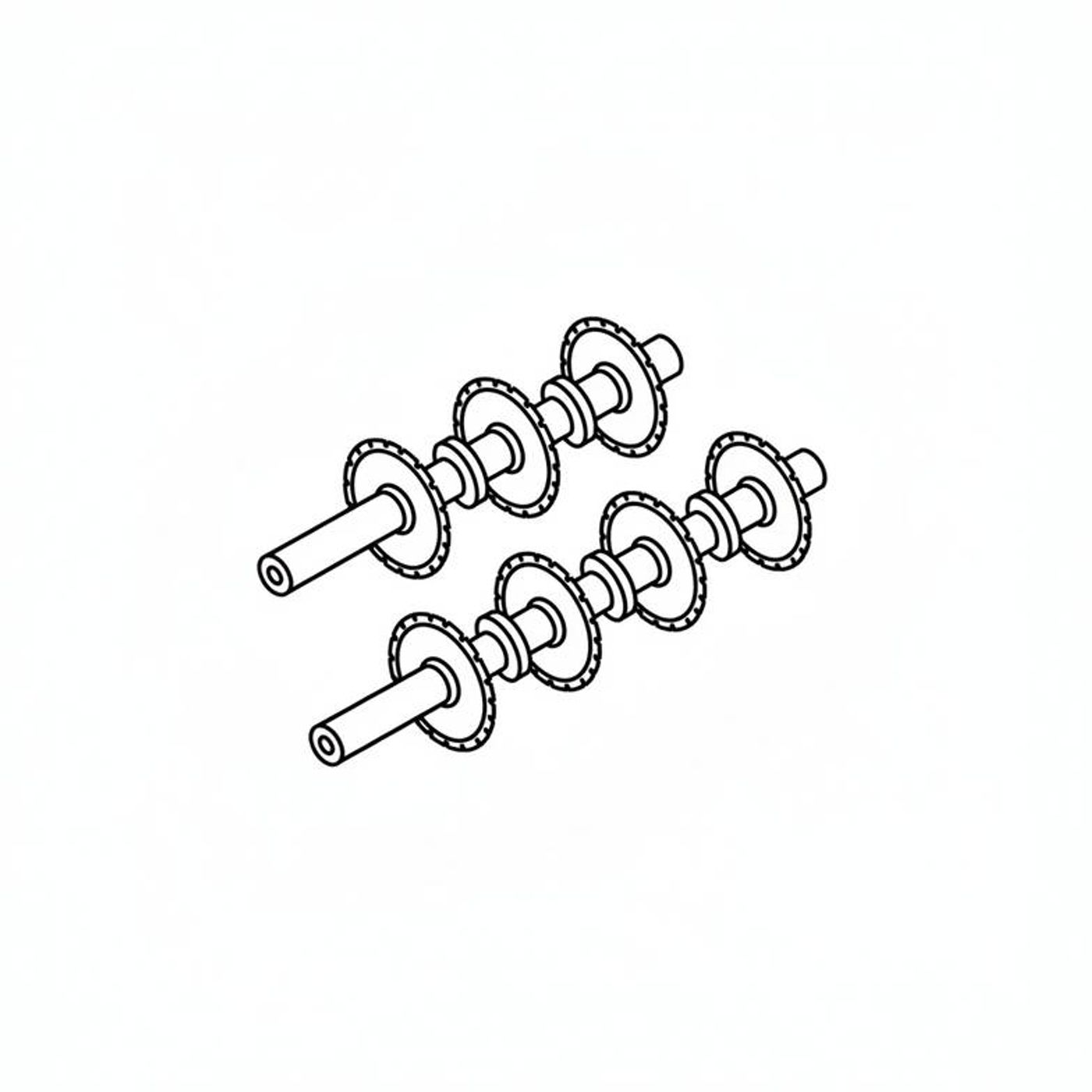
The QFJ-A400 is optimized for a range of common, narrower finished roll widths, which makes it incredibly efficient for those specific jobs. The QFJ-A500's wider web path gives you the operational flexibility to bid on jobs that require wider finished rolls or to slit more narrow rolls from a single, very wide parent roll, maximizing material yield.
Dive Deeper: Matching Machine Width to Your Order Book
The choice here really reflects your business strategy.
- The Specialist: If your business has a long-term contract to supply thousands of 80mm wide rolls of thermal paper, the QFJ-A400 is your champion. It’s designed to do that job with maximum efficiency and minimal waste. The setup is faster, and the capital investment is lower.
- The Generalist: If you're a contract slitter, your phone could ring tomorrow with a request to slit a 1200mm wide roll of film into 400mm sections. The day after, it could be a job for 50mm strips. For this kind of variable work, the QFJ-A500's flexibility is its biggest asset. It allows you to say "yes" to more customers.
A common mistake I see is buying the wider machine "just in case" without having firm orders for it. The extra capital sits idle, and you might even find that running your standard narrow jobs on it is less efficient.
Dive Deeper: Trim Waste, Yield, and Shaft Deflection
Let's look at a simple comparison of how machine width affects your material yield.
- Scenario: Standard Job | Parent Roll Width: 900mm | Finished Slit Width: 100mm (x8) | Machine Choice: QFJ-A400 | Analysis: Perfect fit. Good yield with minimal trim waste. The machine is running in its sweet spot.
- Scenario: Wide Job | Parent Roll Width: 1300mm | Finished Slit Width: 150mm (x8) | Machine Choice: QFJ-A500 | Analysis: Necessary choice. The A400 simply cannot handle the parent roll width. This is where the A500 pays for itself.
- Scenario: Inefficient Use | Parent Roll Width: 900mm | Finished Slit Width: 100mm (x8) | Machine Choice: QFJ-A500 | Analysis: Possible, but not ideal. You're using a large, heavy-duty machine for a job a smaller one could do, and the unused web capacity on the shaft offers no benefit.
Another technical point to consider is shaft deflection. The wider a machine's working width, the more robust the air shafts and rollers need to be to prevent sagging or deflection in the middle. The QFJ-A500 is built with this in mind, but it highlights why simply putting a narrow job on a wide machine isn't always a straightforward swap. You need to ensure proper tension is maintained across the entire web, even the parts you aren't slitting.
Is the maximum speed in a QFJ-A400 vs QFJ-A500 comparison really achievable?
Let's be honest, the "maximum speed" listed on a spec sheet is one of the most tempting but misleading numbers. You see 400 or 500 meters per minute and start calculating incredible daily output. The reality is, you'll likely have to run much slower to get good quality rolls from your specific material.
Maximum speed is a mechanical rating—the fastest the motors and rollers can physically spin under ideal test conditions with a perfect material. Your practical, sustainable, money-making speed is almost always lower. It's dictated by your material's properties, the required slit quality, and the finished roll diameter.
Dive Deeper: The Speed vs. Quality Trade-off
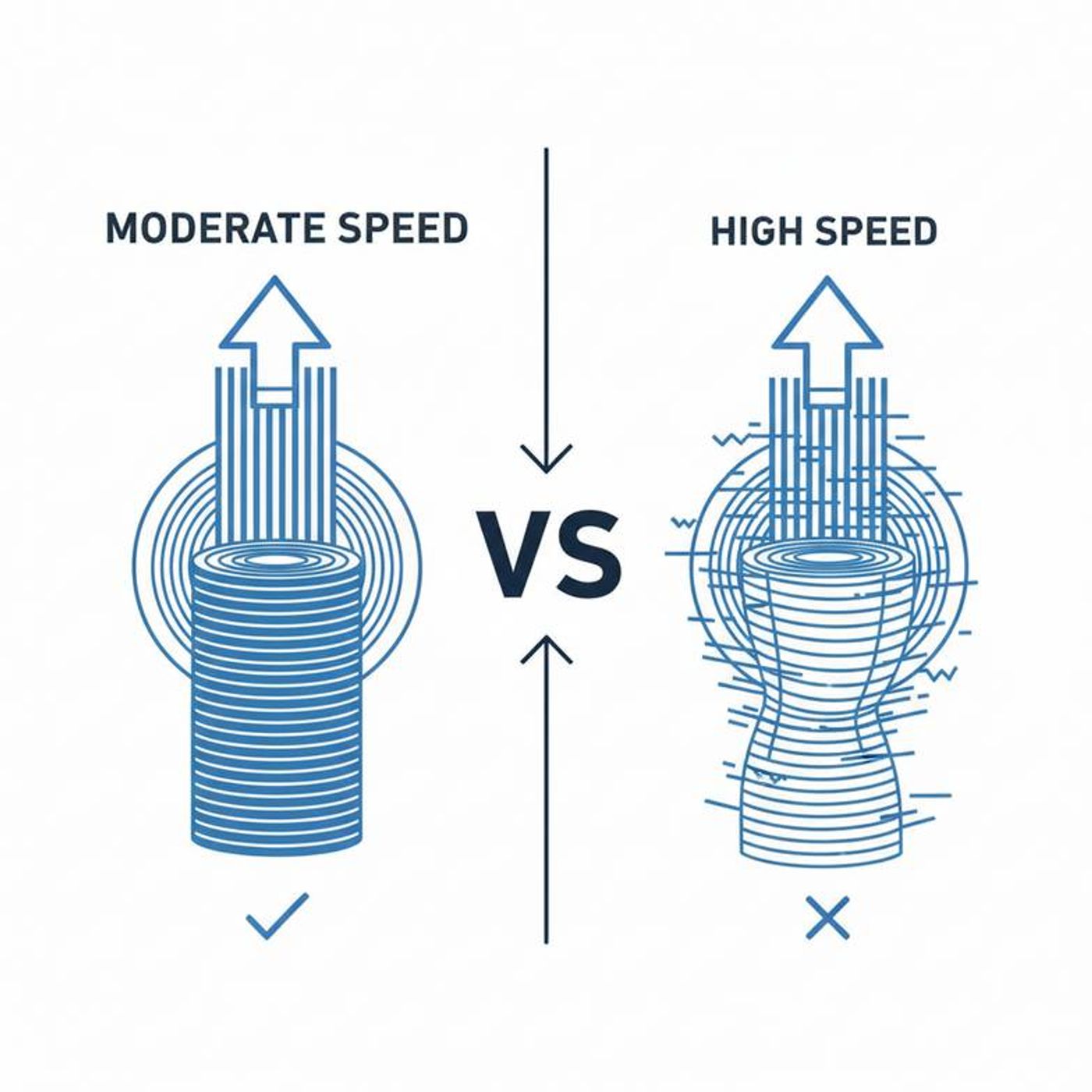
This is the most important trade-off in slitting. Pushing for speed can introduce a host of problems:
- Web Flutter: The material can start to vibrate or flap between rollers, leading to inaccurate slitting.
- Poor Tension Control: At high speeds, it's harder for the tension system to react to tiny changes, which can cause web breaks or inconsistent winding.
- Bad Rolls: Winding too fast can trap air between the layers, causing "starring" or "telescoping" on the finished rolls, making them unusable for your customer.
- Knife Wear: For some materials, excessively high speeds can lead to premature wear on your slitter knives.
I often talk to customers who are surprised they can't run their delicate 12-micron PET film at the same 400 m/min as a standard 80 gsm kraft paper. It's a perfect example of where the material dictates the speed, not the machine's top-end capability.
Dive Deeper: Factors That Determine Your Real-World Speed
So, what determines your actual production speed? It's a combination of factors:
- Material Type and Thickness: Thin films, stretchy nonwovens, and abrasive foils all require slower speeds and more precise tension control than standard paper.
- Tension Sensitivity: Some materials need to be run at very low tension to avoid stretching, which inherently limits the maximum speed.
- Finished Roll Quality: If your customers require perfectly flat, hard-wound rolls, you will need to run slower to achieve that density and avoid defects.
- Winding Diameter: As the rewind roll builds up in diameter, the machine often needs to slow down to maintain a constant surface speed and avoid excessive inertia.
- Operator Experience: A skilled operator knows how to listen to the machine and watch the web. They can find the optimal speed where quality is perfect and output is maximized, gently ramping up and down as needed.
When comparing the QFJ-A400 and QFJ-A500, both have high mechanical speeds, but the A500's more robust frame and drive system are designed to better manage the inertia of wider, heavier rolls running at a sustained pace.
Frequently Asked Questions
Which machine is better for a startup converting business?
This completely depends on your first contracts. If you've secured steady jobs with standard material sizes and widths, the QFJ-A400 is often the lower-risk, more cost-effective choice. If your business plan is to be a flexible, on-demand contract slitter, the A500's versatility might be worth the higher initial investment to attract a wider range of customers.
Can the QFJ-A500 run jobs that the QFJ-A400 is designed for?
Yes, absolutely. But it may not be as cost-efficient for those jobs. Setting up a wider, heavier machine for a narrow job involves more handling and could lead to more trim waste if you can't source parent rolls that efficiently match the job to the machine's width. It's like using a giant dump truck to move a single shovel of dirt.
How does the drive system differ between the two models?
While both models use reliable, modern drive systems, the QFJ-A500 is typically equipped with a more powerful main motor and a more robust transmission. This is necessary to handle the higher inertia and total weight of the larger, wider rolls it's designed for, ensuring smooth acceleration and deceleration without stressing the components.
What information should I prepare before asking for a quote?
To give you the most accurate recommendation, we need to understand your job. The most helpful information includes: material type (e.g., BOPP film, kraft paper), material thickness (in microns or gsm), parent roll maximum width, diameter, and weight, and your desired finished slit widths and finished roll diameters. Photos of your material and current rolls are also extremely useful.
Conclusion
Ultimately, the QFJ-A400 vs QFJ-A500 debate isn't about finding the "best" machine; it's about identifying the right tool for your specific production reality. The decision requires looking past the maximum numbers on a data sheet and honestly assessing your materials, order book, and workshop logistics. The QFJ-A400 excels as a specialist, delivering high efficiency on standardized, high-volume work. The QFJ-A500 is the versatile generalist, providing the flexibility to handle a wider variety of jobs, especially those involving larger and heavier rolls.
Your best choice is the machine whose operational "sweet spot" aligns with the core of your business.
To determine the most suitable and cost-effective configuration for your specific materials and finished-roll requirements, get in touch with our team. We can help you analyze your application and prepare a detailed quotation for the slitting machine that truly fits your needs.