Corona Surface Treatment
The process is intended to increase surface adhesion before printing, coating or laminating. Specify the required surface result and the measurement method with the downstream process.

SLITTING & REWINDING · QFJ-DY
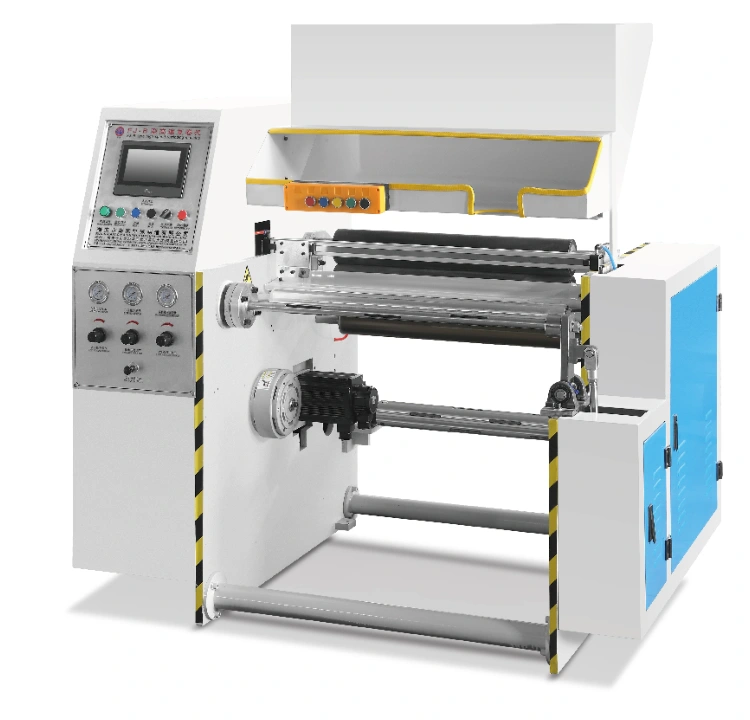
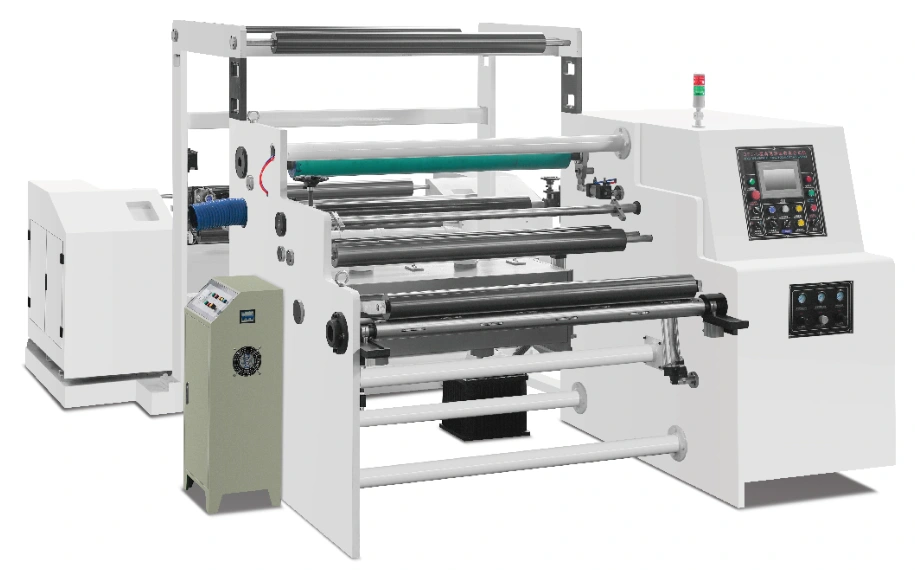
Combine surface corona treatment with slitting and rewinding. QFJ-DY lists 300 m/min, a 1,000 mm incoming-roll diameter and 600 mm finished-roll diameter, using single air-shaft winding with independent servo control.
Listed configuration values. Production speed and practical slit pattern depend on the material and the agreed machine setup.
Consider DY where surface preparation is part of a printing, coating or laminating workflow. Define the incoming surface and the treatment result required by the next process, alongside slit widths and finished-roll quality. Treatment performance needs to be assessed for the actual web and operating conditions.
CONSTRUCTION & CONTROL
The process is intended to increase surface adhesion before printing, coating or laminating. Specify the required surface result and the measurement method with the downstream process.
Treatment is combined with a converting web path. Confirm the treatment position, blade arrangement, finished widths and winding direction on the proposed layout.
An air-expanding winding shaft with independent servo control is described. Confirm core engagement, roll weight and lane requirements for the selected supply.
Agree treatment width, generator rating, electrode arrangement, ventilation and interlocks in the project specification. These items are not defined by the roll-diameter figures.
MATERIAL & FINISHED ROLL
PVC, BOPP, CPP and PET should be assessed by grade, thickness, coating and initial surface condition. Define the ink system and acceptance criteria with the printing process.
Provide the complete layer construction, the side to be treated and the next operation. Review treatment compatibility and material sensitivity before choosing settings.
Describe grade, coatings and the surface being processed. Material listings do not establish a universal treatment level or adhesion result.
PROCESS & CONFIGURATION
| Parameter | DY configuration |
|---|---|
| Listed slitting speed | 300 m/min |
| Parent-roll diameter | 1,000 mm |
| Finished-roll diameter | 600 mm |
| Winding shaft | Single air-expanding shaft |
| Winding control | Independent servo control |
Listed values describe the configuration shown. Confirm working width, roll mass, core interfaces, voltage, frequency and the complete supplied scope in the proposal. Production conditions and acceptance criteria depend on the actual material.
SETUP, OPERATION & ACCEPTANCE
Record the incoming material and surface condition, intended treatment side and downstream ink, coating or adhesive.
Specify the required measured result, test method and production conditions, including web width and speed.
Confirm slitting, winding, ventilation, interlocks and operator access with the proposed electrical and mechanical scope.
Assess the treated surface and downstream adhesion along with slit-edge quality and roll build under agreed trial conditions.
Review the floor plan, service clearance, roll-handling route and utilities before installation. Agree commissioning and operator-training requirements with the proposal. Keep the machine identification, shaft interfaces and blade dimensions available for maintenance and spare-part inquiries.
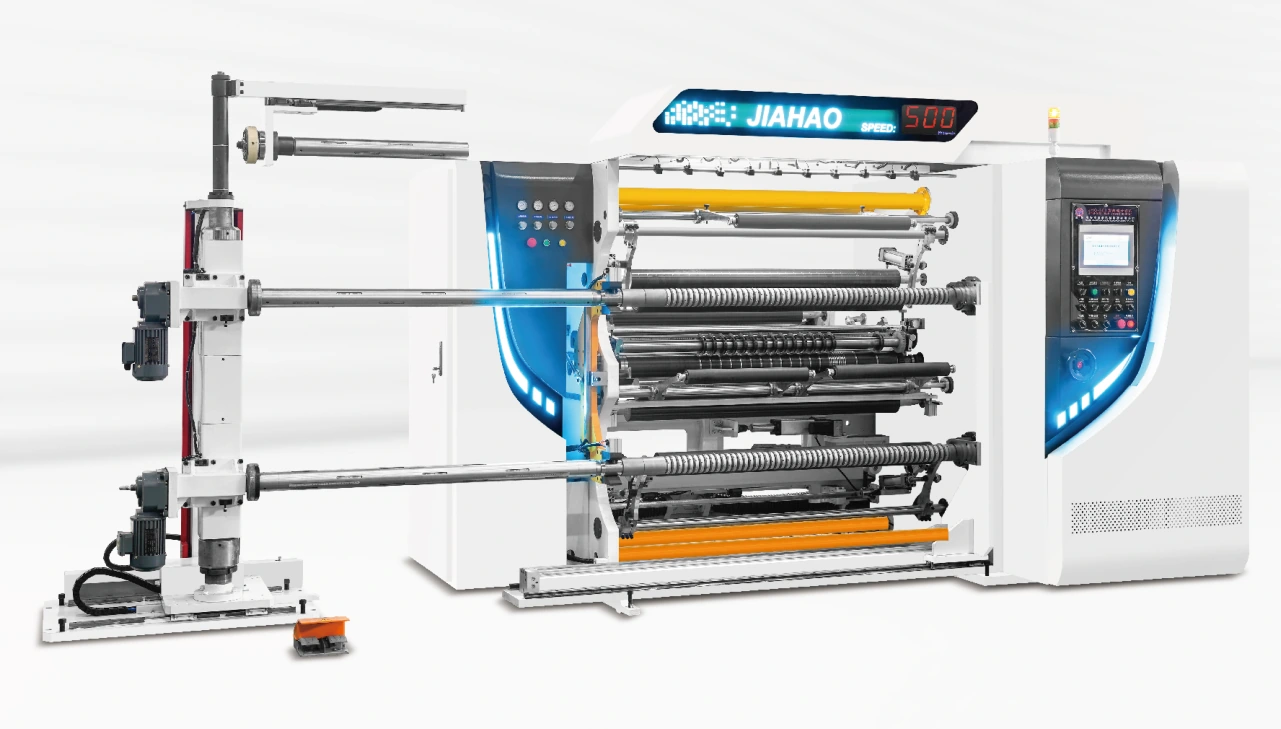
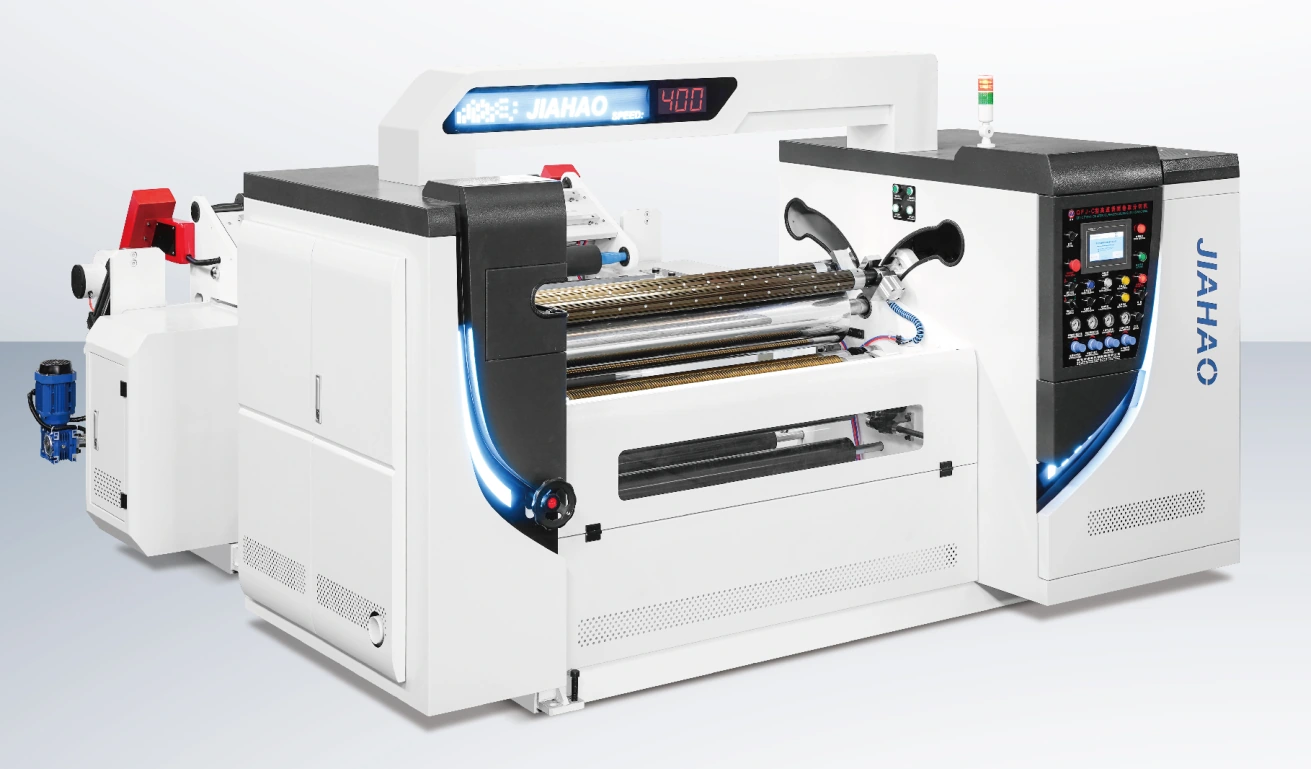
A500 and C400 focus on different slitting and winding arrangements. Choose DY when corona treatment belongs in the process; it should not be treated as an included function on every slitter rewinder.
BEFORE YOU SPECIFY
No. It is a listed machine speed. Treatment effectiveness depends on the substrate, width, speed, initial surface and selected treatment system.
No fixed surface-energy value is stated here. Agree the required measured result and test method for the intended material and downstream process.
Include the required web and treatment width in the inquiry. A matching specification is needed; these values are not provided in the listed configuration.
Suitability depends on the substrate and the intended ink, coating or adhesive. Use a material trial and downstream validation to define the appropriate process.
QUOTATION & SUPPLY SCOPE
Request a QFJ-DY quotation against your material, working width and finished-roll targets. Identify the selected version, cutting and winding arrangement, loading equipment and controls in the proposed supply.
Ask for standard equipment and optional items to be listed separately. Include commissioning, operator training, documentation and initial spare-part requirements in the discussion.
Provide quantity and destination. Confirm price, currency, delivery basis, packing, production schedule and any excluded freight or import charges in the quotation.
Agree representative material inspection, measurement criteria and supplied configuration before ordering. Confirm warranty terms, installation responsibilities and spare-part support with the proposal.
COMPARE MACHINE FORMATS
YOUR MATERIAL. YOUR FINISHED ROLL.
Share the web construction, incoming roll, slit pattern and finished-roll requirements. Include the information you already have.