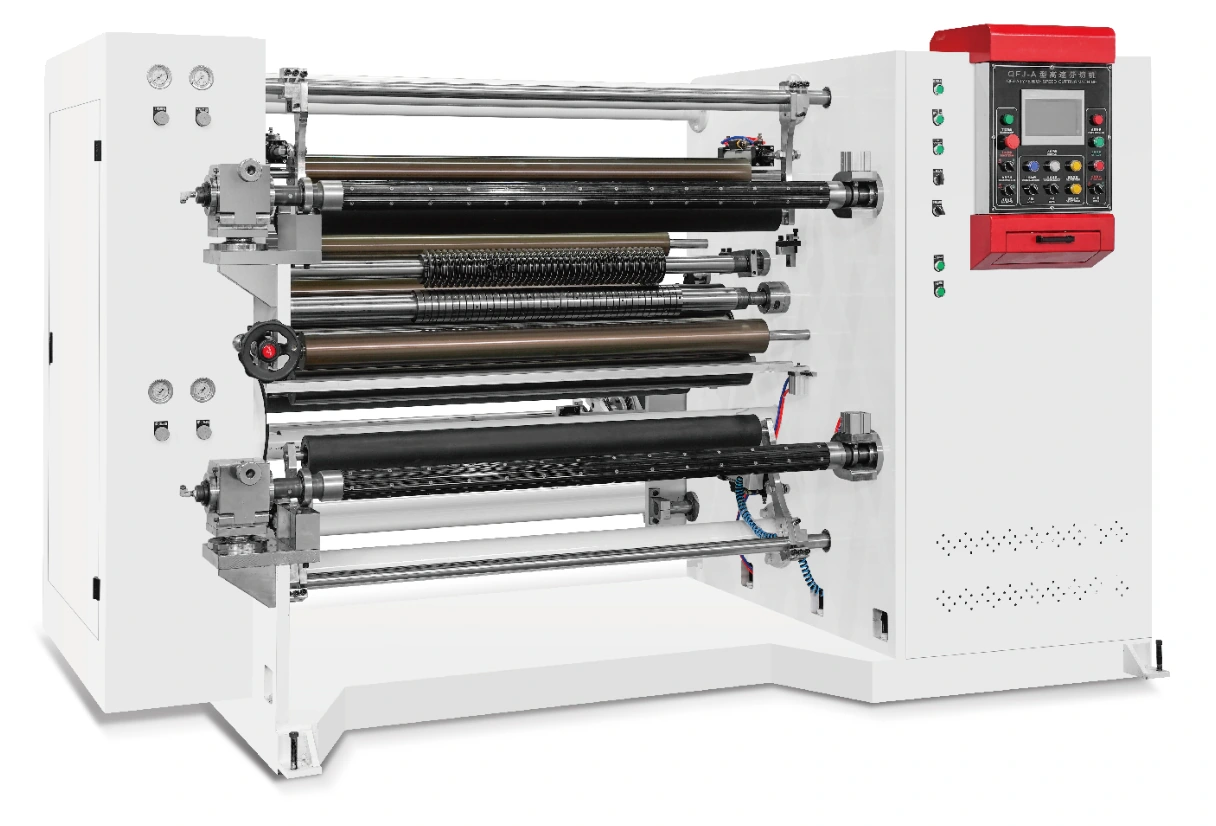
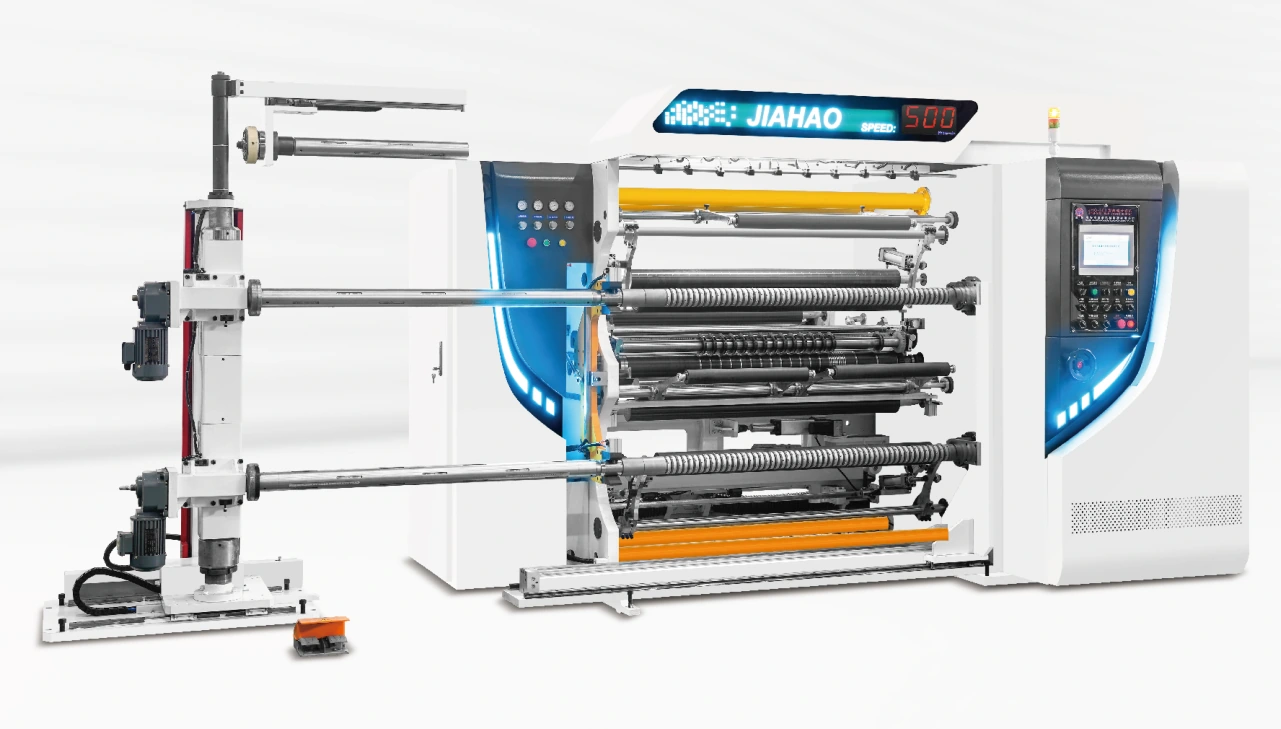
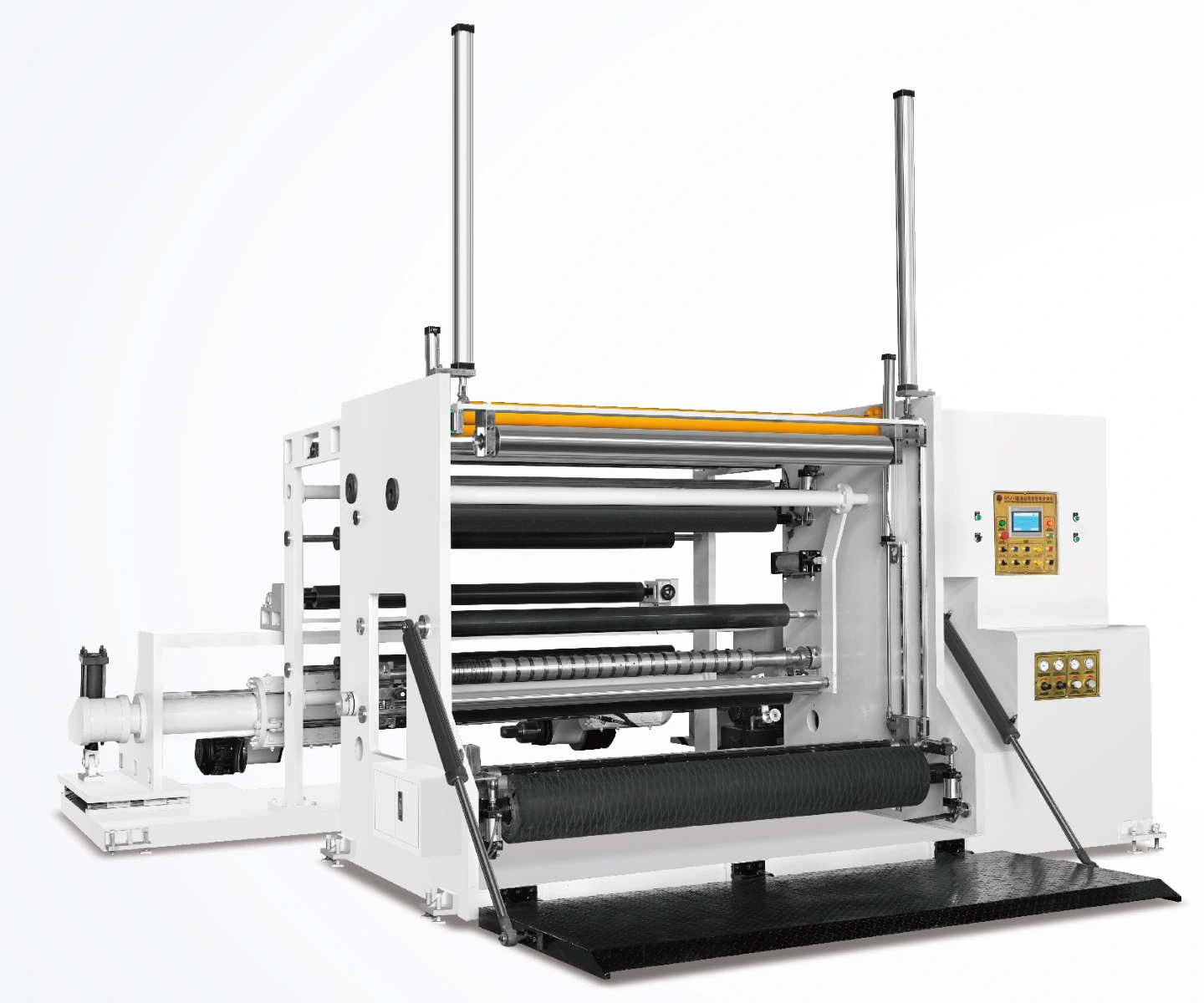
Small-Core Rewinding
The machine is described for rewinding around smaller tube cores. Agree the actual core dimensions, core material and finished-roll requirements rather than assuming a standard core size.

SLITTING & REWINDING · FJ-B
Prepare smaller finished rolls with the FJ-B rewinding range. Compare the 200 m/min configuration with 600 / 200 mm parent / finished diameters and the 300 m/min configuration with 1,000 / 300 mm diameters.
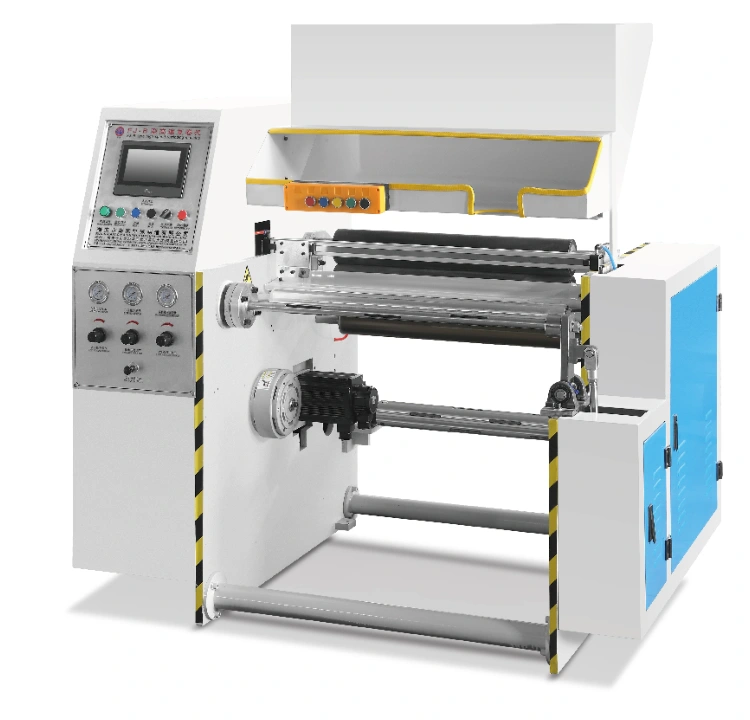
Listed configuration values. Production speed and practical slit pattern depend on the material and the agreed machine setup.
Consider FJ-B when the task is rewinding into smaller tube cores and finished diameters. Define the actual core inside diameter, wall thickness, finished width and roll length. The two configurations below have different roll envelopes and must be assessed separately.
CONSTRUCTION & CONTROL
The machine is described for rewinding around smaller tube cores. Agree the actual core dimensions, core material and finished-roll requirements rather than assuming a standard core size.
The 200 m/min version lists 600 mm incoming and 200 mm finished diameters. The 300 m/min version lists 1,000 and 300 mm respectively; these are separate configurations, not interchangeable limits.
Independent shaft loading is listed for the 300 m/min configuration. Review the loading route, core interfaces and roll mass with the proposed arrangement.
Plan roll length, winding direction, firmness and removal around the next production stage. Any slitting, length-control or automatic handling function should be explicitly identified in the supply.
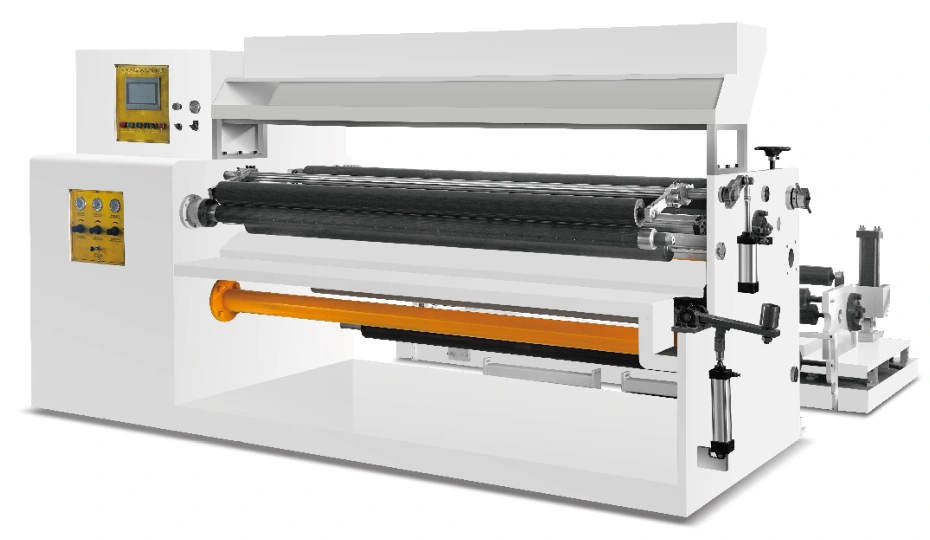
MATERIAL & FINISHED ROLL
Provide paper construction, coating, width and finished-roll length. Review surface marking and firmness against storage and downstream use.
For PVC, BOPP, CPP, PET and composite films, specify thickness, stretch and layer structure. Small cores require review of winding conditions for the actual material.
Identify grade, temper and thickness with acceptable edge and surface condition. Agree the core and roll build using representative material.
PROCESS & CONFIGURATION
| Parameter | 200 m/min configuration | 300 m/min configuration |
|---|---|---|
| Listed rewinding speed | 200 m/min | 300 m/min |
| Parent-roll diameter | 600 mm | 1,000 mm |
| Finished-roll diameter | 200 mm | 300 mm |
| Loading arrangement | Confirm with proposal | Independent shaft loading |
| Core inside diameter | Specify for application | Specify for application |
Listed values describe the configuration shown. Confirm working width, roll mass, core interfaces, voltage, frequency and the complete supplied scope in the proposal. Production conditions and acceptance criteria depend on the actual material.
SETUP, OPERATION & ACCEPTANCE
Choose the starting roll envelope by parent and finished diameter, then confirm width, mass and core dimensions.
State target width, roll length or diameter, core specification and winding direction. Confirm the functions needed to control the output.
Assess access, core preparation, loading and finished-roll removal for the selected configuration.
Inspect roll length, surface condition, firmness and unwind behaviour at the next process under agreed trial conditions.
Review the floor plan, service clearance, roll-handling route and utilities before installation. Agree commissioning and operator-training requirements with the proposal. Keep the machine identification, shaft interfaces and blade dimensions available for maintenance and spare-part inquiries.
FJ-B is a rewinding starting point for small finished rolls. Compare A200 or A500 when a defined multilane slitting arrangement is central to the task. LM400 addresses a much larger roll envelope.
BEFORE YOU SPECIFY
A core-size limit is not stated in the available specification. Send inside diameter, wall thickness, material and finished-roll mass for compatibility review.
They have different listed parent and finished diameters. Request the layout and complete specification for the chosen version.
Do not assume a slitting system from the rewinding designation. Specify lane widths and cutting requirements so the quotation identifies any supplied knife arrangement.
These functions are not established by the listed speed and diameters. Include them as requirements and confirm the included scope in the proposal.
QUOTATION & SUPPLY SCOPE
Request a FJ-B quotation against your material, working width and finished-roll targets. Identify the selected version, cutting and winding arrangement, loading equipment and controls in the proposed supply.
Ask for standard equipment and optional items to be listed separately. Include commissioning, operator training, documentation and initial spare-part requirements in the discussion.
Provide quantity and destination. Confirm price, currency, delivery basis, packing, production schedule and any excluded freight or import charges in the quotation.
Agree representative material inspection, measurement criteria and supplied configuration before ordering. Confirm warranty terms, installation responsibilities and spare-part support with the proposal.
COMPARE MACHINE FORMATS
YOUR MATERIAL. YOUR FINISHED ROLL.
Share the web construction, incoming roll, slit pattern and finished-roll requirements. Include the information you already have.