
Trying to decipher a paper slitter specification sheet can feel overwhelming, with rows of numbers that all start to look the same. You're trying to make a smart investment, but you’re worried about making a mistake. Confusing key specs like roll diameter and web width can lead you to buy an expensive machine that can't handle your parent rolls or fit your factory floor. The solution is to stop seeing them as isolated numbers and start understanding how they work together to define a machine's true capability for your specific job.
The core difference is simple: web width is about your material's size (how wide your paper is), while roll diameter is about the material's quantity and weight (how much paper is on the roll and how heavy it is). Width determines if your material fits side-to-side in the machine. Diameter determines if you can physically lift and handle the roll, and how long you can run before a changeover.
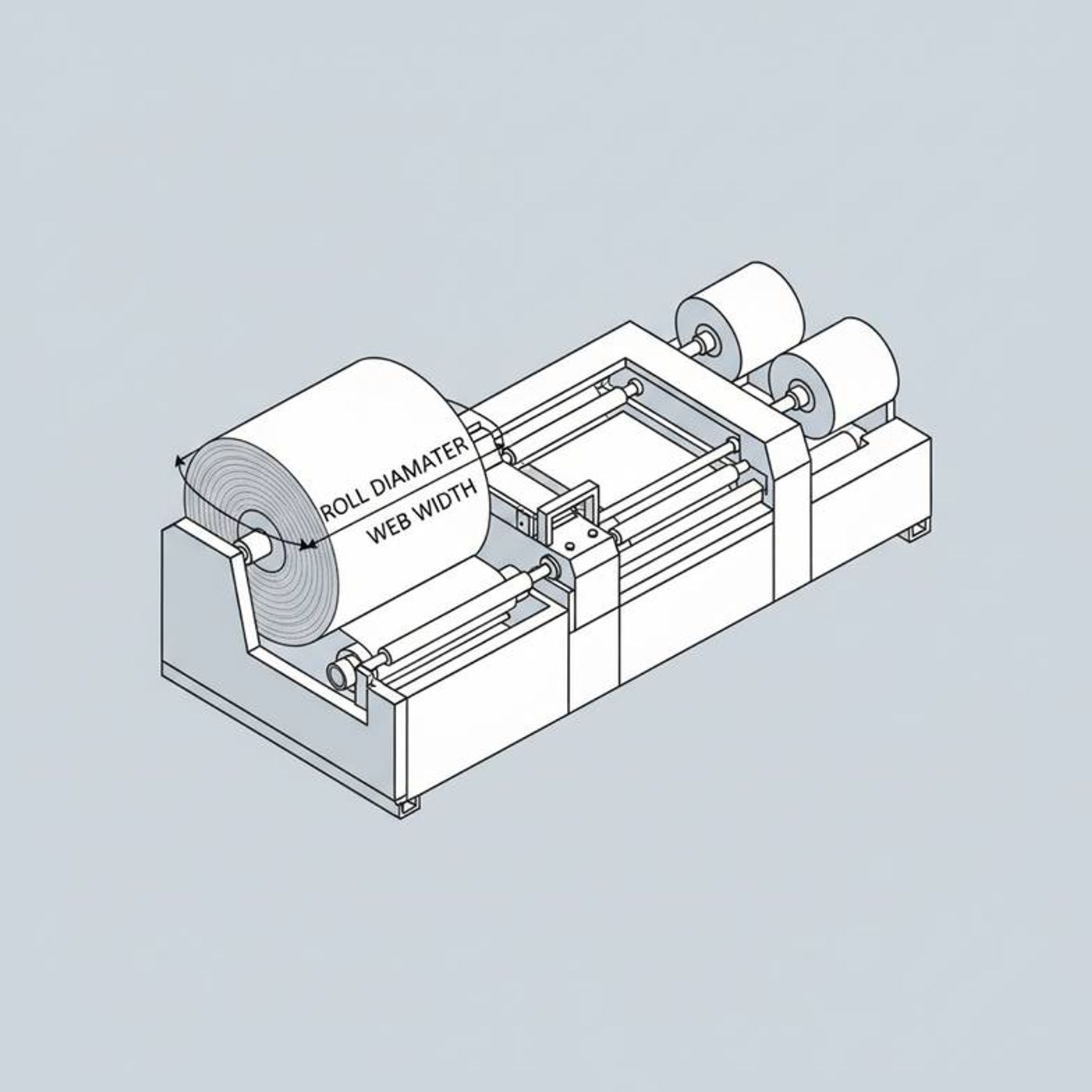
Getting this distinction right is the first step to de-risking your investment and ensuring the machine you choose is a perfect fit for your production needs. Let's break down what these numbers really mean for your day-to-day operations and how you can use them to make a much smarter choice.
What Does "Web Width" on a Spec Sheet Really Mean?
You see "Maximum Web Width: 1600mm" on a spec sheet and think, "Great! My 1600mm parent rolls will fit perfectly." But this is a classic trap. You might find out later that you can't actually slit the full width, leading to frustrating material waste and lost profit. The number on the spec sheet isn't the whole story.
Web width is the maximum width of the material web the machine can process from one side to the other. However, the effective or practical slitting width is always less than the maximum listed. This is because you need extra space for essential machine functions that happen at the edges of the material.
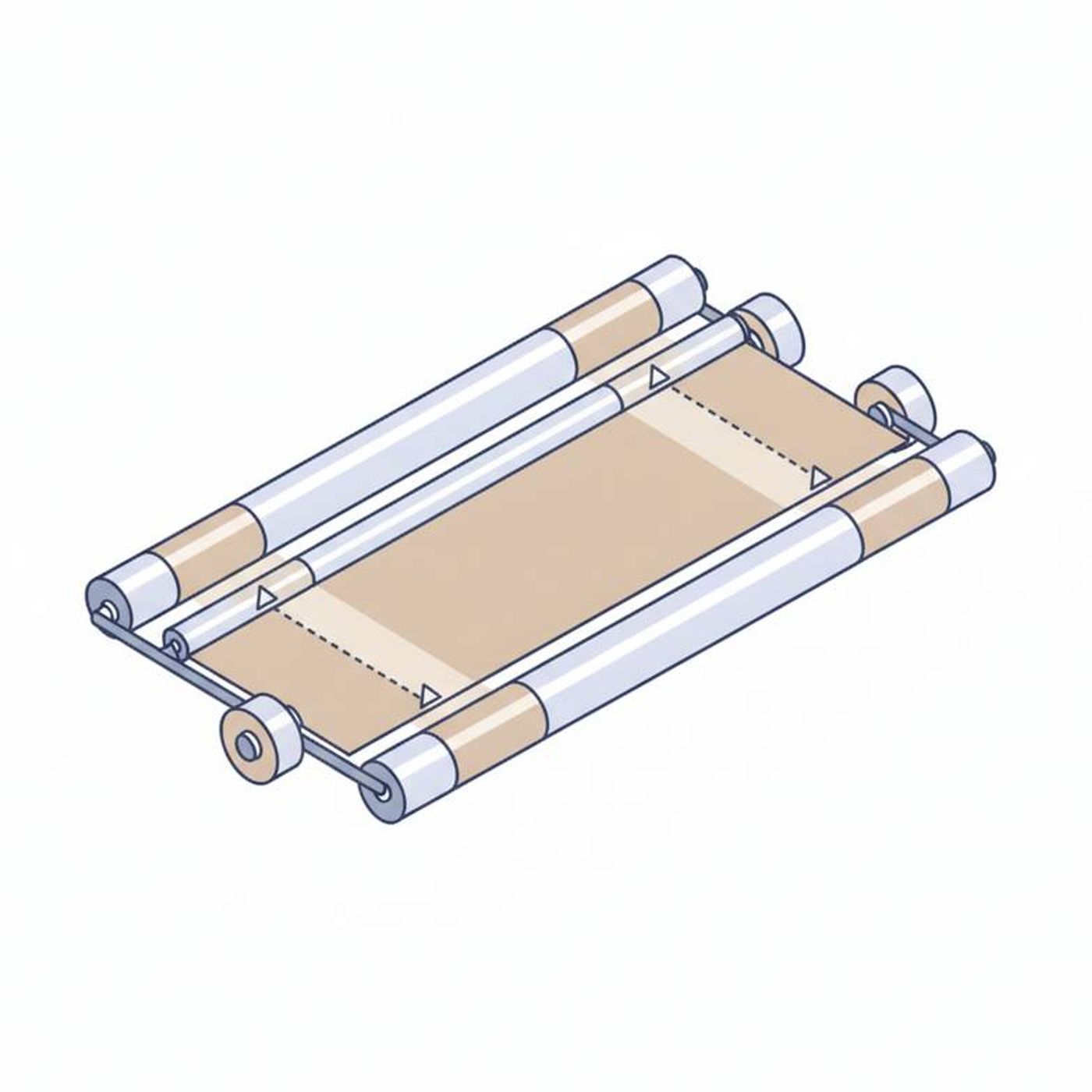
I often advise buyers to think of the maximum web width as the machine's total "wingspan," not the usable passenger space. Here’s a deeper look at what takes up that extra room.
Maximum vs. Practical Slitting Width
The biggest mistake I see buyers make is assuming they can slit material right up to the maximum web width. In reality, you have to subtract space for a few critical elements. Before you can be sure a machine will fit your parent rolls, you must account for:
- Edge Trim: You almost always need to trim a small amount off both edges of the parent roll. This removes any damaged or inconsistent edges from the master roll, ensuring every finished roll you produce is perfectly clean. This trim can be anywhere from a few millimeters to 20mm or more per side.
- Web Guiding System: Modern slitters use a web guide (often an Edge Position Control or EPC system) to make sure the paper tracks perfectly straight through the machine. These systems use a sensor—ultrasonic or infrared—that needs to be positioned over the edge of the paper web. This sensor itself takes up physical space.
- Unwind Stand Gripping: The unwind shaft that holds your parent roll needs to be securely clamped in the unwind stand. The chucks or clamps that hold the shaft require a bit of space on either end, which can sometimes slightly limit the maximum roll position.
So, how do you calculate the real, practical width? It’s a simple subtraction problem.
Practical Slitting Width = (Maximum Web Width) - (Edge Trim Left) - (Edge Trim Right) - (Space for Web Guide Sensor)
Before you even request a quote, you should do this math with your widest parent roll. It will immediately tell you if a machine model is a viable candidate.
Why Is Roll Diameter More About Weight Than Size?
It's easy to look at the maximum roll diameter on a paper slitter specification sheet and think bigger is always better. More material means longer production runs and fewer changeovers, right? But have you stopped to think about how your team is going to lift a 1.5-ton paper roll if your workshop hoist is only rated for 1 ton? A mismatch here can bring your entire operation to a halt.
On a specification sheet, roll diameter directly translates to roll weight and production run time. While a larger diameter means fewer roll changes, it also means a significantly heavier roll that requires appropriate lifting equipment and a machine frame built to handle the immense load and tension.
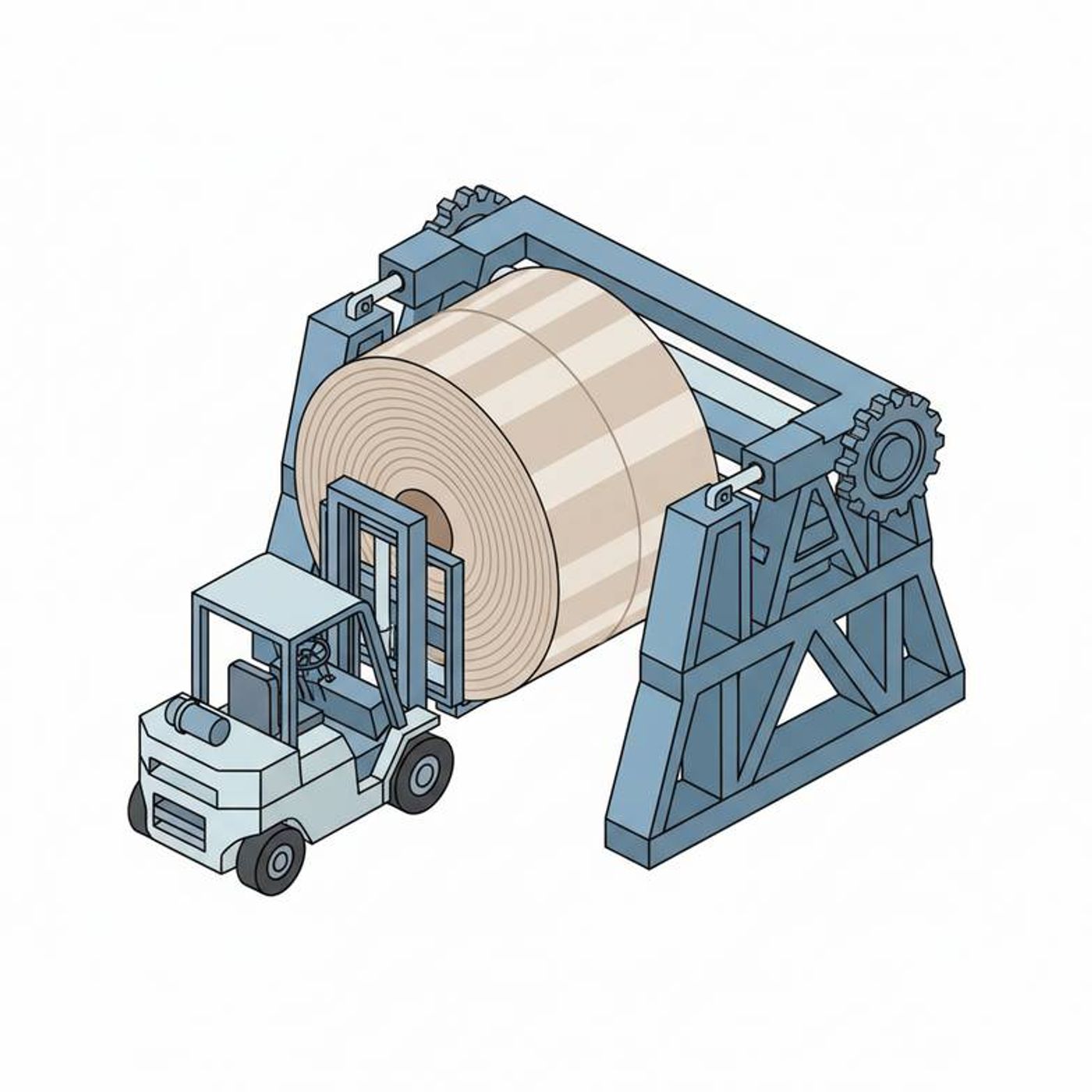
This is where procurement managers need to talk to production and maintenance managers. A machine's specs are useless if they don't align with your factory's real-world logistics.
The Hidden Logistics of Roll Diameter
The diameter spec isn't just a number; it's a question about your operational capacity. Both the unwind (parent roll) and rewind (finished roll) diameters have major implications.
- Unwind Diameter & Weight: This determines how you load the machine. Smaller, lighter rolls might be managed with a simple manual or electric hoist. But as diameters climb, the weight increases exponentially. A 1200mm diameter roll is not just 50% heavier than an 800mm roll; it can be more than double the weight. This often makes a forklift or heavy-duty overhead crane a necessity. Your machine's unwind stand must also be robust enough to support this weight safely.
- Rewind Diameter & Weight: The same logic applies to your finished rolls. If you're slitting a large parent roll into several smaller-but-still-large finished rolls, how will you get them off the machine and to the next stage of production? You need to plan for unloading, handling, and palletizing these rolls.
- Run Time & Efficiency: This is the upside of a larger diameter. Fewer roll changes mean less downtime. The operator spends less time loading and unloading and more time ensuring quality output. The key is finding the sweet spot between maximum run time and what your facility can safely and efficiently handle.
Here’s a practical comparison:
| Feature | Scenario A: Small Diameter | Scenario B: Large Diameter |
|---|---|---|
| Paper Type | 80 GSM Kraft Paper | 80 GSM Kraft Paper |
| Web Width | 1300 mm | 1300 mm |
| Roll Diameter | 800 mm | 1200 mm |
| Approx. Roll Weight | ~530 kg (1,170 lbs) | ~1200 kg (2,645 lbs) |
| Handling Required | Manual/Electric Hoist | Forklift / Heavy-Duty Crane |
| Operational Impact | More frequent roll changes | Fewer changes, longer continuous runs |
As you can see, the decision on diameter goes far beyond the machine itself and impacts your entire workflow.
How Does the Width-to-Diameter Ratio Define the Machine's Job?
You're comparing two machines from different suppliers. Both can handle a 1300mm web width, but one looks much heavier and more robustly built. Why the difference? It's not just about general build quality. You're likely seeing the result of a different width-to-diameter ratio, a "hidden" spec that defines what kind of work a machine is truly designed for.
The relationship between the maximum web width and the maximum roll diameter on a paper slitter specification sheet reveals the machine's intended application. This "profile" tells you if it's built for wide, light rolls or for narrow, heavy rolls—two very different engineering challenges that require different frames, motors, and tensioning systems.
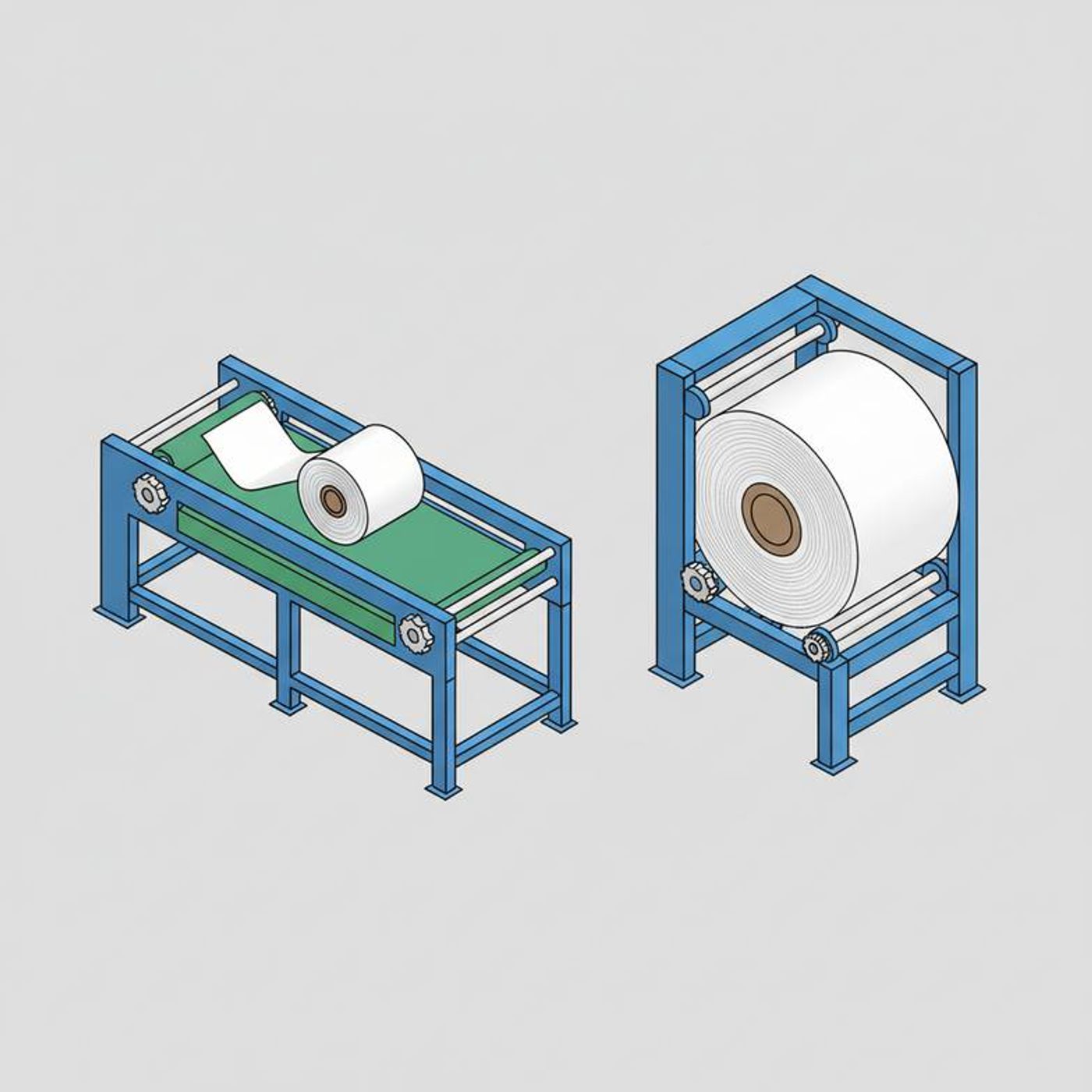
This is one of the most important insights you can gain from a spec sheet, as it helps you match the machine's fundamental design to your typical job mix.
Reading the Machine's "Profile"
Think of this ratio as the machine's personality. Is it a long-distance runner or a weightlifter? Let's look at two common profiles we encounter when helping customers.
Profile 1: Wide Width, Small-to-Medium Diameter
- Example Specs: Max Web Width: 2500mm / Max Unwind Diameter: 1000mm
- Common Applications: Paper mills doing primary slitting, large-format printing, or converting lightweight packaging materials.
- Design Implications: The machine's frame is engineered to handle a very wide span without flexing or vibration. The tension control system is optimized for wide, uniform webs. While the roll diameter is substantial, the primary engineering challenge is managing the width. These machines are often physically large but may not be designed for the extreme roll weights of a high-diameter machine.
Profile 2: Narrow-to-Medium Width, Large Diameter
- Example Specs: Max Web Width: 800mm / Max Unwind Diameter: 1500mm
- Common Applications: Converting label stock, adhesive tapes, thermal paper, or other specialized materials where long, uninterrupted runs are critical for profitability.
- Design Implications: This machine is a workhorse built for weight and endurance. The frame must be incredibly strong and rigid to support the massive weight of a 1.5-meter diameter roll. The braking and tension control systems must be extremely powerful and precise to manage the huge change in torque from a full roll down to an empty core.
When you see a paper slitter specification sheet, look beyond the individual numbers and see the ratio. Ask yourself: does this machine's "profile" match the profile of the jobs I run most often?
Can You Use a Specification Sheet to Ask Smarter Questions?
You send an inquiry to five suppliers with the same question—"What's your max speed?"—and get five different, vague answers. It's frustrating and makes it impossible to compare your options fairly. A common belief is that suppliers are being evasive, but often, the problem is that the question is too simple to have a meaningful answer.
A paper slitter specification sheet shouldn't be a passive document you just read. It should be an active tool you use to formulate specific, context-rich questions for suppliers. This approach transforms the conversation from one about generic marketing claims to one about verifiable facts related to your specific application.
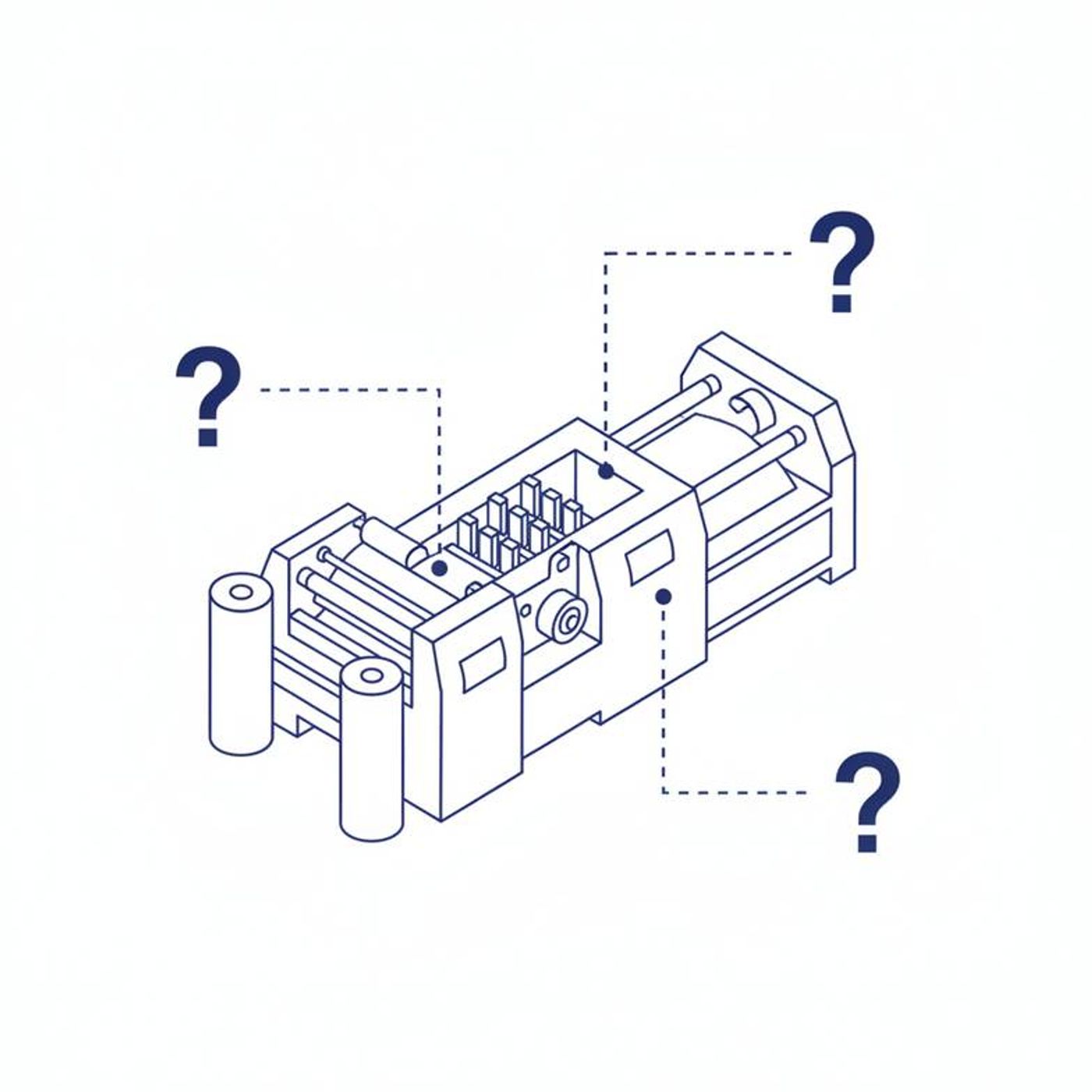
This is how you take control of the procurement process and ensure you get the right machine.
From Passive Reading to Active Qualifying
Let's transform some typical vague questions into powerful, specific ones using insights from a spec sheet.
Vague Question: "What's your max unwind diameter?" Smarter Question: "Your spec sheet lists a 1300mm max unwind diameter. For our 80 GSM kraft paper, this would be a roll weight of approximately 950 kg. Does the unwind stand, frame, and braking system on your Model SL-1300 fully support this continuous operational weight?"
Vague Question: "What's the maximum speed?" Smarter Question: "The top mechanical speed is listed as 400 m/min. For our application—slitting 70 GSM thermal paper from a 1000mm parent roll into ten 100mm finished rolls—what is a realistic and stable production speed we can expect to maintain quality?"
By adding your specific material and operational context, you force the supplier to give you a practical, application-specific answer instead of a theoretical maximum. Here are a few "power questions" you can build using any paper slitter specification sheet:
- "Given my parent roll width of [Your Widest Roll] mm, what is the actual maximum slitting width after accounting for a [Your Trim] mm edge trim and the placement of your standard web guide?"
- "The spec sheet lists a rewind diameter of [Spec Sheet Value] mm. For my [Your Paper Type and GSM] paper, what would be the approximate finished roll weight, and what unloading system is included to handle that weight?"
- "Your paper slitter specification sheet shows you use a [Slitting Method, e.g., shear cut] system. For slitting my [Your Material] at a finished width of [Your Narrowest Width] mm, can you confirm the minimum slit width and the type of knife holders used?"
Using the spec sheet to ask better questions shows suppliers you are a serious, knowledgeable buyer and ensures the quotations you receive are for machines that will actually work for you.
Frequently Asked Questions
What's the difference between parent roll diameter and finished roll diameter?
The parent roll (or unwind roll) is the large, single roll of material you load onto the machine. Its diameter is listed as the "Max. Unwind Diameter." The finished rolls (or rewind rolls) are the smaller, slit rolls you create. Their maximum size is listed as the "Max. Rewind Diameter."
Does max speed on a spec sheet matter more than diameter and width?
No. Diameter and width determine if the machine can physically run your job. Speed determines how fast it might run it under ideal conditions. A machine that fits your rolls but runs a bit slower is always better than a machine that's incredibly fast but can't handle your material size or weight. Fit and logistics always come first.
How much edge trim do I need to account for?
This depends on your parent roll quality and finished product requirements. A common starting point for planning is 10mm to 20mm per side. However, the best practice is to send material samples to your potential supplier and have them recommend the optimal trim amount for their machine.
Can I slit rolls narrower than the machine's maximum web width?
Yes, absolutely. The maximum web width is a physical limit, not a required operating width. You can process any material web that is narrower than the maximum. A good slitting machine is versatile and should be able to handle a wide range of job widths up to its stated capacity.
Conclusion
The next time you look at a paper slitter specification sheet, don't get lost in the numbers. Instead, use it as a map to understand a machine's true purpose. Remember the core principles: web width is about your material's size, and roll diameter is about its weight and your workshop's logistics. Their ratio tells you the machine's intended job profile. Most importantly, use these specifications not just to read, but to ask pointed, specific questions that lead to clear, comparable answers from suppliers. Mastering this skill is the key to investing in equipment that drives efficiency and profitability for years to come.
If you're ready to translate your production needs into a clear paper slitter specification sheet, our team is here to help. Send us your material details, roll dimensions, and finished-roll requirements, and we'll help you configure the right machine for your business.
Continue the Technical Review
For a closer look at the selection and operating questions raised in this guide, read Horizontal vs Vertical Paper Slitters: Comparing Floor Layout and Roll Handling and compare the recommendations in Paper Roll Slitting Machine Operation: Complete Process Guide.