
Trying to order a replacement part for your slitting machine can feel a little stressful. You need to source new blades, and you know that a tiny mistake in the specification can bring your whole production line to a halt. Ordering the wrong knife means wasted material, frustrating delays, and poor-quality cuts that your customers will reject. The key is to follow a clear, structured process for specifying your circular slitter knife dimensions, ensuring you get the right part the first time.
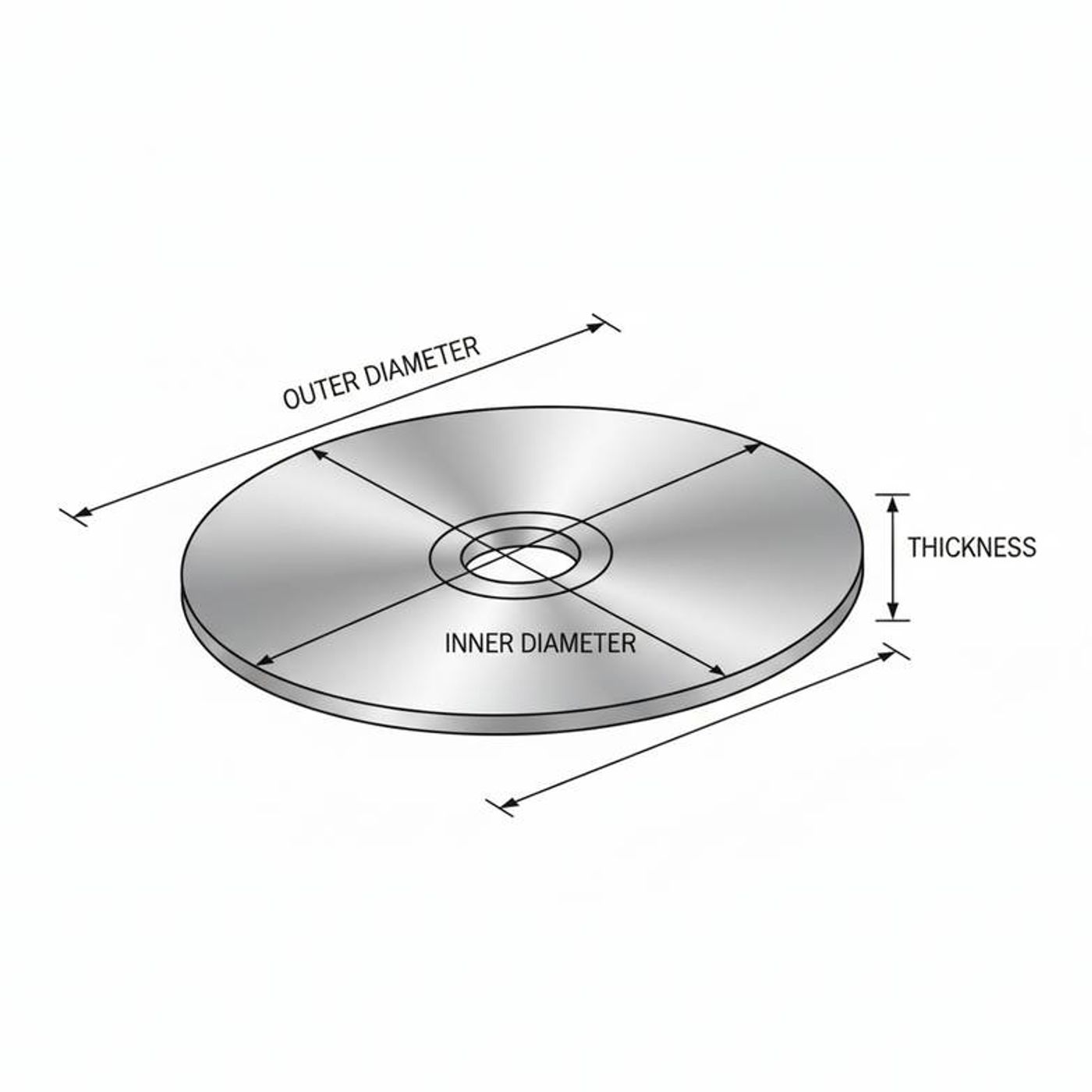
To correctly specify circular slitter knife dimensions for a replacement order, you must provide the Outer Diameter (OD), Inner Diameter (ID), and Thickness (T). More importantly, you must also confirm detailed features like the keyway dimensions, the cutting edge angle (bevel), and any chamfers, as these details ultimately determine the knife's fit, alignment, and cutting performance.
Those three basic dimensions are a great start, but in my experience handling these inquiries, the real, costly problems are often hidden in the details that old drawings miss. Let's walk through each element you need to check to avoid common purchasing mistakes and ensure your machine gets back up and running without a hitch.
Beyond the Big Three: Are Your Basic Circular Slitter Knife Dimensions Really Complete?
You’ve found an old drawing or measured a used knife and have the Outer Diameter, Inner Diameter, and Thickness. It feels like you're ready to order, right? But what happens if that drawing is for a slightly different machine model, or if your calipers are off by a fraction of a millimeter? A knife that almost fits is a knife that is completely useless and could even damage your slitting shaft. Let's look at the details beyond the basic numbers that guarantee a perfect fit.
Your basic circular slitter knife dimensions of OD, ID, and Thickness are a starting point, but they are incomplete without also verifying critical tolerances and mounting features like the keyway. These easily missed details are what ensure the knife mounts securely and aligns perfectly with your spacers and bottom knife.
The Critical Three: OD, ID, and Thickness
These are the non-negotiable basics. Getting them right is the first step.
- Outer Diameter (OD): This determines the maximum cutting depth and the clearance within the machine. An incorrect OD can lead to the knife not reaching the material properly or, worse, colliding with other machine parts.
- Inner Diameter (ID / Bore): This is the hole in the center that allows the knife to be mounted onto the slitting shaft. If the ID is too small, it simply won't fit. If it's too large, the knife will be off-center, causing vibration, eccentric rotation, and terrible quality cuts.
- Thickness (T): The knife thickness works in concert with your spacers to determine the final slit width. Consistency is key. If your replacement knife's thickness is off by even 0.1 mm from the rest of the set, it will throw off the alignment, create uneven pressure, and ruin the accuracy of your finished rolls.
The Details That Actually Cause Downtime
A common mistake I see is buyers focusing only on those three dimensions. True compatibility, however, comes from the features that ensure the knife is mounted securely and can handle the rotational forces of the machine.
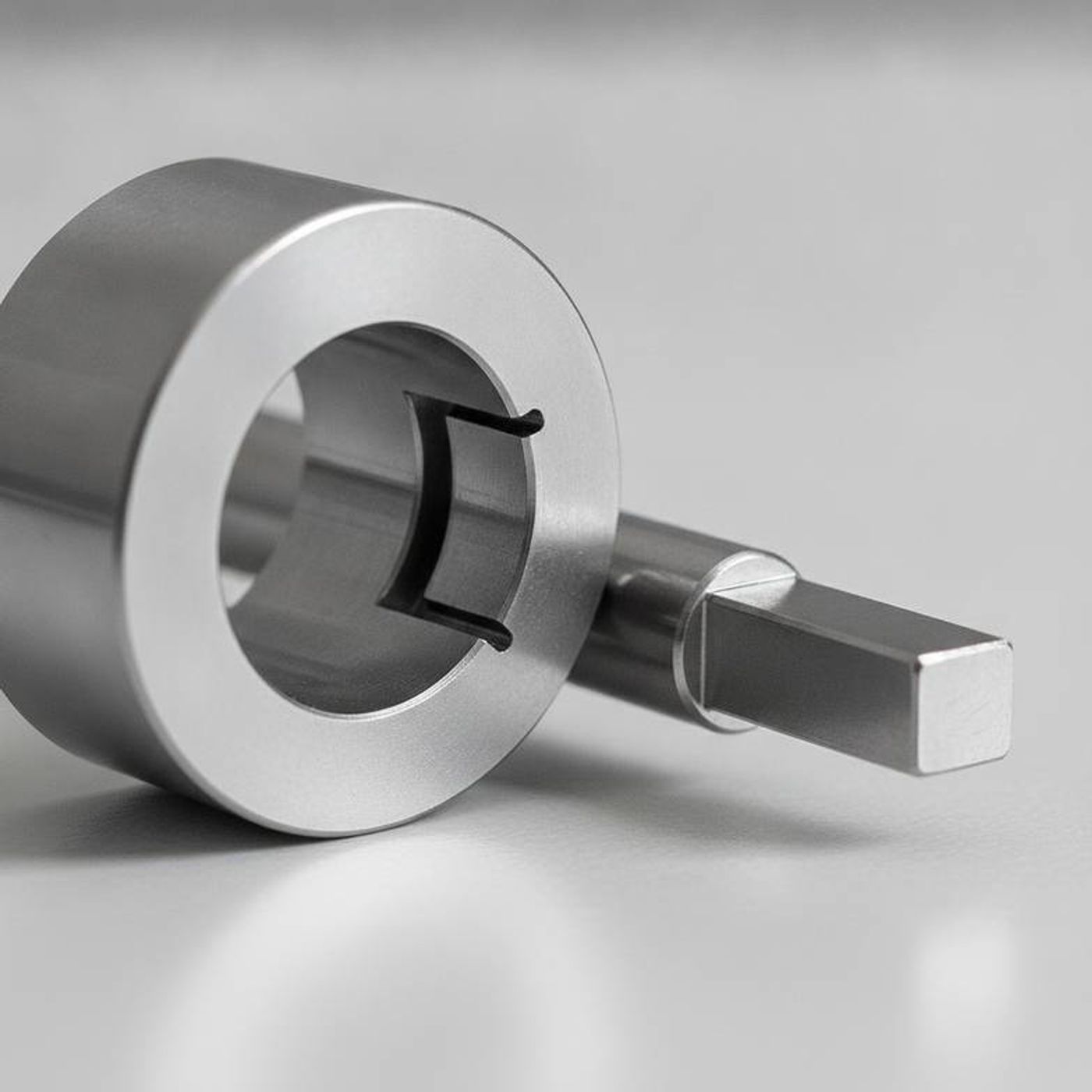
Keyways and Drive Notches This is probably the single most common reason for an incorrectly ordered knife. The keyway is a small slot inside the bore that fits onto a "key" on the shaft, locking the knife in place and preventing it from spinning freely.
- If the keyway is the wrong width or depth, the knife either won't slide onto the shaft or it will be loose.
- A loose fit will cause the knife to chatter during operation, leading to poor cuts and eventually damaging both the knife and the shaft key.
When you send us an inquiry, providing the keyway dimensions is just as important as providing the ID itself.
Chamfers and Radii You might notice small, angled edges (chamfers) or rounded corners (radii) on your knife. These aren't just for looks. They are engineered features, often designed to provide clearance for a locking nut, prevent stress cracks from forming, or help with blade alignment. If your replacement knife is missing a required chamfer, it may not seat correctly against the spacers or shaft shoulder, causing it to wobble.
Tolerances A dimension on a drawing that says "70mm" is not the same as one that says "70.00 ±0.01mm". This tolerance is the acceptable range of variation for a dimension. For slitting knives, tolerances are critical for:
- Thickness Parallelism: Ensures the blade faces are perfectly flat and parallel to each other for a clean cut.
- Side Runout (Wobble): A tight tolerance here ensures the knife spins true without any wobble, which is essential for high-speed shear slitting.
When in doubt, it's always better to provide the full dimensional information from a drawing, including all tolerances.
How Does Your Cutting Method Affect Knife Geometry?
So, you've found a knife with the perfect OD, ID, thickness, and keyway. You're ready to buy. But hold on—if the cutting edge itself has the wrong geometry for your process, you’ll end up with frayed edges, excessive dust, and a blade that dulls in record time. Understanding how your slitting method dictates the knife's shape is the key to selecting a blade that performs, not just one that fits.
Your cutting method—whether it's shear, crush, or razor—directly determines the required knife geometry. The cutting edge angle, also known as the bevel, must be precisely matched to the process to ensure a clean, efficient cut and a reasonable service life for the blade.
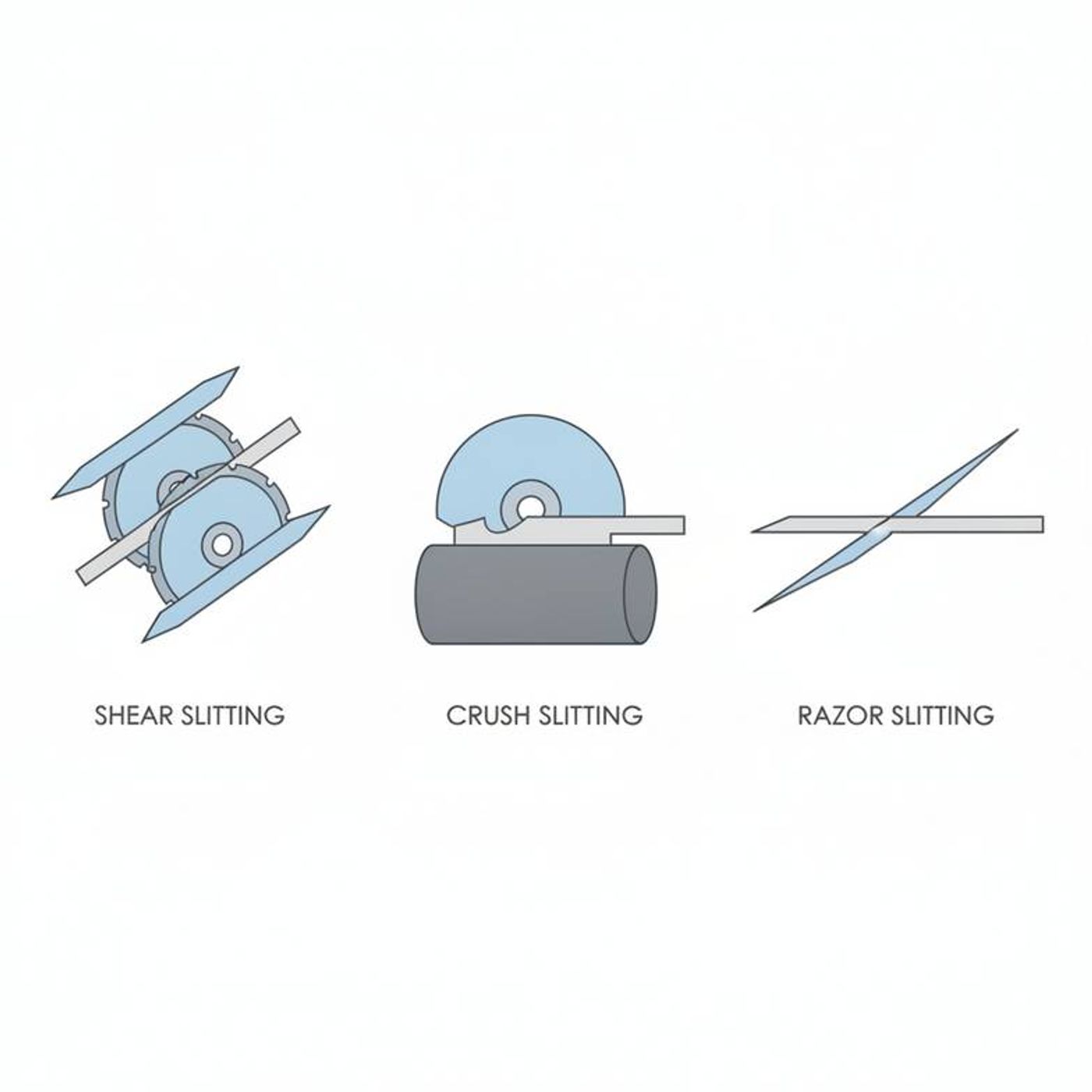
Let's break down the main cutting methods and what they mean for your knife choice.
Shear Slitting
Often described as a "scissor" cutting action, shear slitting uses a pair of overlapping blades—a top and bottom knife—to shear the material. This method produces the highest quality, cleanest edges with the least amount of dust.
- Geometry: Shear slitting knives have sharp, angled cutting edges. The specific angle (e.g., 30°, 45°, 60°) depends on the material being cut. They can have a single bevel on one side or a double bevel on both.
- What to Specify: When ordering, you must know the required bevel angle and type. Using a double-bevel knife in a setup that requires a single-bevel one will result in an incorrect cut point and poor results. A quick photo of your blade's edge profile can help a supplier confirm this for you.
Crush Cutting (or Score Cutting)
This method works like a pizza cutter. A single, hardened knife presses the material against a very hard anvil or sleeve on a bottom shaft. The immense pressure "crushes" or fractures the material along a line to separate it. This is common for materials like adhesive tapes, sandpaper, and some textiles.
- Geometry: Crush cut knives are typically not sharp in the traditional sense. They have a slightly radiused edge. The radius of this edge is a critical dimension.
- What to Specify: If you use crush cutting, you must specify the edge radius. Using a sharp, shear-style knife in a crush cut application is a recipe for disaster—the sharp tip will chip and dull almost immediately under the high pressure.
When a customer sends an inquiry, telling us they use shear slitting for 50 gsm paper is far more useful than just giving us a list of dimensions. It allows us to act as a second pair of eyes and check if the requested bevel angle makes sense for that application.
Which Material Is Right for Your Replacement Slitter Knife?
When you look at quotations, you'll see different material options like D2, M2 (HSS), and Tungsten Carbide, often with very different prices. Choosing the wrong one means you're either overpaying for performance you don't need or you're picking a cheaper material that wears out too fast, driving up your downtime and overall costs. Let's frame this as a practical trade-off, so you can make a choice that is best for your budget and production goals.
The right material for your replacement slitter knife depends on a trade-off between wear resistance, toughness, and cost. Your decision should be guided by the material you are slitting, your machine's operating speed, and your typical maintenance schedule.
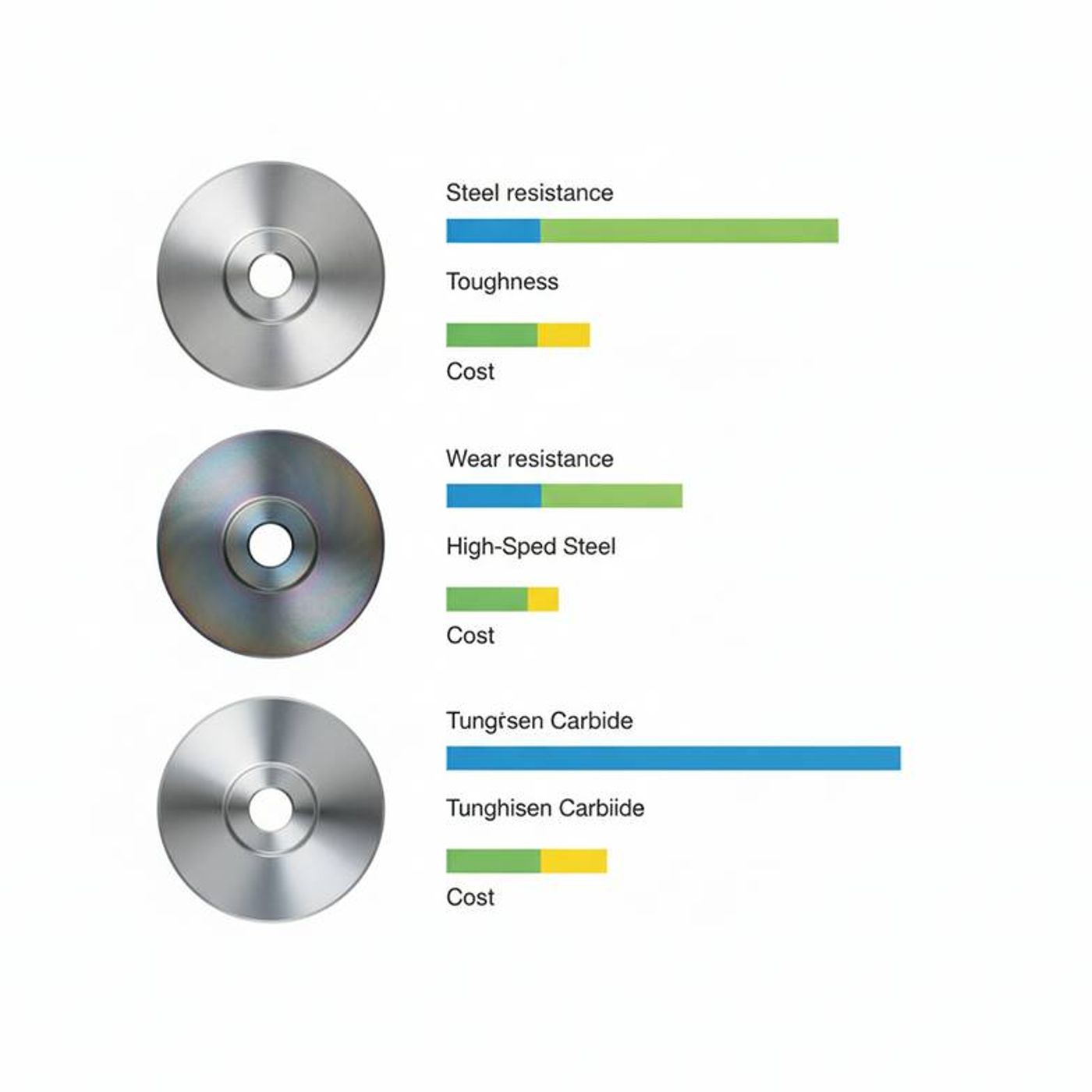
Here's a breakdown of the common materials and where they fit. This isn't about which is "best," but which is "right" for the job.
| Material | Best For (Application) | Key Benefit | Main Consideration (Trade-off) |
|---|---|---|---|
| 52100 (Bearing Steel) | Softer materials, light-duty applications. | Lowest initial cost. | Wears out relatively quickly. |
| D2 (Tool Steel) | The general-purpose workhorse. Great for paper, film, foil, and labels. | Excellent balance of wear resistance and toughness. | Can be less effective at very high speeds where heat builds up. |
| M2 / HSS | High-speed slitting operations. | Better hardness and heat resistance than D2. | Higher cost than D2, can be slightly more brittle. |
| Tungsten Carbide (TC) | Abrasive materials (e.g., fiberglass, nonwovens), very long production runs. | Exceptional wear resistance; lasts many times longer than steel. | Significantly higher cost and more brittle; can chip on impact. |
How do you choose? Instead of guessing, provide your supplier with this information:
- What exact material are you cutting (e.g., 25-micron BOPP film, 300 gsm recycled cardboard)?
- How long are your typical production runs between knife changes?
- How often are you currently sharpening or replacing your knives?
This information helps us recommend a material that aligns with your operational goals, whether that's minimizing initial part cost or maximizing uptime.
How Do You Create an RFQ That Gets You the Right Knife?
You're ready to contact a supplier. It's tempting to send a quick email that just says, "Need price for 150 x 70 x 1.2mm slitter knife." But this approach is a recipe for a long chain of back-and-forth emails and, potentially, an incorrect order. A complete Request for Quotation (RFQ) gives your supplier all the information they need to confirm your spec and quote the right part, right away.
To get an accurate and fast quotation, your RFQ for a replacement knife should always include more than just the basic dimensions. Providing any existing drawings, clear photographs of the old knife, the machine's model number, and details about your application will prevent errors and delays.
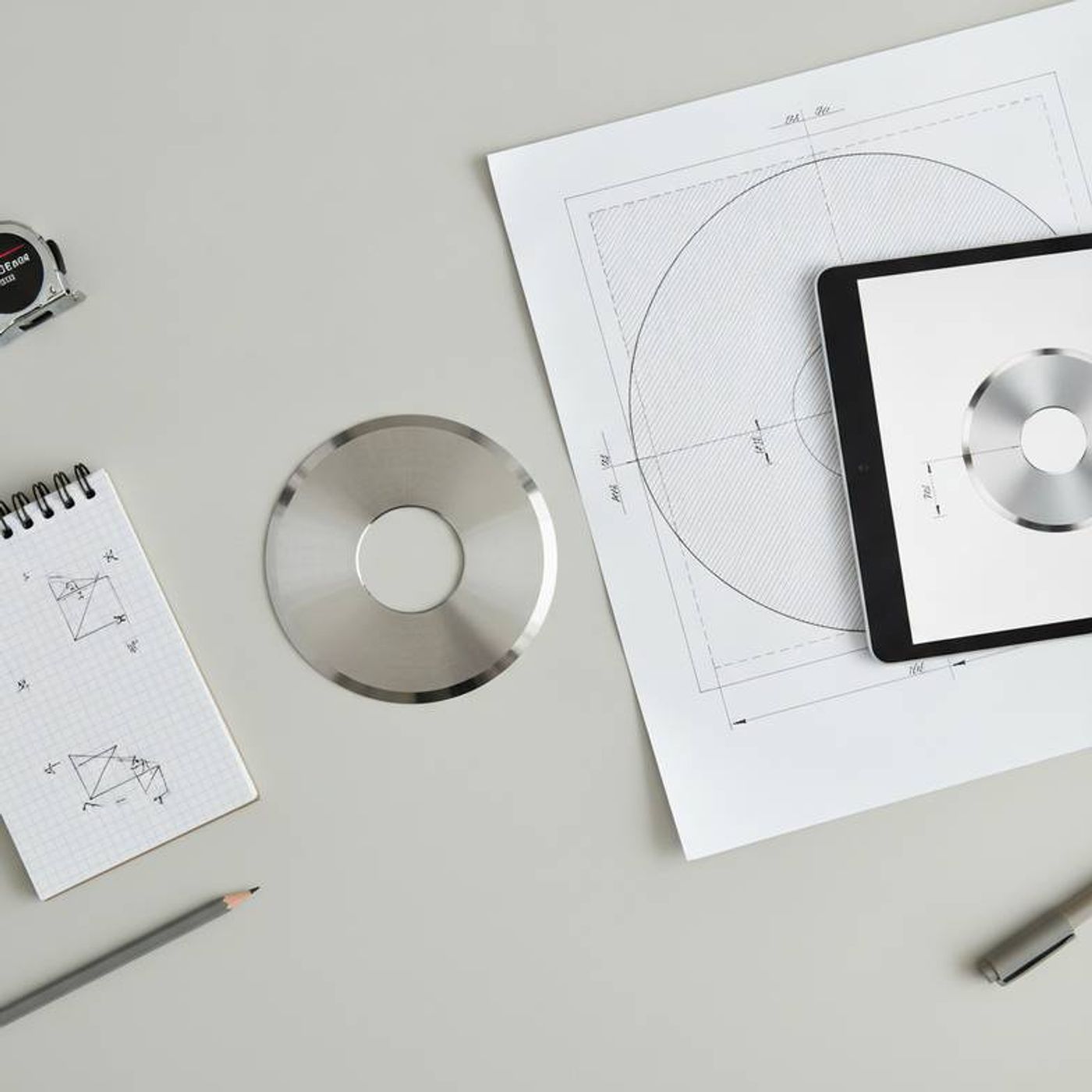
Use this checklist to build an RFQ that gets you exactly what you need.
Your RFQ Checklist for Replacement Knives
- 1. The Technical Drawing: If you have one, send it. Even an old, handwritten drawing from the machine's manual is an excellent starting point. This is the best source of truth for tolerances and other details.
- 2. Your Measurements: If you don't have a drawing, provide the OD, ID, and Thickness that you have carefully measured yourself, preferably with digital calipers for accuracy.
- 3. High-Quality Photographs: Pictures are incredibly valuable. Please include:
- A photo of the knife lying flat on a surface.
- A close-up shot of the keyway or any other drive notches.
- A clear side-profile photo showing the cutting edge (the bevel).
- A photo of the knife next to a ruler to give a sense of scale.
- 4. Machine Information: The machine's manufacturer, model number, and serial number can help us cross-reference original specifications. A clear photo of the machine's nameplate is perfect for this.
- 5. Application Details:
- What material are you cutting?
- What is your cutting method (shear or crush)?
- 6. Quantity: Let us know how many knives you need.
When we receive this complete package, we can act as a second pair of eyes. We often spot potential issues, like a requested bevel angle that doesn't match the typical setup for the material described. It's a simple quality check that helps our customers prevent costly ordering mistakes.
Frequently Asked Questions
What if I don't have a technical drawing for my slitter knife?
No problem. Send us clear photographs from multiple angles, the critical dimensions (OD, ID, Thickness, keyway) you've measured, and the machine's make and model. This information is usually enough for us to create a confirmation drawing for you.
How do I measure the cutting angle or bevel?
Measuring a bevel angle accurately requires special tools. It's much easier and more reliable to send your supplier a clear, close-up photograph of the cutting edge profile and describe your cutting method (e.g., "shear slitting paper"). We can typically identify the geometry from that.
Can you identify a knife just from a photo?
A photo is extremely helpful for identifying features like the bevel and keyway style, but it's not enough on its own to guarantee a fit. We must have it combined with critical measurements that you provide to confirm the specification and prevent errors.
Why is my new knife wearing out so fast?
This is usually due to a mismatch in one of three areas: the wrong knife material for your application, an incorrect cutting angle for your slitting process, or an improper machine setup (like incorrect overlap or excessive side pressure).
Conclusion
Getting your circular slitter knife dimensions right is about much more than just the three basic measurements. A successful replacement order depends on a detailed review of all specifications, including the keyway, cutting geometry, and the correct material for your application. By preparing a complete RFQ with drawings, photos, and operational details, you turn your supplier into a partner who can help you manage risk and verify the specification. This proactive, detail-oriented approach is the single best way to prevent downtime, reduce waste, and maintain the quality of your slitting operations.
If you're preparing to order replacement slitting knives or other components, our team is ready to help you review your specifications. Contact DJH Machinery with your drawings and requirements for a detailed technical review and quotation.
Continue the Technical Review
For a closer look at the selection and operating questions raised in this guide, read What Drawings Are Needed to Order a Replacement Air Shaft? and compare the recommendations in Types of Slitting Machines for Kraft Paper: Circular vs. Razor vs. Shear.