
Struggling with wrinkles, creases, or poor web separation on your slitting machine? A worn or failing bow roller is often the culprit, leading to material waste and frustrating production stops. But a rushed bow roller replacement can make things worse if the new part doesn't fit, creating even more costly downtime. The solution is knowing exactly which dimensions and mounting details to verify before you even think about placing an order.
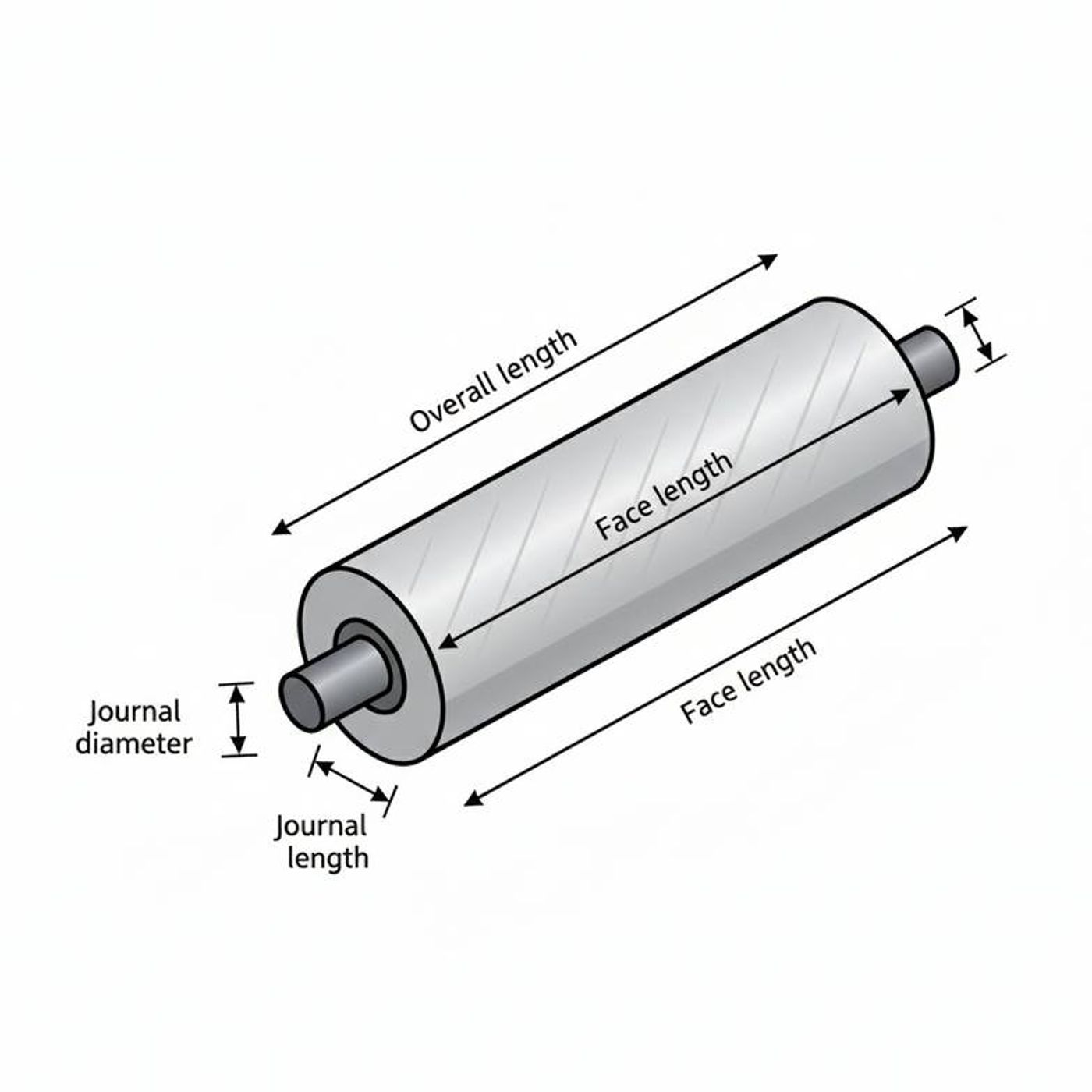
For a successful bow roller replacement, the most critical details are the overall length, face length, journal diameters and lengths, and the mounting style (either flange or foot mount with its specific bolt pattern). Just as important are the operating conditions—your material type, web speed, and tension—which dictate the roller’s internal construction and surface requirements. The safest way to guarantee compatibility is to confirm all these details on a technical drawing with your supplier.
Getting these details right isn't just about finding a part in a catalog. It's a risk management process. Let's dive into the specific information you need to gather to ensure your next bow roller is the right roller, so you can get back to running smooth, high-quality rolls.
What are the non-negotiable mounting dimensions for a bow roller replacement?
You've found a roller that seems to have the right working width, and you're ready to order it. But what if it arrives and you discover it physically can't be installed in your machine frame? This is a common and completely avoidable problem caused by overlooking the mounting interface.
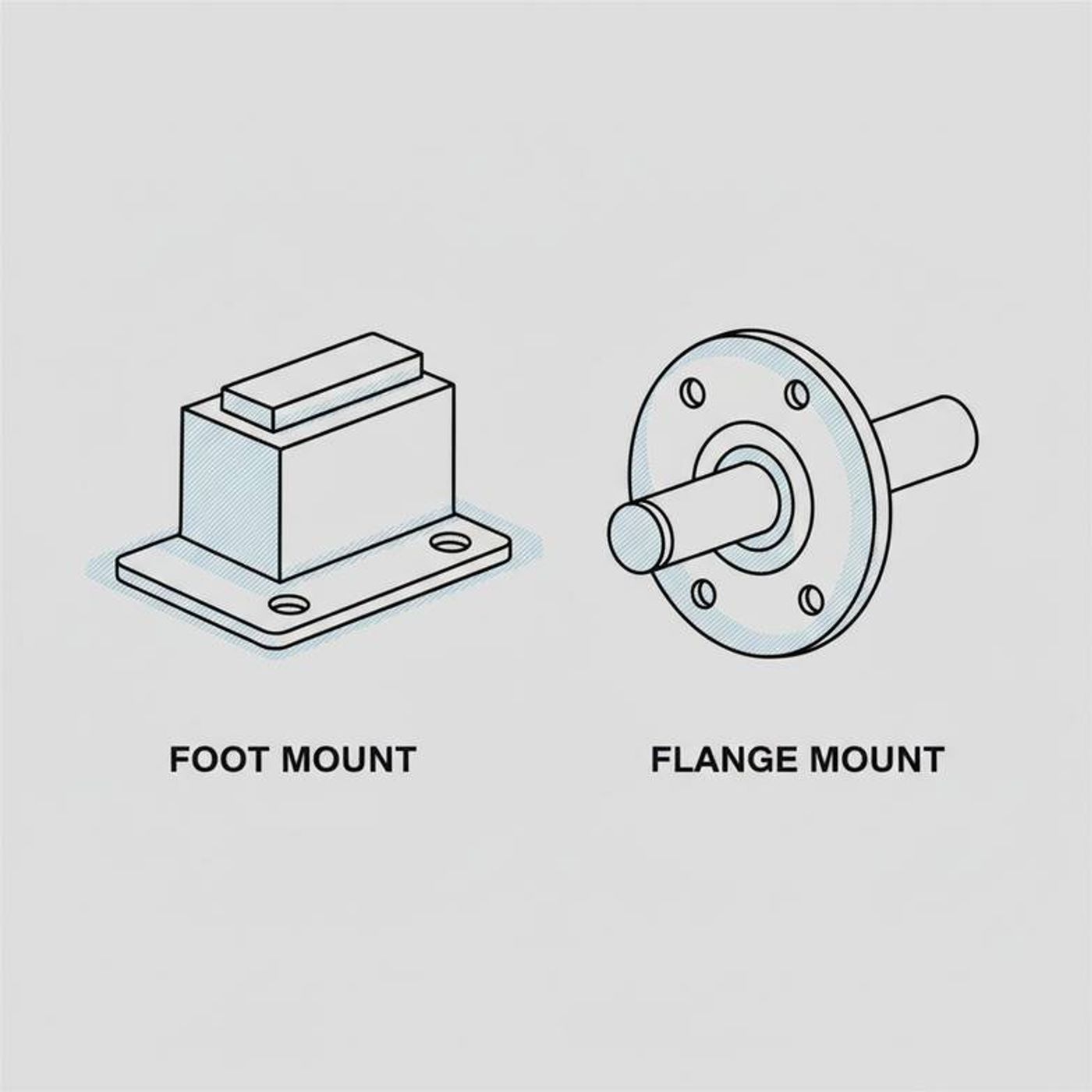
The most critical mounting dimensions are the journal diameters and lengths, the overall length of the roller, and the mounting style—either foot mount or flange mount. Getting any of these wrong means the roller simply will not fit into your machine's brackets, no matter how perfect the face length is.
Dive Deeper: The Details That Determine Fit
When a customer comes to me for a replacement part, the very first things we ask for are photos and drawings of the current installation. Why? Because these mounting details are where most ordering mistakes happen. Here's what we look for.
Decoding Journal Dimensions
The journals are the machined ends of the roller's stationary center shaft that sit inside your machine's mounting brackets or bearing housings. To ensure a fit, you need to confirm two things:
- Journal Diameter: This must match the inner diameter of your bearing or mounting block. If it's too large, it won't go in. If it's too small, the roller will be loose, leading to vibration, poor performance, and premature failure. Precision matters here—even a millimeter of difference is a deal-breaker.
- Journal Length: This determines how far the journal seats into the housing. If it's too short, it may not be securely supported. If it's too long, it might bottom out in the housing or prevent you from tightening the mounting bolts.
I remember a case with a packaging converter who ordered a replacement based only on face length. The roller arrived, but the journals were 5mm too thick for their mounting blocks. The entire production line was down for another week while we rushed a correctly specified roller to them. That's a week of lost production that a simple drawing verification could have prevented.
Foot Mount vs. Flange Mount
Bow rollers are typically mounted in one of two ways. You have to identify which one your machine uses.
| Mounting Style | Description | What to Measure |
|---|---|---|
| Foot Mount | The roller is held by two separate pillow-block-style brackets that bolt down onto a flat surface. | The bolt hole pattern on the bottom of the "foot" (center-to-center distances). |
| Flange Mount | The roller is held by two brackets that bolt onto the side of the machine frame, often circular or square. | The bolt hole pattern on the face of the flange (bolt circle diameter and spacing). |
Simply saying you have a "flange mount" isn't enough. We need the exact bolt hole dimensions. A photograph of the mounting bracket with a tape measure next to it is incredibly helpful if you don't have a drawing.
Why Overall Length is a Deal-Breaker
This sounds obvious, but it’s often overlooked. The overall length is the total measurement from the absolute end of one journal to the end of the other. It defines the total space the roller occupies within your machine frame.
- If the new roller is too long, it simply won't fit between the machine's side frames.
- If it's too short, the journals won't reach their mounting blocks, making installation impossible.
Think of it like buying a bookshelf for an alcove in your house. You can't just measure the width of the books you want to put on it; you have to measure the alcove itself. The overall length of the bow roller is the "alcove" measurement for your machine.
How do you correctly measure the roller's working area for your bow roller replacement?
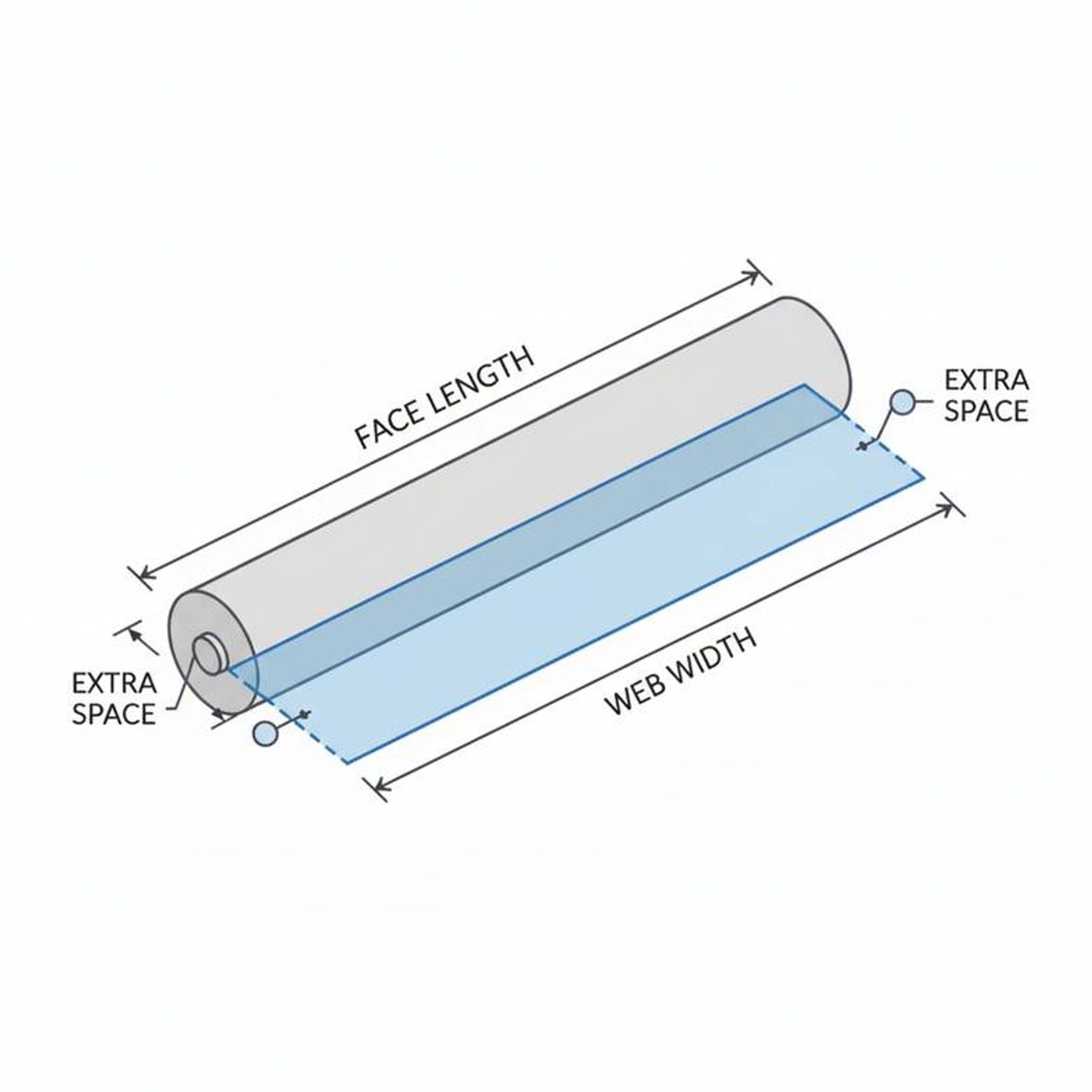
You know your material web is 1200mm wide, so you look for a 1200mm roller. This seems logical, but it's a critical mistake. If the roller's working surface is the exact same width as your material, the edges of the web won't get the full spreading effect, and you could still end up with wrinkles or edge curl.
To ensure proper wrinkle removal across the entire web, you need to measure the roller's "face length." This is the total length of the curved, rotating outer sleeve—the part that actually touches your material. This face length must always be slightly wider than your maximum material web width.
Dive Deeper: Ensuring Full Coverage and a Long Service Life
Defining the working area isn't just about width. The surface material of the roller is just as important and depends entirely on the material you're running. A roller designed for heavy paper will perform poorly with delicate films, and vice versa.
Face Length vs. Web Width: A Common Mix-Up
Let's make this crystal clear.
- Web Width: The width of the material (paper, film, foil) you are running. This can vary from job to job.
- Face Length: The physical length of the roller's rotating surface. This is a fixed dimension of the roller itself.
Rule of Thumb: Your roller's face length should be at least 50-100mm (2-4 inches) greater than your maximum web width.
For example, if the widest material you ever run is 1500mm, we would recommend a bow roller with a face length of 1550mm or even 1600mm. This extra room on each side ensures that even if the web wanders slightly, the edges remain fully supported on the curved surface, providing effective spreading action.
Choosing the Right Surface Material
The outer sleeve of the bow roller does all the work, and its surface needs to be compatible with your substrate. Ordering the wrong surface can lead to slipping, marking, or rapid wear. Here are the common options we discuss with customers:
- Hard Chrome Plating: This is the workhorse for many applications, especially paper and some nonwovens. It's extremely durable, wear-resistant, and provides a smooth, low-friction surface.
- Rubber Sleeves: When you need more grip, especially for slick films or foils, a rubber sleeve is the answer. The type of rubber matters. We often specify:
- EPDM Rubber: Excellent resistance to heat and abrasion.
- Nitrile Rubber: A great all-rounder, resistant to oils and common solvents.
- Teflon Sleeves: If you are running materials with sticky coatings or adhesives, a Teflon sleeve provides a non-stick surface that prevents buildup and contamination.
When you request a quotation, always state the material you are running. This information allows your supplier to recommend the surface that will give you the best performance and longest life for your bow roller replacement.
Why are operating conditions as important as dimensions for your bow roller?
Imagine this: you've done everything right. You sent a perfect drawing, the new roller arrives, and it installs beautifully. But three months later, it fails catastrophically. The bearings are shot and the surface is worn. What went wrong? The roller was dimensionally correct, but it wasn't built for the job.
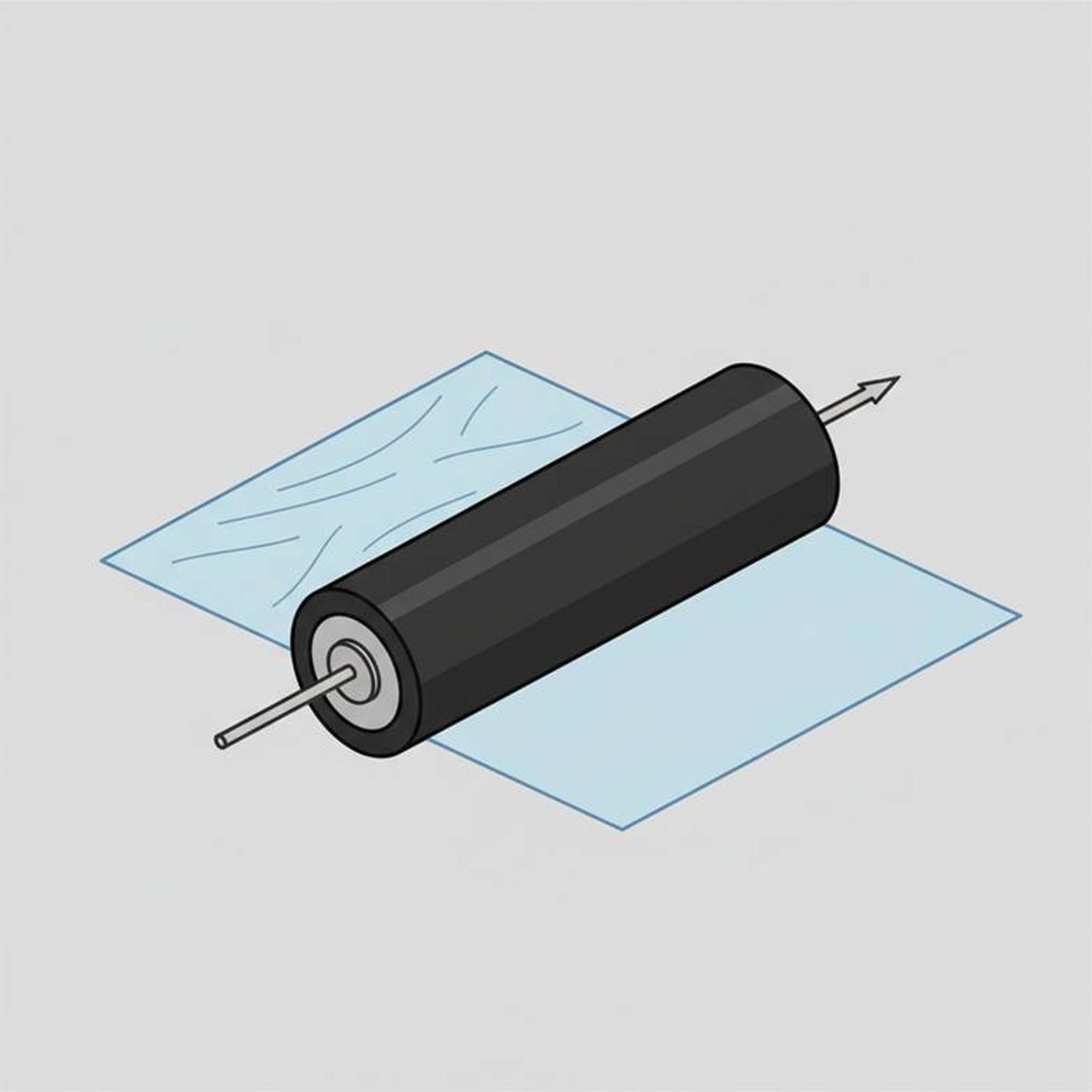
The roller's internal construction, bearing type, and bow amount must be specified to handle your machine's operating speed, web tension, and material properties. A dimensionally identical roller designed for a slow, light-tension nonwoven line will be destroyed quickly on a high-speed, high-tension paper slitter rewinder.
Dive Deeper: Matching the Roller to the Application
This is where a supplier's experience becomes invaluable. By understanding your production environment, we can ensure the roller isn't just a "part" but a solution engineered for your specific needs. This is a crucial part of any successful bow roller replacement strategy.
Speed and Tension Dictate Bearing Choice
The outer sleeve of a bow roller spins on a series of sealed ball bearings mounted on a stationary, curved central shaft. The quality and specification of these bearings are directly related to your machine's performance.
- High Speed: Running at high speeds generates more heat and requires bearings with higher rotational speed (RPM) ratings and appropriate lubrication. Standard bearings will overheat and seize.
- High Tension: Heavy materials like paperboard or thick plastics exert significant force on the roller. This requires bearings with a higher dynamic load rating to prevent them from being crushed or failing prematurely.
When we quote a roller, we always ask for the maximum line speed and tension range. This isn't to be nosy; it's to ensure the bearings we specify can handle the load. This is a detail you can't see from the outside but is critical for reliability.
Getting the "Bow" Right
The "bow," or curve, is what gives the roller its spreading action. The amount of bow is a fixed height at the center of the roller, typically between 0.8% and 1.25% of the face length. While the bow height is fixed, its effect is adjustable. By rotating the entire roller assembly in its mounts, you change the orientation of the bow relative to the web path, which controls the spreading action.
Different materials require different approaches:
- Delicate Films: Often require less aggressive spreading to avoid stretching or distorting the material.
- Heavy Paper/Board: Can handle, and often require, a more pronounced spreading effect to overcome stiffness and remove deep-set wrinkles.
You don't need to be an expert on bow percentages. Just tell your supplier what material you're running and what problem you're trying to solve (e.g., center wrinkles, slack edges). They can then recommend a roller with an appropriate bow for your application.
The Essential Role of the Technical Drawing
This brings us full circle. How do you communicate all of these critical details—mounting dimensions, face length, surface material, and operating conditions—to a supplier accurately?
With a technical drawing.
A good drawing for a bow roller replacement is the single source of truth. It removes all ambiguity and serves as a contract between you and the supplier. A comprehensive request should include:
- A drawing or detailed sketch showing all the critical dimensions we've discussed.
- Photographs of the current roller and its mounting points on the machine.
- Your operating parameters:
- Material(s) being run (e.g., 40-micron BOPP film, 80 gsm kraft paper).
- Maximum web width.
- Maximum machine speed.
- Web tension range (if known).
In my experience, over 99% of ordering mistakes can be prevented by spending a few minutes to confirm a final drawing before placing an order. It's the most effective form of insurance against downtime.
Frequently Asked Questions
Can I just replace my bow roller with one from a different brand?
Yes, absolutely. As long as all critical dimensions (overall length, face length, journals, mounting) and performance specifications (bearings, surface material) are identical, a roller from a different manufacturer will work. This is why having a detailed drawing is so important—it allows any qualified supplier to quote accurately.
What is the difference between a bow roller and a spreader roller?
A bow roller is a specific type of spreader roller. The term "spreader roller" is a general category for any roller designed to spread the web and remove wrinkles. Bow rollers (or curved rollers) are the most common type, but other designs exist, such as slat-style spreader rollers.
How much bow do I need?
The ideal amount depends on your material's thickness and elasticity, the wrap angle of the web over the roller, and the web tension. A good starting point for many applications is a bow height of around 1% of the roller's face length. However, the most important thing is that the roller is adjustable, allowing you to fine-tune the spreading effect on the machine.
Can my old bow roller be repaired?
Sometimes, but it's often not cost-effective. If only a bearing has failed or the rubber sleeve is damaged, repair might be possible. However, the labor involved in disassembly, replacing all the sealed bearings, and reassembly can often exceed the cost of a new roller. If the central shaft is bent or the journals are damaged, replacement is almost always the better option.
Conclusion
A successful bow roller replacement is about more than just matching a part number or a single dimension. It's a careful process of verifying the critical mechanical interfaces—the overall length, journals, and mounting style—along with the functional requirements like face length and surface material. Most importantly, it requires matching the roller's internal construction to your real-world operating speeds and tensions to ensure reliability and a long service life. By preparing a thorough request with drawings, photos, and operating details, you eliminate guesswork and empower your supplier to provide the exact component you need on the first try.
Ready to eliminate wrinkles and ensure a perfect fit? Gather your specifications, drawings, and operating conditions. When you're prepared, contact us at DJH Machinery. Our team will review your requirements to provide a precise, drawing-confirmed quotation for your next bow roller replacement.
Continue the Technical Review
For a closer look at the selection and operating questions raised in this guide, read How to Specify Circular Slitter Knife Dimensions for a Replacement Order and compare the recommendations in What Drawings Are Needed to Order a Replacement Air Shaft?.