
Evaluating vertical paper slitting options often leaves converters stuck between confusing model numbers and unrealistic top-speed claims. You need clean, consistent finished rolls, but buying the wrong machine class leads to severe bottlenecks, web breaks, or idle capital. In this guide, I will break down the practical differences so you can match the right slitter to your production floor.
Choosing between the QFJ-B200 and QFJ-B500 comes down to web width, roll weight capacity, and batch cycle times rather than top mechanical speed. The compact QFJ-B200 suits narrower webs, lighter paper grades, and quick changeovers. In contrast, the heavier-framed QFJ-B500 is engineered for wider parent rolls, larger rewind diameters, and continuous, heavy-duty production runs.
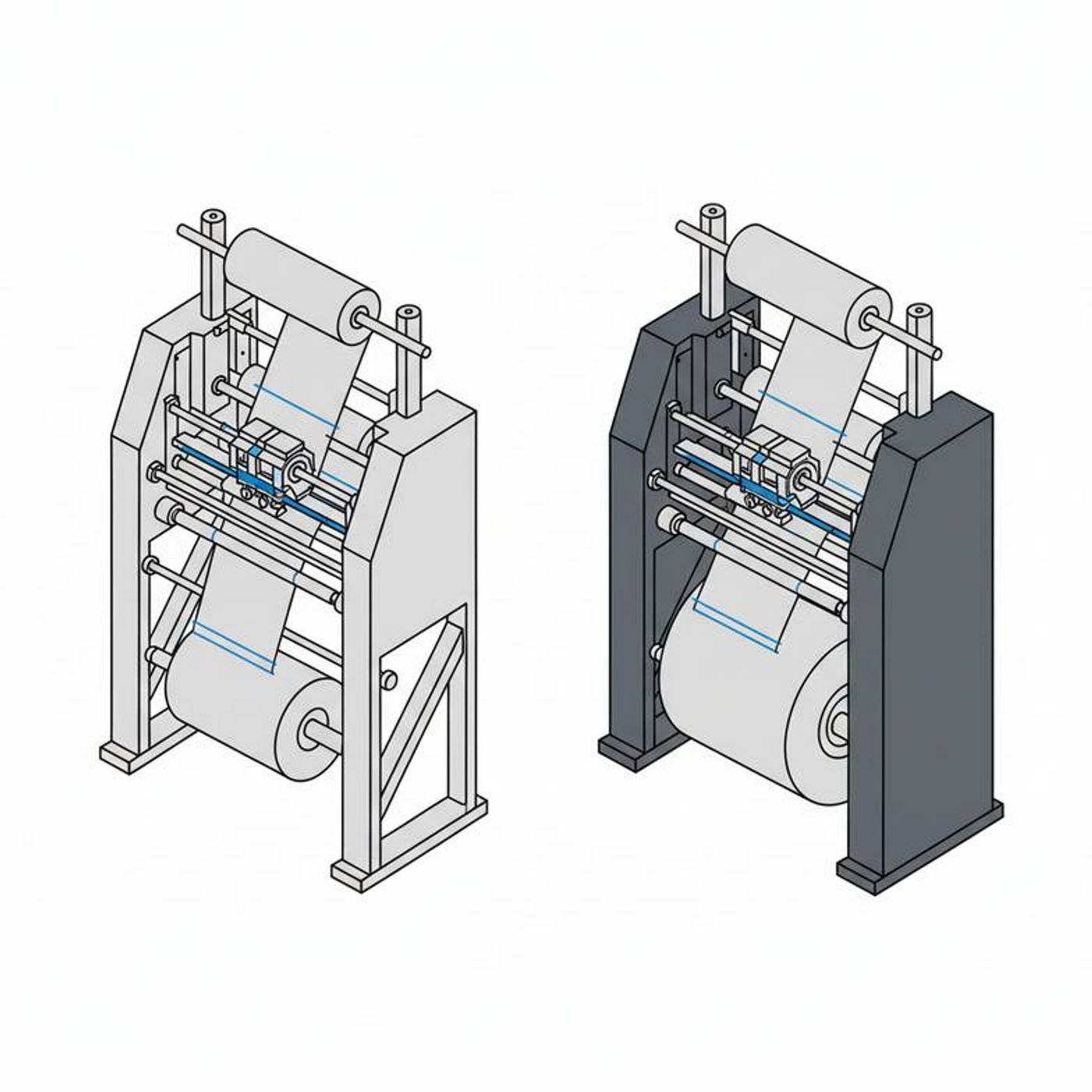
On paper, both machines slit and rewind paper rolls reliably. But on the workshop floor, the physical roll dimensions and mechanical tension tell a different story. Let us look at how these two machine platforms operate under real-world converting conditions.
What sets these vertical paper slitting options apart in daily converting?
Sifting through machine specification sheets can feel overwhelming when numbers look nearly identical. You might worry about overpaying for raw steel or buying an undersized machine that stalls out under heavy continuous loads. Let us look at how their core mechanical design balances daily work.
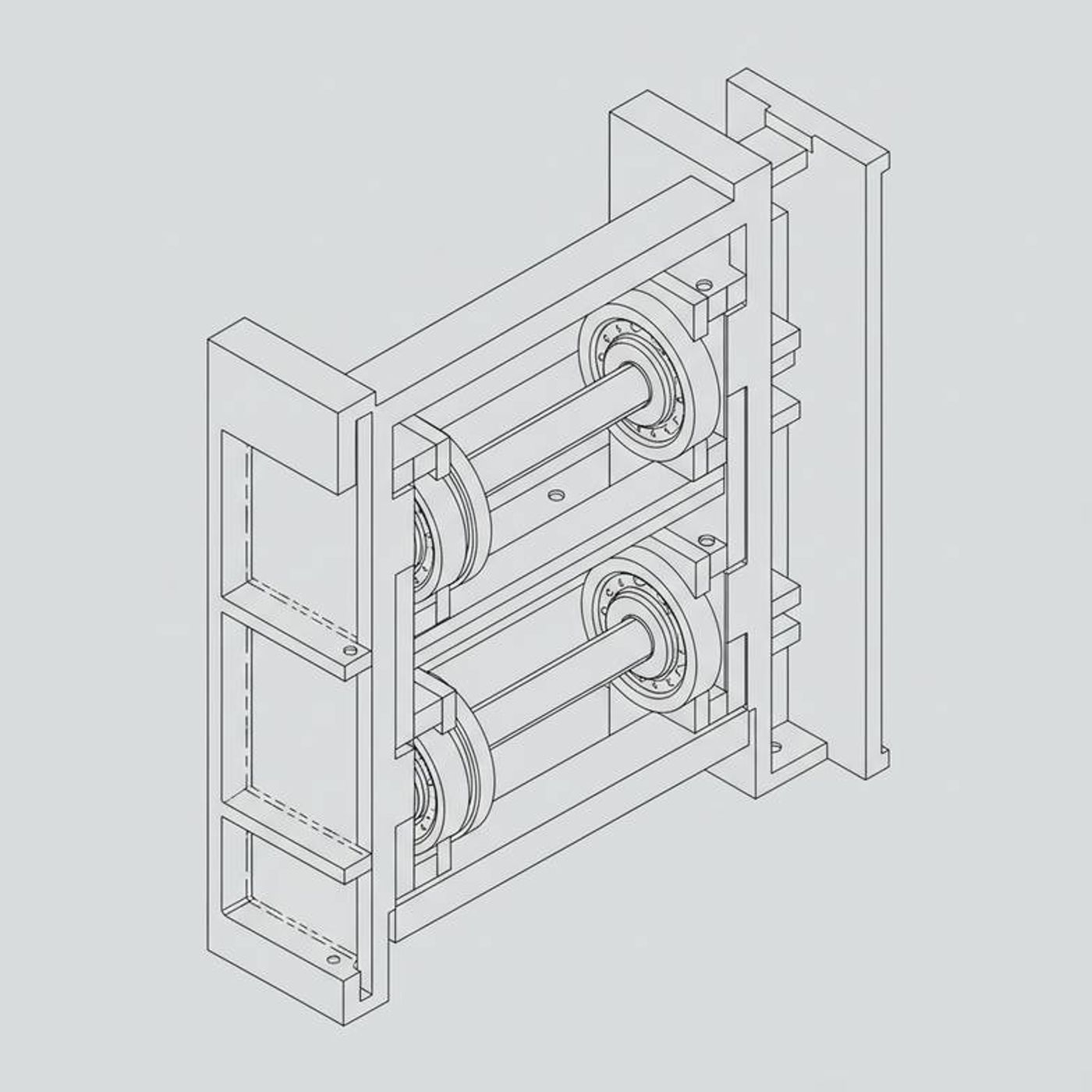
The QFJ-B200 features a compact vertical footprint optimized for rapid setups, lighter parent rolls, and moderate rewind diameters. The QFJ-B500 uses a heavier structural frame, larger guide rollers, and expanded unwind capacities. This design stabilizes wide, dense paper webs against high mechanical torque and web flutter during long shifts.
The Myth of Maximum Nameplate Speed
When I talk with plant managers, the first question is almost always about maximum speed. A catalog might say a machine runs at 200 or 300 meters per minute. But top speed is rarely your actual bottleneck.
Your true daily production depends on overall cycle time. That includes:
- Loading the raw parent roll onto the unwind stand
- Threading the paper web through the roller path
- Setting slitter knives to the target finished width
- Taping leads to new rewind cores
- Unloading finished rolls and resetting shafts
If an operator spends 25 minutes resetting knives and loading cores for a 10-minute slitting run, high mechanical speed will not save your profit margins. The QFJ-B200 is built for quick turnarounds on shorter batches. You can reach the slitter knives easily, adjust spacing rapidly, and swap shafts with minimal fuss.
Compact vs. Heavy-Duty Frame Dynamics
The QFJ-B500 steps in when sheer mass becomes necessary. As your parent roll diameter and web width expand, roll weight climbs quickly. A heavier parent roll introduces vibration. If your machine frame lacks sufficient mass, that vibration travels directly into the cutting zone.
The result? Edge burrs, interweaving finished rolls, and premature knife wear. The B500 platform uses thicker side frames, larger dynamic-balanced idler rollers, and reinforced bearing blocks. These components absorb mechanical shock, keeping the paper web dead flat at higher continuous operating speeds.
| Feature / Metric | QFJ-B200 Typical Profile | QFJ-B500 Typical Profile |
|---|---|---|
| Primary Design Intent | Short runs, quick changes, specialty papers | High-capacity runs, heavier paperboard, continuous shifts |
| Parent Roll Weight | Typically up to 400–600 kg | Typically up to 1,000–1,500 kg+ |
| Max Unwind Diameter | Commonly 600–800 mm | Commonly 1,000–1,400 mm |
| Max Rewind Diameter | Usually up to 400–600 mm | Up to 800–1,000 mm |
| Unwind Loading | Manual shafted or mechanical lift | Shaftless hydraulic or pneumatic roll pick-up |
| Frame Construction | Compact vertical steel plate | Heavy structural plate with reinforced tie bars |
How do web tension dynamics affect your vertical paper slitting options?
Nothing frustrates an operator more than web wrinkles, edge curling, or uneven roll hardness on the rewind shaft. If your tension control cannot match your paper caliper, you waste expensive stock and valuable machine hours. Let us explore the mechanical physics behind web tension control.
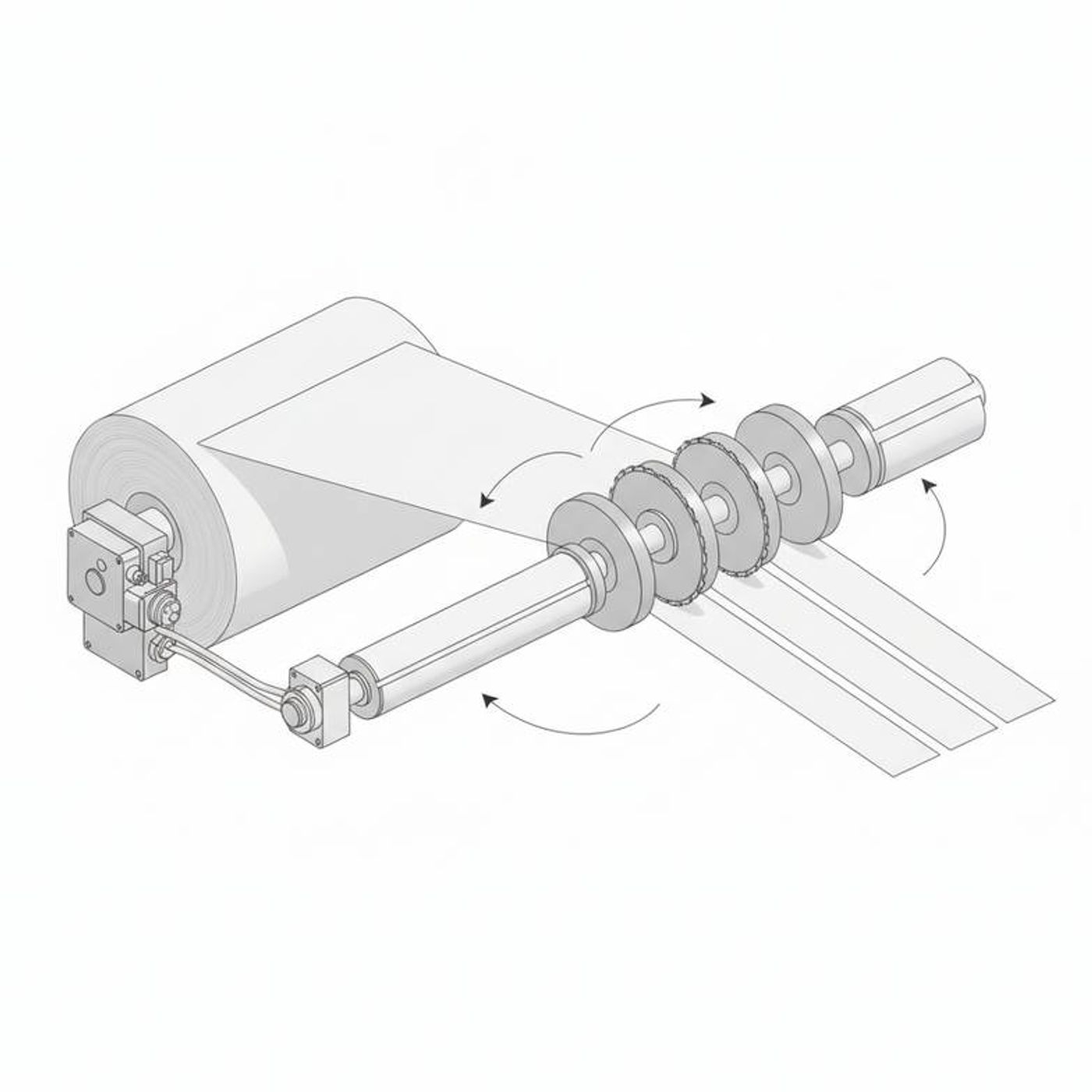
Web tension physics dictate that heavier, wider parent rolls require robust closed-loop tension systems and pneumatic braking to stop roll slippage. The QFJ-B500 excels at maintaining stable high-tension profiles for heavier paperboards, whereas the QFJ-B200 provides delicate, sensitive tension control tailored for thin, lightweight, or specialty papers.
Taper Tension and Rewind Density
Rewinding paper is a delicate balance of physics. You want a tight, dense core so the roll does not telescope during transit, but you must relieve surface tension as the roll grows. If you do not taper the tension, the outer layers will crush the inner paper core.
On the QFJ-B200, the tension range is geared toward lower total pull. This makes it ideal for:
- Calendered specialty papers
- Thermal paper receipt rolls
- Light packaging grades (40–100 gsm)
- Release liners and label base papers
If you run those light materials on an overly stiff, heavy machine, the heavy rollers create too much rotational inertia. The web stretches, thins out, or snaps during acceleration.
The QFJ-B500 handles the opposite problem. When you convert heavy kraft, cupstock, or testliner (120–350+ gsm), you need serious holding torque. The B500 integrates heavier load cells, automatic closed-loop tension controllers, and proportional air brakes. It maintains steady web tension from a full parent roll down to the bare core without web sag.
Shear Cut vs. Razor and Score Tooling
Your knife assembly must match your paper stock. Most vertical paper slitters use rotary shear knives (male top blade running against a female bottom ring).
[Top Circular Blade] \ \ <-- Controlled Overlap & Side Pressure ======[Paper Web]====== | [Bottom Anvil Ring]
On the compact B200, knife shafts are often smaller in diameter. That is fine for narrow widths and light papers, but tough kraft paper will cause shaft deflection.
The B500 utilizes thicker knife shafts and heavy-duty tool holders. This rigid setup lets you apply the lateral side-spring pressure needed for clean, dust-free shear cutting on heavy boards without pushing the slitter shafts out of alignment.
Which vertical paper slitting options fit your specific factory layout and workflow?
Factory floor space is expensive, and bringing in an oversized machine can choke your internal plant logistics. If your crew struggles to load raw parent rolls safely, production slows down before cutting even begins. Let us evaluate the physical footprint and material-handling realities of both machine tiers.
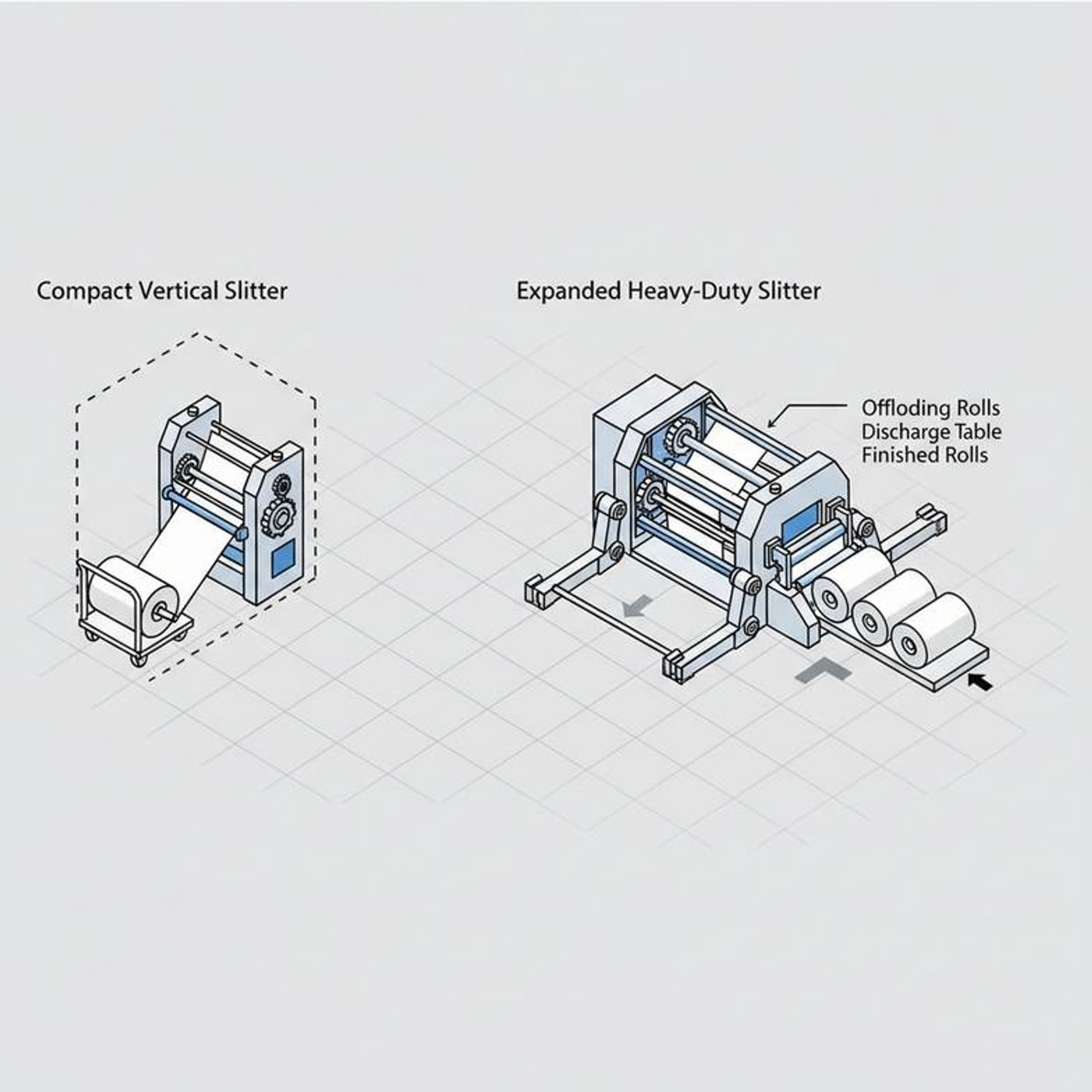
Your shop floor layout determines whether a slitter enhances or cripples workflow. The QFJ-B200 fits tighter spaces and operates with simple forklift or manual shaft loading. Conversely, the QFJ-B500 demands overhead crane clearance, floor-level roll staging, and heavier three-phase power connections to handle heavy rolls safely and efficiently.
Roll Handling and Operator Ergonomics
I once visited a converting plant where the buyer ordered a high-capacity slitter but forgot to measure his ceiling beams. They had to use a manual stacker truck in a tight aisle to load one-ton rolls. It was slow, frustrating, and dangerous.
Before picking between these models, look closely at your roll logistics:
- How do parent rolls arrive? If rolls come in at 400 kg, a simple manual or electric cart works great for the B200. If rolls weigh 1,200 kg, you need the B500’s shaftless hydraulic unwind arms that drop to floor level and clamp the roll automatically.
- How are finished rolls moved? Unloading multiple slit rolls from a cantilevered shaft takes arm muscle. The B200 works well with manual unloading trees. The B500 often requires pneumatic roll pushers or receiving lift tables to keep operators safe.
- Scrap and Trim Removal: Wider, thicker trims generated on high-speed B500 runs require high-volume venturi blowers or dedicated trim winders. The B200 can often manage with standard edge-trim exhaust ducting.
Space Requirements and Capital Friction
Buying more capacity than you need carries hidden costs. A larger machine takes up valuable square meters that could house raw materials or packaging stations. It also pulls higher running amperage, requiring heavier electrical breakers and larger workshop supply drops.
If your core business involves short-run orders, custom slit widths, and frequent job changes, the QFJ-B200 keeps your capital expenditure lean. It gives you the slitting accuracy you need without locking cash into unused mechanical capacity. But if your downstream packaging line is waiting on thousands of identical slit coils every day, the heavier B500 easily pays for its footprint.
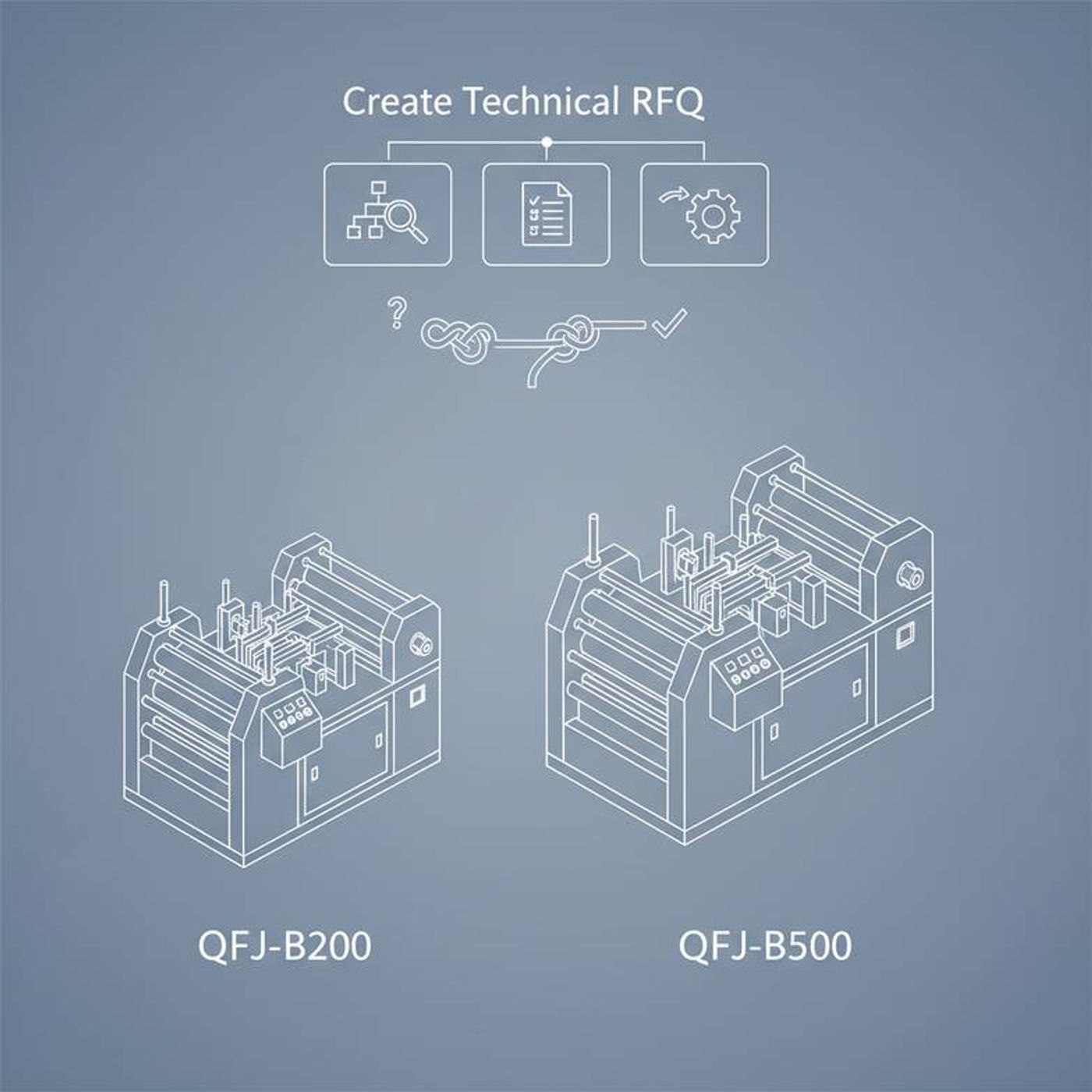
How should you prepare your technical RFQ for these vertical paper slitting options?
Sending a vague request for quotation leads to mismatched machine configurations and frustrating delivery delays. You want an accurate price based on your actual materials rather than cookie-cutter assumptions. Let us walk through the exact technical checklist you should compile before contacting equipment builders.
To prepare an effective RFQ, compile detailed data on incoming paper basis weight, web width, maximum roll weight, core diameters, and required slit tolerances. Providing physical paper samples for test cutting guarantees that the chosen knife geometry, spreader rollers, and drive motors perfectly match your factory converting requirements.
The Critical Paper Audit Checklist
When we review inquiries at DJH Machinery, the most productive discussions always start with exact paper specifications. Before requesting a quote, take an hour to document these five operational parameters:
- Material Structure and Caliper: List paper grades (e.g., bleached kraft, cupstock, coated art paper) and basis weight in grams per square meter (gsm) or paper thickness in microns.
- Unwind Roll Boundaries: Note maximum parent web width, maximum outer roll diameter, and maximum roll weight.
- Rewind Specifications: State your required core inside diameter (usually 3-inch or 76 mm, sometimes 6-inch or 152 mm) and target finished roll outer diameter.
- Minimum and Maximum Slit Widths: Mention your narrowest strip. Slitting down to 20 mm requires completely different knife spacers and shaft support than slitting 150 mm bands.
- Core Tolerance and Shaft Fit: Measure the inner diameter of your paper cores. Inexpensive cores often vary in inner diameter, which can cause slipping on basic pneumatic leaf shafts.
> Engineering Tip: If your paper surface is slippery, coated, or sensitive to scratches, mention this immediately. You might need cork-wrapped rollers, rubber-covered pull rollers, or grooved aluminum idlers to prevent web slippage and surface scuffing.
Testing and Technical Clarification
Do not rely on catalog photos to confirm mechanical compatibility. Ask your machinery builder to review your technical drawings or run a trial cut using your actual paper stock.
At DJH Machinery, we look closely at the interface details: shaft journal dimensions, core-expansion mechanisms, cutting overlap tolerances, and spreader roller profiles. Reviewing these mechanical items during the quotation phase prevents costly modifications after the machine lands on your shop floor.
Frequently Asked Questions
Can the QFJ-B200 slit heavy kraft paper?
Yes, provided the paper weight stays within the machine's tension limits and roll weight capacity. However, if you plan to run heavy kraft board above 200 gsm continuously from large-diameter rolls, the heavier frame and higher braking torque of the QFJ-B500 will deliver better roll structure and reliability.
What air shaft types are used on these slitters?
Most configurations use pneumatic lug-type or leaf-type air shafts designed for standard 3-inch (76 mm) paper cores. For wide webs with multiple narrow slits, differential friction air shafts are often recommended. These ensure every rewind roll receives uniform tension, even if the paper caliper varies across the web.
How do I know if I need shear knives or razor cutting?
Razor cutting works best for thin plastic films and select soft foils, but it quickly dulls and tears fibrous paper webs. For paper slitting, rotary shear knives (top male blade and bottom female anvil) are the industry standard. They produce clean, dust-free edges across light paper, heavy kraft, and laminated boards.
Does higher maximum mechanical speed always mean higher output?
No. Maximum mechanical speed only applies when the machine runs continuously. If your daily production involves short rolls, small orders, and frequent knife repositioning, operator handling and setup times dictate your real output. A machine designed for rapid changeovers often out-produces a faster machine on short-batch work.
Conclusion
Choosing between these vertical paper slitting options is not about picking the biggest or fastest model on the floor. It is about matching the physical reality of your paper rolls to your daily production workflow. The compact QFJ-B200 offers agility, lower capital cost, and quick setups for lighter papers and short runs. Meanwhile, the QFJ-B500 provides the frame mass, roll handling muscle, and tension control required for heavy paper stocks and high-volume production.
If you are currently evaluating your factory requirements or preparing a machine purchase, my team at DJH Machinery can help. Contact DJH Machinery with your roll dimensions, paper basis weights, and target finished roll specs. We will gladly review your application and help you identify the right converting equipment for your workshop.
Continue the Technical Review
For a closer look at the selection and operating questions raised in this guide, read Horizontal vs Vertical Paper Slitters: Comparing Floor Layout and Roll Handling and compare the recommendations in Comparing Turret vs Center Surface Paper Roll Slitting Machine Configurations.