PET Grade and Thickness
Distinguish uncoated, coated, printed, metallized and laminated PET. Provide thickness and surface restrictions; suitability for one construction does not establish suitability for another.

DJH MACHINERY · APPLICATION SELECTION
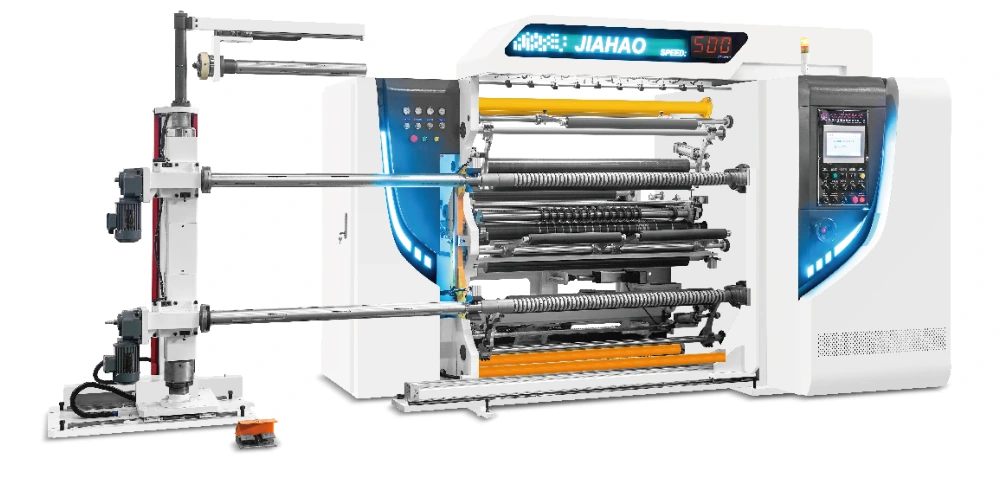
Define your PET film construction, thickness and edge requirements before choosing a slitter rewinder. Compare winding arrangements and roll capacities against packaging, printing or other downstream process requirements.
MATERIAL, CUTTING & WINDING
Distinguish uncoated, coated, printed, metallized and laminated PET. Provide thickness and surface restrictions; suitability for one construction does not establish suitability for another.
Agree the permitted edge condition, inspection method and blade arrangement using a representative sample. Include any limits on burrs, debris or damage to functional coatings.
Specify core size, finished diameter and winding firmness. Review contact surfaces, tension control and handling conditions where scratches, blocking or telescoping would affect the next process.
CONFIGURATION COMPARISON
These configurations are starting points for an application review. Material thickness range, operating speed and achievable roll quality must be agreed for the selected setup.
| Model | Construction and selection | Key configuration values |
|---|---|---|
| QFJ-A500 | A horizontal layout to assess when you need several slit lanes rewound on differential shafts and the parent and finished rolls fit the listed capacities. Start with the web structure and required roll firmness, then review the working width and lane pattern. | Listed speed: 500 m/min Minimum slit: 20 mm Parent-roll diameter: 800 mm |
| QFJ-AF400 | Start with AF400 when large finished rolls and a separate unwind section are important to the production layout. Compare roll weight, loading access and the finished-roll removal route alongside working width. A larger roll envelope can reduce the frequency of roll changes, but the complete handling plan still needs to suit the installation. | Listed speed: 400 m/min Minimum slit: 30 mm Parent-roll diameter: 1,200 mm |
| QFJ-AF500 | Consider AF500 when differential-shaft winding is relevant and the incoming roll requires more diameter capacity than the A500 configuration. The split construction needs a layout review covering both sections, the connecting web path, loading and service access. Material structure and lane requirements remain central to the selection. | Listed speed: 500 m/min Minimum slit: 20 mm Parent-roll diameter: 1,200 mm |
Roll diameter is separate from working width and roll weight. A listed speed is not a material-specific performance guarantee.
PREPARE YOUR RFQ
Provide grade, layer structure, grammage or thickness, coating and representative material for review.
List parent-roll width, diameter, weight and core; each finished width, lane count, finished diameter and core size.
State target output, quality criteria, utilities, destination and handling needs. Request separate identification of included controls, options, commissioning, delivery basis and acceptance conditions.
BEFORE YOU SPECIFY
The material-specific thickness range must be confirmed with the proposed equipment. Share the actual PET grade and thickness rather than relying on the generic film description.
Compare differential-shaft A500 or AF500 formats for multi-lane winding accommodation with the AF400 air-shaft format when larger finished rolls are relevant. Final suitability depends on sample evaluation and the required roll structure.
The complete laminate structure determines the review. List every layer and any coating or surface restriction; do not transfer plain-film settings without verification.
TECHNICAL READING
Film-slitter selection starts with the actual film structure and finished-roll requirement. Review the handling, cutting and winding conditions together before comparing machine speed or automation.
Film converters should define material structure, roll quality and operating conditions before comparing equipment. Use this guide to prepare questions about web handling, cutting and the agreed machine scope.
Film wrinkles can relate to material condition, web path, contact geometry or tension. Record where and when the wrinkle forms before choosing a component or changing the configuration.
YOUR MATERIAL. YOUR FINISHED ROLL.
Send your material and roll specifications to DJH Machinery for a configuration review.